As an Amazon Associate, we earn from qualifying purchases. Some links on this site are affiliate links at no extra cost to you. Our recommendations are based on thorough research and editorial judgment.
How Focal Length Affects Aerial Composition

Focal length greatly impacts our aerial composition, shaping how we capture scenes from above. Shorter focal lengths, like 24mm, let us embrace expansive landscapes, while longer lenses, such as 166mm, help us zoom in on distant subjects. This choice alters our field of view and perspective, affecting depth and detail. By employing varied focal lengths, we can enhance storytelling, create intimacy, and more effectively convey our visual narratives. Explore further to uncover practical techniques and tips that optimize our aerial photography.
Key Takeaways
- Short focal lengths (24mm) emphasize expansive landscapes, enhancing depth and providing a dramatic, overarching view of the scene.
- Medium telephoto lenses (70mm) create balance in urban environments, compressing backgrounds while focusing on specific subjects.
- Longer focal lengths (166mm) excel at capturing distant details, making them ideal for wildlife or isolated mountain features.
- Composition techniques like layering foreground, middle ground, and background elements enhance depth and perspective, making focal length decisions crucial.
- The choice of focal length shapes visual storytelling; wider angles convey expansiveness, while longer lenses create intimacy and focus on specific details.
What Is Focal Length and Why Does It Matter in Aerial Photography?
When it comes to aerial photography, getting a grip on focal length is super important because it really shapes the pictures we take. Focal length is simply the distance from your camera lens to the image sensor, and it plays a big role in determining both the size of your image and the way everything looks in it.
For instance, if you’re using a short focal length like 24mm, you’ll end up with a wider field of view, which is perfect for capturing vast landscapes or big groups of buildings. On the other hand, if you opt for a longer focal length, say 70mm or even up to 166mm, your field of view gets narrower. This is great for zooming in on a specific subject—like a distant mountain peak or a unique detail in a cityscape—allowing you to really focus on what you want to highlight.
Another thing to think about is depth of field, which refers to how much of the scene is in focus. Moderate lenses, especially those in the 24-50mm range, are often favored for tasks like photogrammetry because they keep things clear across different distances. So, when you’re planning your next aerial shoot, just remember that the focal length you choose can massively impact your final shots and the story they tell. Now, let’s discuss how to pick the right lens for different photography styles! Additionally, choosing drones with 4K camera resolution helps ensure that the details captured with any focal length are sharp and vivid for stunning aerial footage.
Understanding the Field of View (FOV) in Aerial Composition
Hey there! Let’s chat about the field of view (FOV) in aerial photography because it’s such a key aspect of capturing the perfect shot. Understanding FOV helps you figure out how to frame your images and convey your story visually. Essentially, FOV is all about the angle of view that your camera lens captures. If you have a wider FOV, you can take in more of the scene, but there’s a trade-off: you might lose some details because the optical magnification decreases.
To keep it simple, the FOV is connected to the focal length of your lens. If you’re using a telephoto lens with a longer focal length, you get a tighter angle, which means you can focus on specific subjects from a distance – think of capturing a majestic eagle in the sky. On the flip side, a lens with a shorter focal length gives you a wider view, perfect for sweeping landscapes or cityscapes. So if you’re trying to capture the vastness of a mountain range, a wider FOV with a shorter lens will do the trick.
It’s all about picking the right lens to nail those compositions. Be intentional about what you want to highlight in your photos. The better you understand the FOV and how to manipulate it, the more powerful your aerial storytelling will become. This can really help you decide what captures to get next! Also, choosing a drone with advanced 3-axis stabilization can greatly improve the smoothness and clarity of your aerial footage, enhancing the overall composition quality.
How Focal Length Influences Perspective in Aerial Shots
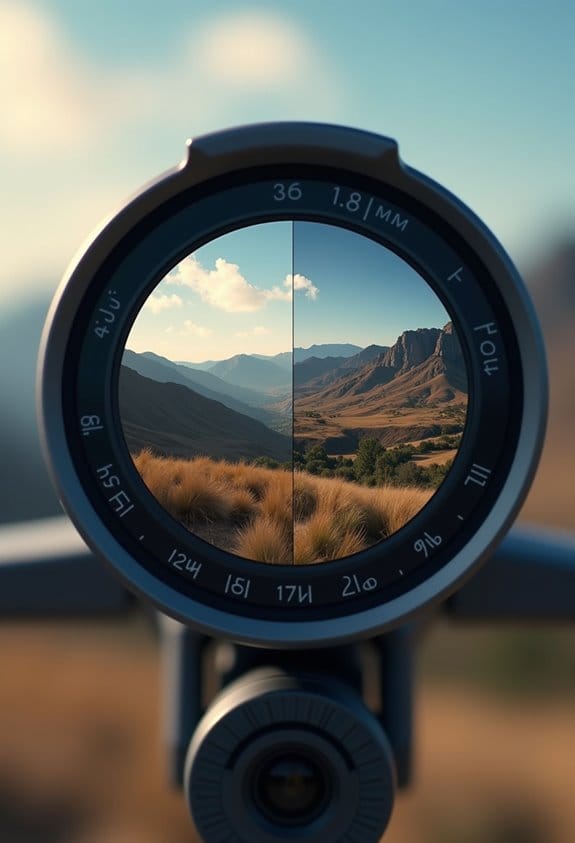
Hey, I’ve been diving into aerial photography lately, and I’ve realized just how much focal length shapes the way we see things from above! Basically, focal length is like the tool we use to control our perspective and how everything sits together in a shot.
Let’s break it down a bit. When you’re using a longer focal length — say around 166mm — it’s like you’re pulling the background closer to the foreground. This can create a beautiful intimacy between different elements in your composition. Think of it this way: you could capture a stunning skyline with a mountain range behind it that feels almost like they’re embracing each other. On the flip side, if you grab a wide-angle lens, like a 24mm, you’re opening up your view. This is perfect for those breathtaking landscapes where you want to showcase a vast scene, making the foreground pop against a sweeping panorama.
Then there’s the medium telephoto, like a 70mm, which is great for isolating subjects. Picture this: you’re photographing a little cabin nestled in a forest, and with that focal length, the cabin stands out dramatically against the larger trees. It creates this powerful focus that draws the viewer’s eye right where you want it.
Understanding how focal length influences perspective can really elevate your aerial images, making them more engaging and dynamic. It’s all about knowing what feeling you want to convey and choosing the right lens for the job. Ready to explore some more techniques in aerial photography? Let’s go!
Keep in mind that using drones with features like 3-Axis Gimbal stabilization can greatly enhance image clarity by reducing motion blur during flight.
Choosing the Right Focal Length for Aerial Scenes
Choosing the right focal length for aerial scenes can make a world of difference in your photography, and it’s something you’ll want to think about before you take off. Each lens you use affects what you see and how you frame your shots, so let’s break it down.
If you’re working with a shorter focal length, like 24mm, you’ll capture those stunning, sweeping landscapes. This is perfect for showing the vastness of a scene, allowing viewers to feel the depth and scale. For example, when you’re flying over a beautiful valley, a wide shot at 24mm can draw in the viewer’s attention, making them feel like they’re really there.
On the other hand, if you grab a 70mm lens, you’ll find it strikes a nice balance. This medium telephoto lens compresses backgrounds while helping you focus on particular subjects—great for those urban shots where you want to highlight a skyline or an interesting building. Just think how a 70mm can isolate a skyscraper amid a busy cityscape, creating a striking image without distracting elements around it.
Now, if you’re really looking to zero in on those far-off details, a longer focal length like 166mm is your go-to. It’s fantastic for capturing subjects that are distant and unique, like a flock of birds or a mountain peak. Just keep in mind that flying at higher altitudes can affect your drone’s battery life, so plan accordingly.
When choosing your lenses, consider using prime lenses if sharpness is your top priority. They offer amazing clarity but can be less versatile. Zoom lenses, however, give you the flexibility you might need in dynamic situations, like quickly changing compositions when flying. By understanding these options, you’ll be set to take breathtaking aerial photos that leave a lasting impression. Next, let’s chat about how to best compose those stunning shots when you’re in the air!
Also, pay attention to your drone’s flight time, especially when using longer focal lengths or flying at higher altitudes, to ensure uninterrupted shooting sessions.
The Impact of Focal Length on Depth and Distance in Aerial Shots
Hey there! Let’s chat about how focal length affects depth and distance in our aerial shots. You might be surprised to learn that this little detail can really shape how your photos turn out. For instance, when you shoot with a shorter focal length, say around 24mm, it gives a wonderful sense of depth. It pulls the foreground into focus while still showing off the broader scene around it. Think about capturing a stunning landscape with mountains in the background and a vibrant field in the foreground—that’s where a 24mm lens shines.
On the flip side, if you opt for a longer focal length, like between 70mm and 166mm, you’ll notice something interesting. It compresses the distances in your shot, which can make everything feel a bit closer together. While this can help to spotlight your main subject—like a bird or a landmark—it sometimes sacrifices that sense of depth. So, if you’re after a well-rounded aerial shot, a moderate focal length between 24mm and 50mm is your best bet. It strikes a great balance, keeping everything clear and detailed even in vast landscapes.
Choosing the right focal length is complemented by using drones equipped with adjustable lenses, which allow photographers to capture versatile perspectives from the sky.
Now that you have a grasp of how focal length works, let’s explore how to frame your subjects effectively in aerial photography!
How Focal Length Affects Image Composition and Framing
You know, when you think about how focal length affects your photography, it’s not just about how far away from your subject you stand. It really shapes how you frame your shots and what emotions or stories you convey through your images! Take aerial photography, for example; the focal length you choose can totally change how we view a scene.
With a shorter focal length, like a 24mm lens, you get this amazing wide-angle view. This is perfect for capturing expansive landscapes or dynamic layers, like the rolling hills beneath a sunset. On the flip side, if you opt for a longer focal length, say 70mm, you zoom in on your subject more and cut out distractions around it. Think about capturing a stunning wildlife shot up in the mountains; you can isolate that majestic eagle mid-flight without all the branches cluttering the frame. Additionally, choosing the right focal length is essential for optimizing your drone’s 4K video quality and achieving stunning aerial imagery.
Practical Techniques to Utilize Focal Length in Aerial Shots
Hey there! If you’re getting into aerial photography, knowing how to use different focal lengths can really boost your images and storytelling. Let me break it down for you.
First up, if you’re capturing those sweeping landscapes, reach for a shorter focal length, like 24mm. This lets you fit in vast fields, rolling hills, or coastlines while emphasizing that gorgeous depth. For example, when shooting a sunset over a valley, the wide angle will really showcase the scale of the scene.
Now, when you’re focusing on urban environments, a midrange zoom of about 70mm can be your best bet. This focal length helps create a nice balance between the foreground and background, letting you isolate subjects like a unique building or a busy street corner. Picture capturing a bustling marketplace with just the right amount of city backdrop—it makes the subject pop!
Lastly, if you want to zero in on wildlife or another distant subject, switch to a longer focal length, say around 166mm. This way, you can snap amazing wildlife shots without getting too close and disturbing them. Imagine photographing a soaring eagle or a herd of deer from a safe distance—it adds a whole new layer to your shots.
And don’t forget about composition! Think about layering your shots with elements at different distances: foreground, middle ground, and background. This technique can add a sense of depth and make your aerial photos even more captivating.
Next time you’re up in the air, remember these tips, and you’ll be capturing stunning images in no time! Using drones equipped with 4K to 8K camera capabilities significantly enhances image quality, making your aerial compositions even more impressive.
How Do Different Focal Lengths Shape Your Aerial Storytelling?
Have you ever thought about how different focal lengths can really shape our storytelling in aerial photography? It’s pretty fascinating! The lens you choose can completely change not just how a scene looks, but also the story you’re trying to tell. For example, if you grab a wide-angle lens at 24mm, you can capture sweeping landscapes that pull the viewer right into the scene. This can add depth and make your aerial shots feel expansive, almost like the viewer is floating over the land themselves.
On the flip side, when you use a telephoto lens, like a 166mm, you’re able to focus on smaller, specific details. It’s like peeking into a different world, where you can isolate those unique elements and create a more personal narrative. Imagine zooming in on a bustling market or a serene lakeside to highlight vibrant colors or intricate patterns without any distracting elements in the background. Choosing drones with 4K or higher camera resolution can ensure these details are captured with stunning clarity and precision.
Focal Lengths for Various Aerial Photography Uses
You know, when it comes to aerial photography, the focal lengths can make or break your shots. It’s fascinating how a simple change in focal length can dramatically affect what you capture! For instance, if you’re shooting sprawling landscapes, a shorter focal length around 24mm gives you this amazing wide field of view. You can capture all the beauty and depth of the scene, making it feel really expansive.
On the flip side, if you find yourself in an urban environment, a mid-range focal length like 70mm can be a game changer. It helps you zero in on specific subjects while gently compressing the distance between them. Think of it like a superhero lens that brings your cinematic shots to life, emphasizing those stunning skyscrapers or bustling streets!
Now, if your goal is to photograph distant subjects—maybe a unique landmark or wildlife—you’ll want to reach for a longer focal length, around 166mm. This not only brings those far-off details into sharp focus but also helps cut through the haze that can come with distance. And if you’re into photogrammetry, you’ll find that lenses in the 24-50mm range can enhance your image quality nicely, while wide-angle lenses under 20mm are perfect for capturing tight spaces—like standing on a rooftop where you need to cover a whole city view.
Ultimately, understanding how to use focal lengths effectively opens up amazing possibilities for your aerial photography. Each choice offers a different perspective, making it a fun experiment in creativity! What other techniques are you curious about?
Keep in mind that using drones with advanced gimbal technology can greatly improve the stability and sharpness of your aerial shots regardless of focal length.
Mastering Composition With Variable Focal Lengths in Aerial Photography
Hey there! Let’s talk about mastering composition in aerial photography. It’s all about combining what you know about focal lengths with your creative flair for framing. When you shoot with a wide-angle 24mm lens, you can capture those breathtaking expansive landscapes. This lens really helps create a sense of depth, making your images feel more immersive.
Now, if you’re looking to focus on a particular subject, a 70mm medium telephoto lens does the trick by isolating that subject and compressing the background. Imagine snapping a shot of a bustling city skyline; the 70mm lens helps highlight the details without the distractions of everything else around it. If you want to take pictures of things that are further away, like a distant mountain range, a 166mm telephoto lens comes in handy for those close-up details without getting too close and disturbing the scene.
And don’t forget about composition techniques, like using leading lines—they can elevate your photos no matter what focal length you choose. Just keep in mind that longer focal lengths often mean you’ll need to fly higher, which can use up more energy. Plus, the lighting can really change the vibe of your shots, so let that influence your lens choice too. These little tips can really enhance your aerial photography game! When transporting your drone and lenses, using a protective case with custom foam inserts helps keep your gear secure and ready to shoot. So, what do you want to focus on next?
Frequently Asked Questions
How Does Focal Length Affect Composition?
Focal length shapes our aerial perspective notably. We notice compression effects, refine our framing techniques, emphasize landscape highlights, achieve subject isolation, and manipulate spatial relationships, creating compelling compositions that engage viewers and convey narratives effectively.
What Is the Best Focal Length for Aerial Photography?
For aerial photography, we’ve found 24-50mm to be ideal. A wide angle captures vast landscapes, while a telephoto lens nuances details. Understanding crop factor helps us avoid lens distortion and enhances our aerial perspective.
Is 28MM or 35MM Better?
We believe it depends on our goals—28mm’s advantages shine in landscape capture, while 35mm benefits us with better subject isolation and reduced lens distortion. Both perform well, especially in low light, so choose wisely!
What Is the 500 Rule for Focal Length?
The 500 Rule helps us optimize exposure time in night photography. By dividing 500 by our focal length, we can prevent star trails and guarantee camera stability for sharp, beautiful celestial shots.