As an Amazon Associate, we earn from qualifying purchases. Some links on this site are affiliate links at no extra cost to you. Our recommendations are based on thorough research and editorial judgment.

Understanding Camera Sensor Sizes in Aerial Drones

Understanding camera sensor sizes in aerial drones is essential for capturing high-quality images. Larger sensors, like Micro Four Thirds and full-frame, let in more light, improving image quality, especially in low-light situations. We should consider key specifications such as megapixels, aperture size, and dynamic range. In choosing a drone, knowing how these factors influence performance can help us select the best gear for our photography needs. Let’s explore how each sensor impacts our aerial imaging experience.
Key Takeaways
- Camera sensor size significantly affects image quality, with larger sensors capturing more light and improving low-light performance.
- Common sensor sizes in aerial drones range from 1/2.3 inch to full-frame, impacting detail and vibrancy in images.
- Drones like the DJI Mavic 3 feature a Micro Four Thirds sensor, balancing size and versatility, with trade-offs in clarity.
- Higher resolution drones (20MP to 48MP) enhance detail for specific applications like aerial mapping or surveys.
- Understanding sensor specifications and settings is crucial for selecting the right drone for optimal aerial photography outcomes.
The Basics of Drone Camera Sensors
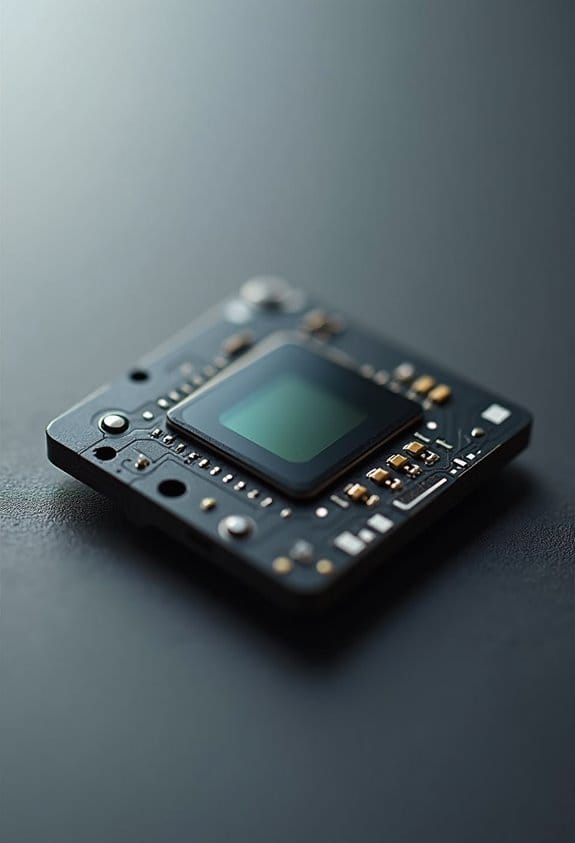
Hey there! When you start exploring aerial photography, you might be surprised to learn just how crucial camera sensors are for the quality of your photos. These little pieces of technology are key in determining how good your images will look. Think of camera specifications like sensor size as the foundation of your drone’s photographic capabilities.
Different drones come equipped with various sensor sizes—some of the common ones you’ll encounter include 1/2.3 inch, 1 inch, Micro Four Thirds, APS-C, and full-frame sensors. Generally speaking, larger sensors are better at capturing more light, which really helps improve image quality, especially when you’re shooting in low-light conditions. For instance, the DJI Mavic 3 features a Micro Four Thirds sensor, while the DJI Air 2S has a smaller sensor that limits its performance in tricky lighting. Additionally, choosing drones with advanced stabilization technology can enhance your footage quality by reducing motion blur and shakiness in your images.
How Drone Sensor Size Affects Your Aerial Images

Hey there! Let’s chat about how sensor size impacts aerial images taken by drones. You know, the sensor size is a crucial factor in determining just how great those photos turn out. When drones come equipped with larger sensors, like the ones found in professional DSLRs, they can capture more light. This really helps boost image quality, especially when the lighting isn’t ideal, like during sunset or overcast days.
For instance, with a larger sensor, you’ll notice that colors become more vibrant, and details remain sharp, even in the shadows. Smaller sensors, on the other hand, sometimes struggle in these situations, which can lead to grainy images that lack clarity. It’s a bit like trying to take a picture at a concert with a phone versus a high-quality camera—one gives you stunning shots while the other might leave you wanting more.
In addition to sensor size, having advanced stabilization technology in drones ensures that the images and videos stay sharp and smooth even when the drone is in motion.
Comparative Analysis of Drone Sensor Sizes

When we talk about drone sensor sizes, it’s fascinating how much they can influence what we capture in aerial photography! For instance, larger sensors like the one in the Canon 5D Mark IV—the size of a postcard at 36 x 24mm—offer incredible image quality and excel in low-light situations. On the other hand, consumer drones like the DJI Mavic 3 come with a smaller M43 sensor at 17.3 x 13mm, which can sometimes lead to less clear images.
Take the DJI Mavic Air 2, for example. Its compact 6.4 x 4.8mm sensor doesn’t do as well in low light, but it can still perform admirably in bright daylight. Then there’s the DJI Air 2s, which has a sensor measuring 13.05 x 8.82mm. It strikes a nice balance, allowing for more versatile photography options without feeling too bulky.
Recognizing these sensor differences can really help you make informed choices about which drone to use for your next adventure. So, whether you’re capturing stunning landscapes at sunrise or documenting memorable events from above, knowing how these sensors work will enhance your overall experience. Drones like the DJI Air 3S feature a 1-inch CMOS sensor, which significantly improves image quality and low-light performance compared to smaller sensors.
Recommended Products

No Registration Needed - Under 249 g, this drone with camera for adults 4K does not require FAA registration or Remote ID for recreational use. Visit the FAA's official website for requirements related to drone registration and Remote ID. [1]

No Registration Needed - Under 249 g, this drone with camera for adults 4K does not require FAA registration or Remote ID for recreational use. Visit the FAA's official website for requirements related to drone registration and Remote ID. [1]
Real-World Impacts of Different Sensor Sizes on Aerial Imaging
Hey! So, let’s chat about how different sensor sizes can really change the game in aerial imaging. You know, like the ones in drones? Take the DJI Mavic 3 for example – it has a larger sensor that can grab more light. This is a big deal, especially when you’re shooting in low-light conditions, because it means your images come out clearer and richer in detail, whether you’re photographing a sunset or capturing city lights at night.
When you’re out there capturing landscapes, a larger sensor not only improves image quality but also allows for a greater Ground Sample Distance (GSD). This means you can achieve really high resolutions, which is fantastic for making detailed maps or getting those crisp shots of nature. On the flip side, smaller sensors, while nice for everyday use, often pack in more pixels, which can lead to some digital noise creeping in—definitely not what you want in your photos!
Additionally, drones equipped with 1-inch sensors significantly enhance both image quality and low-light performance, making them ideal for professional aerial photography.
Key Sensor Specifications: Megapixels and Aperture
When you start exploring aerial photography, you quickly realize how crucial a camera’s megapixels and aperture are for capturing amazing images. Megapixels, which can range from just 2 up to 50 in drone cameras, really help determine how much detail you can get in your shots, especially when you’re doing surveys. But hold on, it’s not just about the number of megapixels—having a larger sensor is also key to getting great image quality.
Now, let’s chat about the aperture. This is basically the opening in the lens, and its size can seriously affect your photos. If you use a lower f-number, you’ll notice your drone performs better in low light, which is super handy during sunrise or sunset shoots. On the flip side, a higher f-number can lead to issues like diffraction that makes your images less sharp. So, it’s about finding that sweet spot between megapixels, aperture, and sensor size—and when you do, you’ll get those sharp, stunning photos you’ve been aiming for.
With this knowledge, you’re better equipped to take your aerial photography to the next level. Next, let’s look at how to manage settings and lighting for even better results! Efficient data transfer via high-speed cables can also streamline the process of handling your aerial images and videos.
Recommended Products

【Equipment】BETAFPV C03 FPV micro camera comes with 1200TVL resolution with Global WDR and 1/3" CMOS sensor, it ensures a high-quality and clear image.

1080P Adjustable Camera Drone: Break Free from Fixed Perspectives! Featuring a 1080P HD camera with a 90° motorized adjustable lens, our FPV drone gives you the freedom to capture breathtaking shots from sweeping horizons to top-down bird's-eye views - at the touch of a button. Connect to the "DAZLEN FPV" App for real-time live streaming via FPV technology. Experience aerial exploration from a pilot's perspective, and share your unforgettable moments instantly on social media.

【𝟖𝐊 𝐏𝐡𝐨𝐭𝐨, 𝟒𝐊 𝐇𝐃𝐑 𝐕𝐢𝐝𝐞𝐨】Equipped with a 1/2'' Sony CMOS sensor, it captures 𝟒𝟖𝐌𝐏 𝐩𝐡𝐨𝐭𝐨𝐬 and records 𝟒𝐊/𝟑𝟎𝐟𝐩𝐬 𝐇𝐃𝐑 stable videos within a 𝟑-𝐚𝐱𝐢𝐬 𝐠𝐢𝐦𝐛𝐚𝐥. The F1.8 aperture and 4-in-1 pixels improve low-light performance, details, and color.
Drone Camera Types: Integrated, Interchangeable, and Specialized
When you’re getting into drone photography, one of the first things you’ll notice is how the type of camera affects your shooting experience and the quality of your images. For instance, if you go for a drone with an integrated camera, like the DJI Mavic 3 Pro, you’ll enjoy a smooth, hassle-free experience thanks to its high-quality 4/3 CMOS Hasselblad sensor. However, you won’t be able to change out lenses, which might limit your creativity a bit.
Now, if you’re looking to get more serious about your photography, you might want to consider something like the DJI Inspire 3. It comes with an interchangeable lens system via its Zenmuse X9, allowing you to choose different lenses depending on what you’re shooting. This flexibility really helps push your photography to the next level, especially in varied environments.
Lastly, don’t forget about specialized cameras. These are made for specific tasks, such as thermal imaging or LiDAR mapping, but they’re often more complex to operate. So, if you’re venturing into industrial applications, make sure you have some training under your belt. The key takeaway here is that choosing the right camera type will really shape your aerial photography journey. Now, let’s explore what settings and techniques can elevate your drone shots even further!
Understanding camera quality also involves considering features like adjustable angles which enhance creative shooting opportunities and minimize drag for better flight performance.
Key Features Influencing Drone Camera Performance
Alright, so now that we’ve picked out the right type of drone camera, let’s chat about the key features that really make a difference in how well those drone cameras perform. Think of these features as the building blocks of great aerial photography.
First up is sensor size. Essentially, a larger sensor can capture more light, which is super important if you’re trying to take pictures in low-light conditions, like during sunrise or sunset. For example, if you’re flying your drone over a forest at dawn, a larger sensor will help you snap those vibrant colors without losing detail in the shadows.
Next is resolution. Most drones pack between 20MP to 48MP, but here’s the catch: you want to balance that with sensor size. A tiny sensor cranking out high megapixels can lead to grainy images. Imagine trying to take a photo with your smartphone in a dimly lit room—it just doesn’t turn out well, right?
Then we’ve got aperture. A lower f-number means more light can enter the lens, which really helps when the sun starts to dip. For instance, if you’re capturing aerial shots of a wedding at golden hour, a lower f-number will keep those images clear and beautifully lit.
Don’t forget about image stabilization. A good gimbal can make a world of difference, especially if you’re flying your drone in windy skies. It’s like having a steady hand while taking photos—no one wants a blurry shot!
Lastly, consider dynamic range. A camera with a wide dynamic range can capture details in both the bright and dark parts of your images. So if you’re photographing a landscape with a bright sky and dark mountains, you won’t lose detail in either area.
Additionally, choosing a drone with good wind resistance ensures stable performance, especially when capturing shots in challenging weather conditions.
All of these features come together to create stunning photos from your drone. Next, let’s look at how to put these insights into action for capturing breathtaking aerial shots!
Recommended Products

【𝐑𝐨𝐜𝐤 𝐒𝐭𝐞𝐚𝐝𝐲 𝟒𝐊 𝟑-𝐀𝐱𝐢𝐬 𝐆𝐢𝐦𝐛𝐚𝐥】Equipped with 𝐒𝐎𝐍𝐘 𝐂𝐌𝐎𝐒 𝐒𝐞𝐧𝐬𝐨𝐫 and a 𝟏𝟐𝐌𝐏 camera capable of recording 𝟒𝐊/𝟑𝟎𝐟𝐩𝐬 video, the ATOM drone with camera for adults 4k delivers respectable aerial image and video quality. The 𝟑-𝐚𝐱𝐢𝐬 𝐛𝐫𝐮𝐬𝐡𝐥𝐞𝐬𝐬 𝐠𝐢𝐦𝐛𝐚𝐥 ensures smooth and steady footage even in 𝐥𝐞𝐯𝐞𝐥-𝟓 𝐰𝐢𝐧𝐝𝐲 𝐜𝐨𝐧𝐝𝐢𝐭𝐢𝐨𝐧𝐬

【FAA CERTIFIED COMPLETED】: The Bwine drone has completed remote ID certification and complies with the FAA Declaration of Compliance. Get a Bwine drone, and fly unhindered. You can find the remote ID on the drone arm, including the QR code. For any more questions about FAA Remote ID, please get in touch with us via the contact information on the back cover of the manual or the Bwine drone APP.

Lightweight and Portable: The drone with camera 4k for adults comes with weight of below 249g, compact and portable, without FAA or Remote ID registration, ideal for for outdoor enthusiasts
Master Camera Settings for Optimal Drone Photography
Hey there! So, if you want to really boost your drone photography, mastering your camera settings is the way to go. It’s all about getting those stunning, high-quality images that capture the essence of your surroundings. For instance, adjusting the white balance depending on the lighting can make a huge difference. If you’re shooting at sunrise, a warmer white balance will enhance those golden tones, while a cooler setting might be better for overcast days.
Now, don’t forget about exposure compensation! This nifty feature lets you brighten or darken your shots on the fly, which is super useful when you’re flying through varying light conditions. If the sun suddenly pops out from behind a cloud, a quick adjustment can save your shot.
Shutter speed is another critical aspect. If you want to freeze the action — like when you’re capturing a bird in flight — you’ll need a fast shutter speed. On the flip side, if you’re going for that smooth, flowing look, a slower shutter speed can create a beautiful motion blur.
And here’s a tip: in challenging lighting, switching to manual mode can give you better control. Instead of relying on auto-focus, try manual focus for precise adjustments. By playing around with these settings, you’ll get a better feel for what your camera can do and improve your skills. It’s really all about practice and experimentation. Now, let’s chat about composition techniques next!
Additionally, choosing a drone with a high camera resolution will significantly enhance the clarity and detail of your aerial photos.
Selecting the Right Drone Based on Sensor Needs
Hey there! If you’re thinking about getting a drone and want to capture those breathtaking aerial photos and videos, picking the right one based on sensor needs is super important. First off, let’s talk about sensor size. Drones like the DJI Mavic 3 come with a 4/3 CMOS sensor, which makes a big difference in your image quality, especially when the light isn’t ideal—think sunset shots or early morning fog.
Now, if you’re after high resolution, look for drones that have cameras with 20MP to 48MP. These are perfect for tasks like aerial mapping or surveying landscapes where detail really matters. Plus, if you’re using something like the DJI Inspire 3, you can even switch out lenses. This feature lets you adapt to different shooting scenarios—whether you want a wide-angle view of a landscape or a zoomed-in shot of wildlife.
Lastly, there’s this thing called ground sample distance (GSD) that’s worth knowing about. It ties back to your sensor size and resolution. Basically, the smaller the GSD, the more detail you’ll capture in your photos, which is crucial in tricky lighting. So, by understanding these elements, you can make an informed decision on which drone will suit your needs best. And once you’re all set with the right gear, it’ll be time to get out there and start capturing those amazing shots! Many modern drones also feature advanced obstacle avoidance technology to ensure safer and more reliable flights, enhancing your shooting experience.
Recommended Products

100MP Main Camera - DJI Mavic 4 Pro’s 100MP Hasselblad camera with 6K/60fps HDR video captures stunning drone footage with vivid detail.

DJI Authorized - Includes Full USA Warranty + 2 Year CPS Extended Warranty | DJI Mavic 4 Pro | MASTER ANY SHOT WITH A PRO-GRADE TRIPLE CAMERA SYSTEM - The massive 100MP 4/3 CMOS Hasselblad main camera delivers breathtaking detail and true-to-life color, while 2 telephoto lenses unlock dramatic zoom and cinematic perspectives. Advanced features like Dual Native ISO and RAW stacking ensure unparalleled image quality and dynamic range, giving you the power of an entire camera bag in the sky.

DJI Authorized - Includes Full USA Warranty + 2 Year CPS Extended Warranty | DJI Mavic 4 Pro | MASTER ANY SHOT WITH A PRO-GRADE TRIPLE CAMERA SYSTEM - The massive 100MP 4/3 CMOS Hasselblad main camera delivers breathtaking detail and true-to-life color, while 2 telephoto lenses unlock dramatic zoom and cinematic perspectives. Advanced features like Dual Native ISO and RAW stacking ensure unparalleled image quality and dynamic range, giving you the power of an entire camera bag in the sky.
Frequently Asked Questions
What Do the Different Camera Sensor Sizes Mean?
When we consider sensor technology, different camera sensor sizes affect our drone photography. For instance, larger sensors improve image quality in low light, impacting field depth and offering superior results over smaller sensors with a crop factor.
Is a 1 Inch Sensor Bigger Than Micro 4 3?
A 1-inch sensor is slightly smaller than Micro Four Thirds, but it offers significant sensor size advantages. Its low light performance enhances image quality, making it ideal for drone photography, despite varying sensor crop factors.
What Is the Difference Between 1 1.8 and 1 2.8 Sensor?
A 1/1.8 sensor, roughly 7.07mm, excels in low light, enhancing image clarity and dynamic range. It provides a better depth of field and superior lens compatibility compared to the smaller 1/2.8 sensor.
What Does 1 2.5 Sensor Size Mean?
The 1/2.5 sensor size means a compact design typically offers modest resolution and image quality. In low light, we may face noise issues, affecting depth perception, drone stability, and lens compatibility for specific applications.

