As an Amazon Associate, we earn from qualifying purchases. Some links on this site are affiliate links at no extra cost to you. Our recommendations are based on thorough research and editorial judgment.


How to Protect Your Drone During Air Travel

When traveling with our drones, we need to understand airline regulations, such as battery limits and packing requirements. It’s essential to register our drone beforehand and check local laws to avoid fines. Properly packing the drone in a padded case and securing the batteries in a designated LiPo bag is key for safe transport. Staying informed about emergency procedures can also enhance our flying experience. Let’s explore more strategies to guarantee our drone photography remains first-rate throughout our travels.
Key Takeaways
- Check airline regulations for carrying drones and lithium batteries to ensure compliance and avoid issues at security checkpoints.
- Register your drone according to local regulations to prevent legal problems and ensure a smooth flying experience upon arrival.
- Pack the drone in a padded case or specialized backpack and remove propellers to protect it during travel.
- Secure spare lithium batteries in carry-on luggage and verify they meet airline restrictions for hassle-free transportation.
- Stay updated on local drone laws and weather conditions at your destination, ensuring safe and legal flying opportunities.
What You Need to Know About Airline Rules for Drones
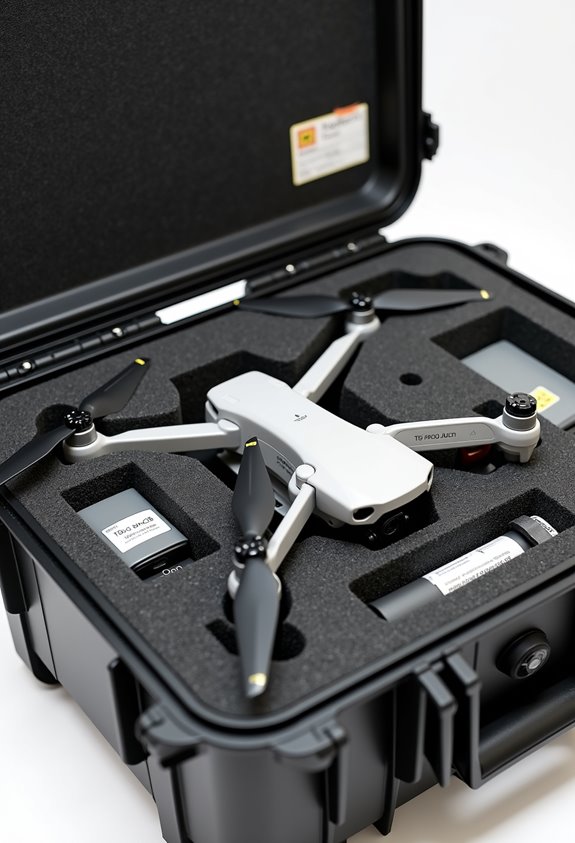
If you’re planning to fly with your drone, getting to grips with airline rules is super important for a hassle-free experience. Most airlines let you bring your drone along in either your carry-on or checked luggage, but it’s always a good idea to double-check the specific policies for the airline you’re flying with since they can differ quite a bit.
One thing to pay close attention to is how you handle lithium batteries. For example, if you have spare batteries, you’ll want to keep them in your carry-on instead of checked baggage. According to the FAA, if your batteries are under 100 watt-hours, you can take as many as you want in your carry-on. However, if you have batteries in the 101 to 160 watt-hour range, you can only pack two of them in your carry-on.
When you go through security, be prepared for them to ask about your drone and its components. Just be clear and upfront about what you’re carrying, and everything should go smoothly. Happy travels, and safe flying with that drone of yours! If you’re curious about tips for packing your gear securely, let’s dive into that next.
It’s also a smart move to use a fireproof battery bag to safely store and transport your drone’s batteries during air travel.
Recommended Products

🔥【Zeee LiPo Battery Bag Material】- 100% outside fireproof fabric, interlayer fabric with waterproof effect, and inner non-woven fabric with flame retardant, which effectively isolate air and improve the safety when charging. Heat insulation temperature up to 1000℉. Please note the bag can't prevent the fire if the temperature over 1000℉. In this situation, it is not 100% fireproof.
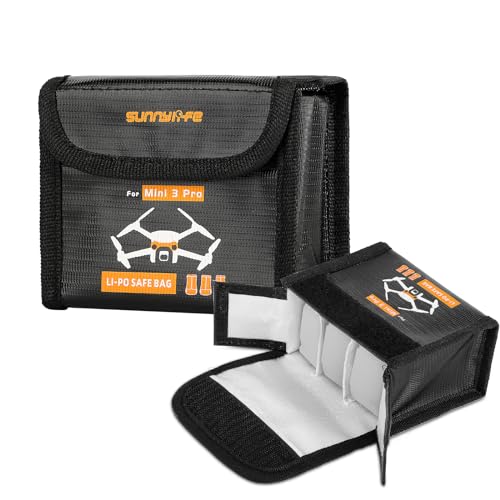
Flame Retardant Material: the inner fabric is made of high flame-retardant nylon fiber, and the outer material is pvc flame-retardant cloth.heat resistance,explosion proof,and fireproof.

Tenergy large lipo zipper bag for charging and storing LiPO batteries, battery packs.
Check Your Drone’s Battery Size Before Traveling

Hey there! Before we take our drones on that epic adventure, let’s talk about checking the battery size first. It’s super important to know that your drone’s battery needs to be under the 100 watt-hour (Wh) limit. If it is, then you can stash it in your carry-on without any hassle.
Now, if your battery measures between 101 and 160 Wh, you’ll need to keep in mind that you’re only allowed to bring two spare batteries on board. One thing to remember is that the Federal Aviation Administration (FAA) says you can’t pack spare lithium batteries in checked luggage; they have to be in your hand luggage. So really, double-check your battery specs before you head to the airport.
Also, don’t forget that each airline can have its own rules about carrying drone batteries. For example, some airlines might limit the number of batteries you can bring or have specific packaging requirements. It’s a good idea to check with them ahead of time so you aren’t caught off guard when you’re at the airport. Now that you’re all set about the batteries, let’s go over some tips for traveling with your drone gear!
Make sure to look for batteries with built-in Battery Management System protection to ensure safety during travel.
Recommended Products
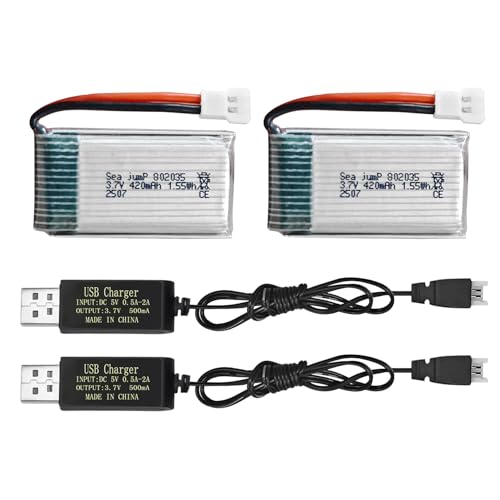
Compatible with most quadcopters, remote-controlled drones, gliders, and robot batteries (can only be installed if the voltage, size, and plug match).
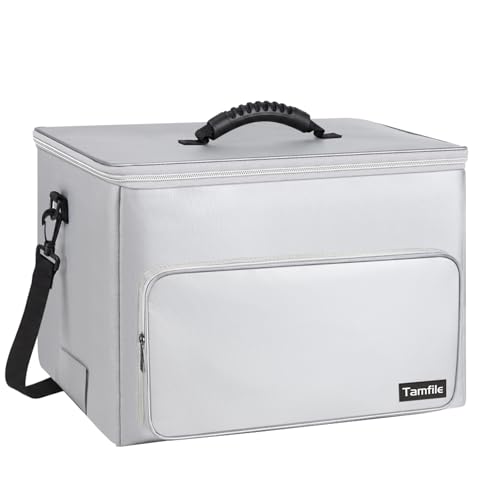
LIPO BATTERY STORAGE BAG: A fire-resistant lipo bag made of three-layer refractory materials (double-layer non-itching silicone-coated glass fiber + aluminum foil glass fiber cloth), which is safer and more reliable than other ordinary battery packs in case of fire or internal fire.
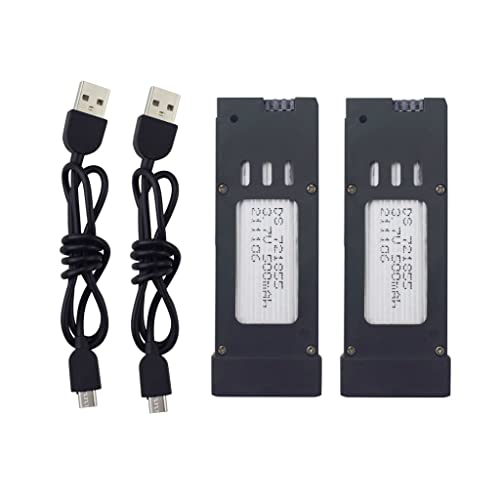
Battery compatible with E58 S168 folding quadcopter
Register Your Drone Before You Fly

Hey there! So, if you’re planning to fly your drone, make sure you register it first. It’s super important because the rules change from one country to another, and you definitely don’t want those regulations messing with your travel plans. For example, in the U.S., if your drone weighs more than 0.55 lbs, you’ll need to register it with the FAA. It’s pretty quick and only costs $5 for three years.
Now, if you’re in Europe or just visiting, keep in mind that drones weighing 250 grams or more must have a registered operator. This means you’ll have to get a unique ID number to stick on your drone. It’s a simple step but essential to help you avoid fines or penalties. So, taking a few minutes to do this can save you a lot of hassle later!
Before you head out on your drone adventures, just remember, registration is just the start. You’ll also want to check local flying rules to ensure you’re all set for a smooth experience in the skies! Additionally, using a polypropylene case to transport your drone can provide excellent protection against impacts and environmental damage during travel.
Research Local Drone Laws Before Traveling
Hey there! So, as we’re gearing up for our next adventure, let’s talk about local drone laws. It’s super important to understand the rules at our destination because they can really shape how we enjoy flying our drones. Each spot has its own regulations, and trust me, you don’t want to run into legal issues on your trip!
For example, many national parks and historical sites, like Yellowstone or Gettysburg, don’t allow drones at all without special permits. If you’re planning to visit places in Morocco, make sure to research the local laws—getting caught with a drone can lead to some hefty fines. And if we’re heading to Europe, just keep the EU’s drone categories in mind: Open, Specific, and Certified. They help clarify what’s allowed based on how you’re using your drone.
If you’re flying in the U.S., you can check out the FAA’s B4UFLY tool. It’s a helpful resource that shows federal and local airspace rules, so you can avoid any mishaps, especially at busy spots like Disney World, where drones aren’t allowed at all. Knowing these laws not only keeps you on the right side of the law but also lets you focus on capturing those amazing moments without stress. So, let’s keep these tips in mind as we plan our itinerary! Remember to also verify your drone’s weight for portability, as lightweight drones often have fewer restrictions when traveling.
Properly Pack Your Drone for Safe Transport
When it comes to transporting your drone, packing it correctly is key to ensuring it arrives safe and sound. It’s not just about understanding local drone laws; you want to make sure your gear is protected too! So, let’s chat about some easy steps you can follow to pack your drone for safe transport.
First up, opt for carry-on luggage instead of checked bags. This way, you can keep an eye on your drone, and there’s less chance of rough handling during the flight. Plus, when it comes to security screenings, having your drone easily accessible makes the process much smoother.
Next, grab a padded case or a specialized backpack. These are designed to give your drone the cushioning it needs during travel. And here’s a tip: always remove the propellers and any detachable components. This not only minimizes the risk of breakage but also makes for easier packing.
Now, let’s talk about batteries. Make sure to pack them securely in a designated LiPo bag. This prevents any accidental activation that could lead to problems, like a fire hazard. If you’re flying with the drone you bought, try to keep the original packing materials—they’re typically designed to keep your gear extra safe.
Choosing a case with custom-cut foam can significantly reduce the risk of damage by securing your drone and its accessories snugly in place.
Recommended Products

【Custom Design】YETEETH hard case specifically designed for DJI Mini 4K, Mini 2, Mini 2 SE Fly More Combo and other accessories.

Adjustable Internal Foam: The removable sponge foam allows you DIY the space to fit different products, such as digital camera, drones, and soft foam to prevent damage.

【All-Round Protection】This hard protective case with foam is designed for electronics and tools, providing reliable protection for your devices. It is compatible with cameras, portable air pumps, label printers, portable vacuums, game consoles, watches, and other daily essentials. Multiple sizes are available to meet different storage needs.
Understand Emergency Procedures for Safe Drone Usage
Hey there! Let’s talk about emergency procedures for safe drone usage—it’s something every drone pilot should take seriously. You know, when you’re up in the air, unexpected situations can pop up, so being prepared can really be a lifesaver. It’s key to get familiar with the emergency protocols in your drone’s user manual, especially when it comes to things like battery failures or equipment malfunctions. For example, if your drone suddenly loses battery power, knowing how to execute an emergency landing can save your drone from a crash.
And don’t forget about that handy Return-to-Home (RTH) feature! If you happen to lose signal during a flight, this function can automatically guide your drone back to where you launched it. I can’t tell you how many times I’ve seen pilots get anxious when they lose signal, but knowing how RTH works gives you some peace of mind. Plus, keeping an eye on the weather forecasts helps you decide when it’s best not to fly, ensuring that you’re prepared for any sudden changes. Also, understanding your drone’s battery life helps you plan flights better and avoid emergency situations caused by power loss.
Recommended Products
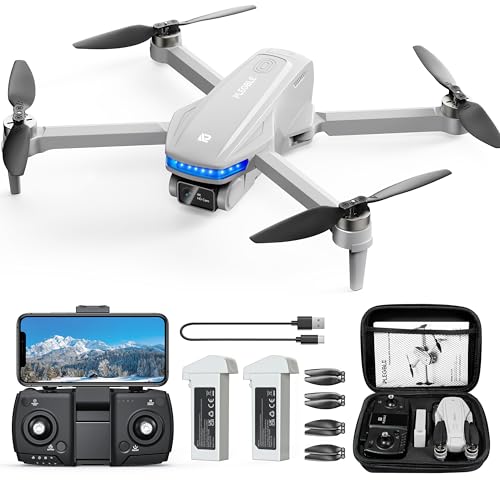
Smart GPS Functions: The professional drone is equipped with an advanced GPS module for safer, more reliable flights. It automatically returns to its takeoff point if it loses signal or runs low on battery—so you won’t have to worry about it flying off unexpectedly. Designed for pilots of all skill levels, it’s easy to control and packed with fun features like GPS Auto Return, Follow Me, Waypoint Flight, and Circle Fly. Explore more flight options and take your drone experience to the next level

【Drone with Camera with Smart Screen Controller】Experience stunning aerial views with the Karuisrc K600GPS drone! Featuring a 1080P 90° adjustable camera, this model is perfect for those searching for drones with camera for adults 4k. The innovative drone with screen on controller (4.5" display) offers real-time viewing without a phone, though it's also APP controllable. Perfect as an FPV drone for adults and kids.
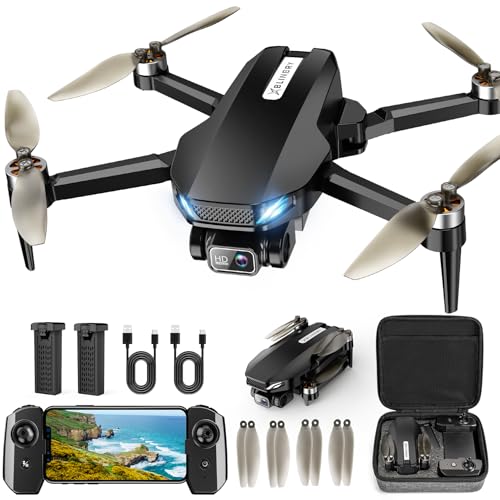
【2K HD Camera & 5G Real-time Transmission 】The 2K drone is equipped with a 90° electrically adjustable camera, enabling effortless adjustment of the camera angle for enhanced perspectives. Built-in shock absorption and 5GHz FPV transmission ensures smooth and stable videos. HD photos and videos can be saved directly to your phone through the app, making it easy to view and share your happy moments on social media.
How Can You Maximize Your Drone Photography While Traveling?
Want to make your drone photography truly shine while traveling? First up, it’s super important to check the local drone laws wherever you go. Different places have different rules, and you don’t want to end up with a fine or risk getting your drone taken away. For example, some parks might have no-fly zones or specific times when flying is restricted.
Next, a little prep goes a long way! Create a preflight checklist to make sure your drone is in tip-top shape—check the battery levels and remember to pack extras, along with spare memory cards. You want to be ready for those unforgettable moments. And before you take off, peek at the weather. Clear skies with a light breeze are perfect for getting those stable aerial shots.
Don’t forget to seek out unique spots that aren’t swarming with people. Think about heading to a lesser-known beach or a scenic overlook instead of the crowded tourist hotspots. This can lead to some breathtaking images without the hassle of waiting for the perfect shot. Finally, once you’ve captured your images, play around with your camera settings and post-processing techniques to really make those shots pop.
Using drones with features like obstacle avoidance can help protect your equipment and ensure safer flights in unfamiliar territories.
With these tips, you’ll be well on your way to enhancing your drone photography while exploring new places! And once you’ve got those stunning pics, let’s talk about how to share them effectively to showcase your travel adventures.
Recommended Products
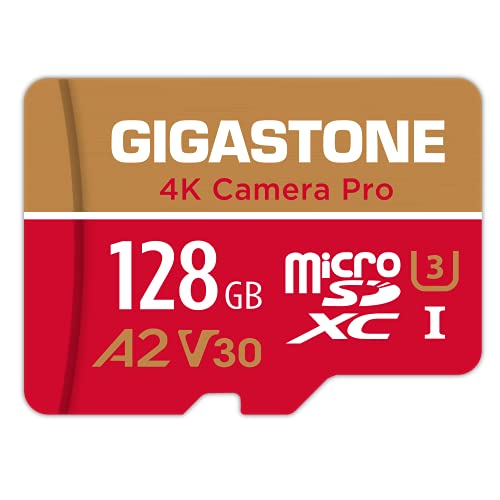
[Speed] Read/Write up to 100/50 MB/s, V30 speed grade, Ultra HD (UHD) 4K video recording, UHD 4K gaming.

Potensic 128GB Memory Card for Drones x 1

High-Performance: SanDisk Micro SDXC 128GB Extreme Memory Card, ideal for DJI Mini 4 Pro drones.
Stay Updated on Drone Regulations and Technology Advances
Hey there! If you’re flying drones, staying updated on drone regulations and the latest technology is super important. You know how fast rules can change? It’s a good idea to keep an eye on aviation news from groups like the FAA and EASA. For example, just last year the FAA made some changes affecting where you can fly drones in urban areas. Staying informed helps you avoid any unpleasant surprises.
Joining online drone communities and forums is a great way to share experiences and get the scoop on new tech. Plus, using apps like Aloft and B4UFLY can give you real-time updates about local flying rules and airspace. Just imagine planning a trip and knowing exactly where you can safely fly your drone!
Another practical tip is to attend workshops or webinars. They can really help you grasp compliance requirements and keep your flying adventures legal and safe. Lastly, don’t forget to regularly check your drone manufacturer’s website. They often post updates and safety notices that can impact how you use your gear. Staying connected to this information means your next flight will be smooth sailing! Incorporating knowledge about FAA regulations and drone capabilities can also enhance how you manage your drone flights effectively. What’s next on your drone adventure list?
Frequently Asked Questions
How to Travel With a Drone on a Plane?
When we travel with our drones, we should follow drone travel tips, check airline regulations, and use smart packing solutions. Keeping batteries and the drone in carry-on luggage guarantees both safety and compliance.
Where Should I Pack My Drone When Flying?
When flying, we should always pack our drone in carry-on luggage, using proper packing materials. Let’s confirm we follow battery regulations and explore various drone storage solutions to keep it safe and secure!
Will the FAA Know if I Fly My Drone?
Yes, the FAA can know if we fly our drone. By adhering to FAA regulations, following airline policies, and keeping our drone registration updated, we can avoid unnecessary scrutiny and potential penalties for improper flying.
Where Do I Put My Drone When Flying?
When we’re flying, let’s stash our drone in carry-on luggage, symbolically cradling it like a fragile bird. We’ll follow travel regulations and guarantee battery safety, protecting our aerial companion for adventures ahead.


