As an Amazon Associate, we earn from qualifying purchases. Some links on this site are affiliate links at no extra cost to you. Our recommendations are based on thorough research and editorial judgment.


Understanding Archaeological Applications of Drone Photogrammetry

Drone photogrammetry is revolutionizing archaeology by providing aerial perspectives that reveal hidden structures and preserve cultural heritage. It allows us to document sites without disturbing artifacts, capture thousands of high-resolution images, and create detailed 3D models for analysis. By using advanced technologies like thermal imaging and machine learning, we can uncover buried features and improve data accuracy. Drones also facilitate public engagement through shared models and collaborative projects, enhancing the understanding of our historical landscape. There’s much more to explore in this fascinating field.
Key Takeaways
- Drone photogrammetry provides unique aerial perspectives, revealing hidden archaeological structures and landscapes while preserving cultural heritage.
- High-resolution drones capture thousands of images quickly, enabling detailed 3D models for efficient analysis and excavation planning.
- Thermal imaging technology can uncover buried sites by detecting underground temperature variations, enhancing archaeological documentation.
- Machine learning integration sharpens feature detection and site mapping, vastly improving archaeological analysis accuracy.
- Successful case studies demonstrate drone applications in documenting, preserving, and understanding historical sites across diverse environments.
How Drone Photogrammetry Transforms Archaeological Research

You know, drone photogrammetry is really shaking things up in archaeological research! It’s amazing how drone photography lets us see landscapes from above, revealing treasures that are often hidden when you’re on the ground. For instance, researchers can spot the outlines of ancient structures or even roads that would otherwise go unnoticed.
What’s even cooler is how we can combine these aerial views with Remote Sensing techniques. This means we can analyze and preserve archaeological sites with a level of detail we’ve never had before. Take thermal imaging, for example—drones equipped with this technology can uncover structures buried beneath the earth. Imagine finding an old foundation or a forgotten burial site just a few feet below the surface!
These aerial images also help us create detailed 3D models of sites, which makes it a breeze to analyze findings and plan excavations. It’s like putting together a puzzle but much more exciting! By joining these advancements, we’re not just learning more about our past—we’re also doing a better job of protecting our cultural heritage for future generations. It’s a fascinating time to be involved in archaeology! Using high-quality optical glass enhances the clarity and accuracy of these photogrammetric images, making the data even more valuable.
Recommended Products
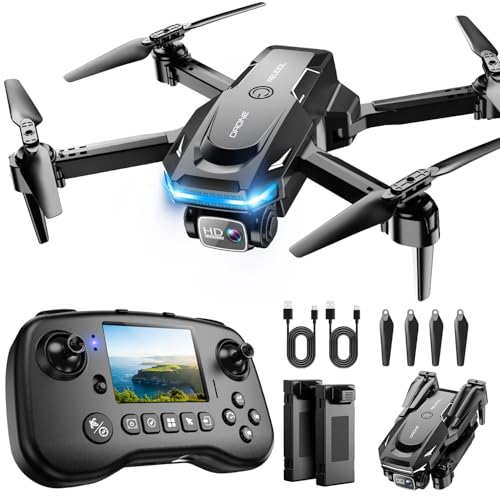
The PK01 drone's remote comes with a super handy built-in screen—no phone needed—so you can watch live HD footage and check flight stats right in your hands. (An SD card is required to save images and videos; not included) Powered by tough brushless motors, this little flyer is strong, smooth, and built to last. With one-key takeoff/landing, headless mode, and even 360° flips, you’ll look like a pro in no time. Ready for takeoff?🤩

Smart GPS with Auto Return: Designed for pilots of all skill levels, this 4K drone offers precise positioning for smarter operation. Key functions include One-key Return, low-power auto return, GPS lock, and compass calibration. Easily execute creative shots like Rocket, Helix, Follow Me, and Circle Fly, enabling reliable performance in various environments

【Ultra-Long Control Range】With an astonishing control distance of 2,650 feet, it far surpasses other drones that only offer a control distance of 250 feet. This extended range enables your drone to soar freely and unrestrainedly in the sky.
Benefits of Using Drones for Archaeological Documentation

You know, drones have really transformed how we document archaeological sites. These high-tech gadgets come with high-resolution cameras that make it super easy to take tons of aerial photos quickly. Imagine being able to capture thousands of shots in just a few hours! This not only helps us create detailed 3D models of the sites, but it also allows us to document cultural heritage without harming the original artifacts, which is pretty important.
For instance, when we’re working in sensitive environments like ancient burial grounds, we can fly drones over the area to survey it without disturbing anything on the ground. Plus, with tools like photogrammetry, we can analyze how different layers of soil and artifacts relate to each other, giving us insights that were hard to get before. And when we add machine learning to the mix, we can really sharpen our ability to detect features and map out sites effectively.
It’s fascinating how technology can preserve the past while paving the way for a deeper understanding of our history. Moreover, drones equipped with 3-axis brushless gimbals ensure image stability crucial for accurate archaeological mapping. Speaking of deeper understanding, let’s dive into how these methods influence our research and discoveries in the field!
Recommended Products
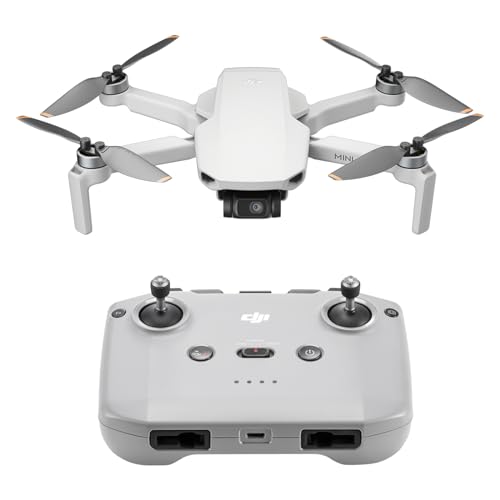
No Registration Needed - Under 249 g, this drone with camera for adults 4K does not require FAA registration or Remote ID for recreational use. Visit the FAA's official website for requirements related to drone registration and Remote ID. [1]

Lightweight and Portable: The drone with camera 4k for adults comes with weight of below 249g, compact and portable, without FAA or Remote ID registration, ideal for for outdoor enthusiasts

No Registration Needed - Under 249 g, this drone with camera for adults 4K does not require FAA registration or Remote ID for recreational use. Visit the FAA's official website for requirements related to drone registration and Remote ID. [1]
Essential Technologies for Effective Drone Photogrammetry

If you’re excited about using drone photogrammetry in archaeology, there are some key technologies you definitely want to have in your toolkit! For starters, high-resolution drones like the DJI Phantom 4 RTK can be a game changer. They provide real-time kinematic positioning, which means your maps of archaeological sites will be super accurate. Imagine capturing every little detail of those ancient ruins!
Once you’ve got your aerial images, you can use software like Pix4D or Agisoft Metashape to transform those photos into detailed 3D models and orthomosaics. This really helps with documenting sites. For example, if you’re mapping an ancient city, these tools allow you to visualize the layout and even share it with fellow researchers or the public in a user-friendly way.
And here’s something cool: thermal imaging drones, like the Parrot ANAFI Thermal, can help you spot features beneath the ground. By detecting temperature differences, you might uncover hidden structures or artifacts—think of it as a way of peeking below the surface without digging! Plus, with multi-spectral imaging, you can differentiate between various surface materials. This not only enriches your understanding of the site but also helps you piece together its historical context.
For enhanced vegetation analysis around archaeological sites, integrating wide-angle lens NDVI cameras on drones can provide detailed insights on plant health and land conditions that may reveal subtle site features.
Drone Case Studies in Archaeology
So, let’s talk about how drone photogrammetry has been a game changer in archaeology. It’s fascinating to see how these flying gadgets are used to capture stunning images and create 3D models of historical sites. For example, back in 2018, the National Trust for Scotland used drones to survey a whopping 250 miles! They took 4,000 super high-resolution aerial images, which allowed them to build a detailed 3D model of the landscape.
And it doesn’t stop there! The Visualizing Qatar’s Past project cleverly combined thermal imaging with photogrammetry. This combination helped archaeologists effectively document the Ruwayda site, revealing layers of history that might be missed by the naked eye.
In Jordan, drones played a crucial role in monitoring archaeological sites and documenting the unfortunate looting activities between 2013 and 2018 as part of the Landscapes of the Dead project. This monitoring is vital for understanding the impact of such actions on our shared heritage.
Drones are also making a difference in Peru, where they’re being used to create 3D models that aid in preservation efforts. And in another exciting revelation, aerial surveys in Jordan have uncovered Neolithic structures, which give us invaluable insights into ancient communities and their ways of life.
It’s amazing to see how these technologies offer a fresh perspective on archaeology. They not only help us uncover the past but also inspire us to think about how we can protect these treasures for future generations. Using waterproof cases for drone gear ensures protection during difficult terrain and weather, safeguarding the technology that powers these discoveries. Now, let’s explore more about the technologies that are pushing these projects forward!
Recommended Products

No Registration Needed - Under 249 g, this drone with camera for adults 4K does not require FAA registration or Remote ID for recreational use. Visit the FAA's official website for requirements related to drone registration and Remote ID. [1]

1080P Adjustable Camera: Enjoy aerial views with this drone with camera, featuring a 1080P HD camera adjustable up to 90° for the perfect angle. Capture photos and videos using simple gesture control, or use it to check rooftops and other hard-to-reach areas. Perfect for capturing fun moments indoors and outdoors.
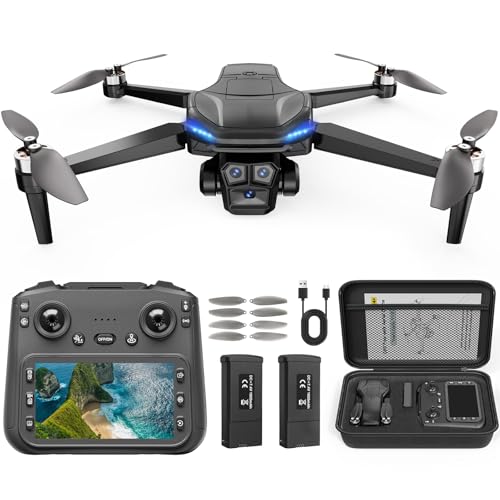
Real-Time 4K Transmission: This FPV drone is equipped with a 4K high-definition camera, providing real-time video transmission to your phone or the built-in 4.5-inch display on the controller. You can capture stunning aerial photos and videos and save them directly to your device as you fly. The camera lens tilts up to 90°, giving you multiple shooting angles for more creative footage.
What Challenges Come With Using Drones?
Hey, have you ever thought about how drones are being used in archaeology? They’re pretty fascinating tools, but there are quite a few challenges researchers face when trying to use them. For starters, the regulations set by the FAA can really slow things down. It’s not as simple as just launching a drone and getting to work; they have strict rules that can get pretty complicated.
One major hurdle is the concern over privacy and airspace rights. For instance, if a drone flies over private property, it can lead to legal trouble. Plus, there’s the ethical dilemma of whether flying drones near cultural heritage sites might disturb them. Researchers also have to think about logistics – flying a drone isn’t just pressing a button. They often need specialized training to operate them effectively, and there’s a cost associated with the equipment too.
Even with these challenges, it’s crucial for us to find ways to work through them. Drones have the potential to make archaeological surveys more efficient and accurate. The use of weather-resistant equipment can also be a significant factor in fieldwork longevity. As this technology evolves, I can only imagine how it will shape the future of archaeology. But before we dive deeper into the exciting applications of drones in the field, let’s take a closer look at those regulatory hurdles.
Recommended Products

Carrying Case for DJI Neo: The FSIDIWT carrying hard case is designed for DJI Neo drone and accessories(ONLY FOR DJI NEO)

Specially Designed: This storage case is specially designed for DJI Neo 2 Drone. (Incompatible digital transceiver). Extremely lightweight and compact, it easily fits into a backpack or travel bag, reducing the burden of carrying gear for aerial photography on the go

Spacious Main Pocket: Features a large main zipper pocket and 3 front side pockets to accommodate various photographic equipment and accessories.
Future Trends in Drone Photogrammetry and Archaeology
Hey! Have you ever thought about how drones are changing archaeology? It’s pretty exciting! While there are some challenges right now in using drones for archaeological work, the future trends in drone photogrammetry are something to look forward to. For instance, advancements in artificial intelligence and machine learning are set to really improve how drones detect features and analyze sites. Imagine going from spending hours sifting through data to having the drone help pinpoint important structures on the ground almost instantly!
Another cool aspect is the addition of multi-spectral and thermal imaging. This technology means we might be able to see subsurface features that we couldn’t before. Think about how helpful that would be when searching for hidden structures. Plus, there’s gonna be user-friendly mapping software that could make it so much easier for even amateur archaeologists to conduct detailed surveys. With everything becoming more accessible, we can expect more people to get involved in exploring our history.
And let’s not forget about battery life and payload capacity. With ongoing improvements, drones will be able to cover larger areas, making documentation of vast landscapes much more efficient. Imagine documenting an entire ancient site in a fraction of the time it currently takes! Finally, platforms for sharing 3D models and maps will really bring the community together, allowing more people to engage with the stories behind the artifacts we uncover. The way we interact with our cultural heritage is on the brink of transformation, making archaeological conversations richer and more engaging! Additionally, advanced 3-axis gimbal stabilization in drones will ensure clearer and more stable aerial images, which is crucial for precise archaeological mapping.
Frequently Asked Questions
How Are Drones Used for Archaeology?
We use drones for archaeology through drone mapping and aerial surveys, aiding in artifact documentation, site monitoring, and landscape analysis. This technology revolutionizes archaeological imaging, allowing us to capture detailed data efficiently and accurately.
What Is Photogrammetry in Archeology?
Photogrammetry in archaeology involves using drone technology for data collection, enabling precise site mapping and 3D modeling. This technique enhances spatial analysis, preserving cultural heritage while capturing critical information about archaeological sites efficiently and accurately.
What Is the 50 Year Rule in Archeology?
We understand the 50 Year Rule is essential for site preservation, classifying artifacts as historic. It intertwines archaeological ethics, historical context, and technology integration, guiding us in remote sensing and ensuring data accuracy in preserving our past.
What Is the RPA in Archaeology?
The RPA in archaeology involves remote sensing for digital mapping, aiding in site documentation and archaeological surveys. It enhances landscape analysis and plays a crucial role in heritage preservation by monitoring and documenting significant sites efficiently.