As an Amazon Associate, we earn from qualifying purchases. Some links on this site are affiliate links at no extra cost to you. Our recommendations are based on thorough research and editorial judgment.


Understanding LiPo Battery Technology in Camera Drones

LiPo batteries, or lithium polymer batteries, are vital for camera drones, offering high energy density and lightweight design for extended flight times. Their nominal voltage of 3.7 volts allows quick responses from motors, enhancing maneuverability. With discharge rates ranging widely, they can provide bursts of power needed for aerial maneuvers. However, understanding specs like capacity, voltage ratings, and safety precautions is essential for ideal use. Let’s explore how these batteries work and their importance in drone technology.
Key Takeaways
- LiPo batteries offer high energy density, essential for extended flight times in camera drones without adding unnecessary weight.
- A nominal voltage of 3.7 volts enables rapid motor speeds, improving stability and responsiveness during aerial photography.
- High discharge rates (20C to over 100C) are crucial for quick power bursts, enhancing maneuverability in capturing dynamic shots.
- Proper charging, such as using a specialized LiPo balance charger, ensures safety and longevity of the battery.
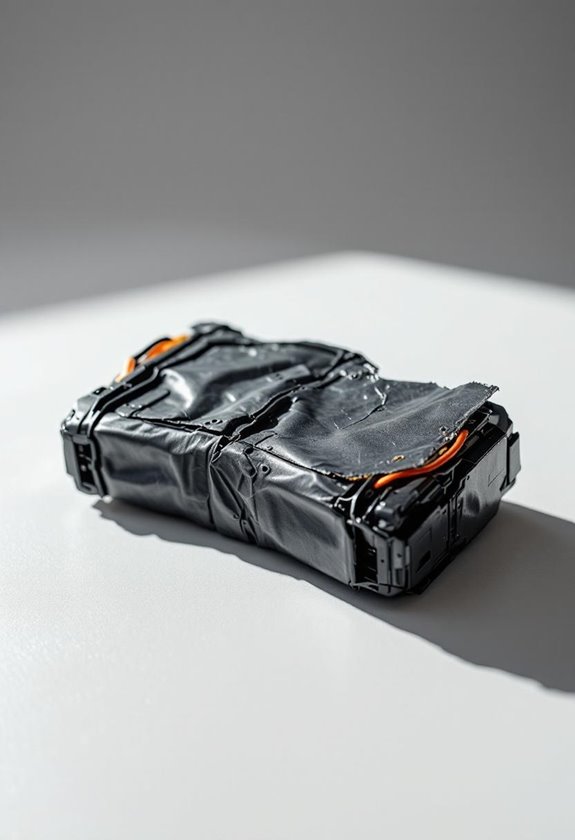
- Monitoring for signs of battery damage, like swelling or voltage drops, is vital for maintaining drone performance and safety.
What Are LiPo Batteries and How Do They Work?

Hey there! So, have you ever wondered what LiPo batteries are all about? You know, those lithium polymer batteries that power so many things these days, especially drones. They work by using a lightweight combination of a lithium-based cathode and an anode, which gives them their impressive power without adding too much weight. One neat feature of LiPo batteries is that they use polymer electrolytes, which allow for a super high energy density—often between 140 to over 200 watt-hours per kilogram. This is why drones can be so compact and still fly for a good amount of time!
Now, if we break it down a bit, a single LiPo cell usually has a nominal voltage of around 3.7 volts. But if you connect multiple cells in series, you can easily boost that voltage. The way they work is pretty fascinating—they discharge energy through the movement of lithium ions. This movement enables high discharge rates, which means these batteries can handle substantial current draw. For example, if you’re racing a drone, you’ll want a battery that can keep up with quick bursts of energy without lagging.
But with great power comes great responsibility. You have to be careful when handling these batteries since improper use can lead to safety issues like thermal runaway. They can get quite hot if you aren’t mindful, so always store them properly and use a fireproof bag when charging. This way, you can enjoy all the benefits of LiPo batteries safely! Speaking of safety, let’s move on to how to care for your LiPo batteries to ensure they last as long as possible. Additionally, choosing the right battery with appropriate discharge rates and capacity is crucial for optimal drone performance.
Top Benefits of LiPo Batteries for Drone Performance

Have you ever wondered why LiPo batteries are so popular in the drone world? Well, it mostly comes down to their impressive performance and efficiency. These little powerhouses pack a punch with high energy density—think of them as lightweight champions that give your drone longer flight times without weighing it down. For example, even with a capacity of about 3000 mAh, your drone can soar through the sky with ease.
Typically, each LiPo cell operates at around 3.7 volts, which is great because it means our drones can reach higher motor speeds, making them super responsive. Imagine trying to maneuver your drone through tricky spots; that quick response can really make a difference! Plus, they can handle a lot of power on demand, thanks to their high discharge rates ranging from 20C to over 100C. This ability allows for sudden bursts of speed, which is essential when you’re trying to outmaneuver something or capture that perfect shot.
Additionally, most LiPo batteries offer a long lifespan with 500-600 charge cycles, ensuring they remain reliable over time.
Recommended Products
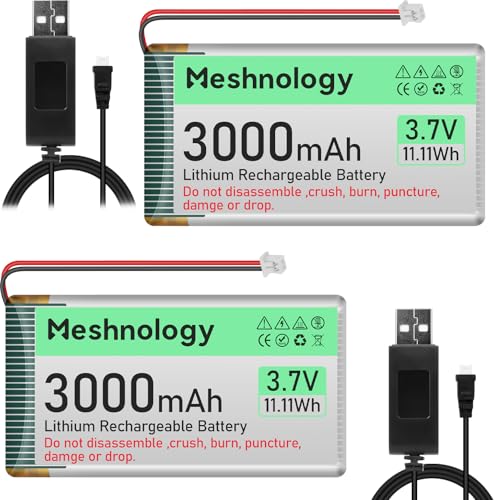
High Energy Capacity: Our 3.7V 3000mAh rechargeable lithium battery offers impressive power for your devices, ensuring longer run times and improved performance for your lipo drones, RC models, and development boards, including Arduino and Lora systems.

[Compatibility Notice] CONNECTOR TYPE IS JST PH2.0MM (2-Pin, 2.0mm Pitch). Please verify the exact size, connector type, and polarity match your device before purchase. An incorrect match may damage your device or this battery.
What Are LiPo Battery Specs You Need to Know?

If you’re getting into drones or just fancy some tech talk, understanding LiPo battery specs is super important. These batteries can really boost your drone’s performance, so let’s break down the key specs you need to know.
First off, we have battery capacity, which is measured in milliamp hours (mAh). This basically tells you how much energy the battery can store. For instance, if you have a 5870 mAh battery, you can expect about 30 minutes of flight time. That’s pretty impressive, right?
Next, there’s the discharge rate, expressed as a “C rating.” This rating shows how quickly the battery can deliver power to your drone. A 10C rating means that it can provide up to 58.7 amps for that same 5870 mAh battery. So, if you’re planning on flying aggressively or using a lot of power-hungry features, that rating is essential to consider.
Don’t forget about voltage ratings, which directly affect how fast your motor runs. Common setups include 4S (14.8V) and 6S (22.2V)—these numbers refer to the number of cells connected in series, which boost the overall voltage output. Higher voltage generally means more speed for your drone.
Also, keep an eye on internal resistance. The lower this value is, the more efficient your battery will be, and you’ll notice less heat when it’s working hard.
Choosing the right battery charger, especially one with smart technology, can significantly enhance battery efficiency and lifespan.
Understanding these specs can really help you pick the right battery for your needs. For instance, if you want to do some high-speed flying, you might prioritize a high discharge rate and a good voltage setup. By grasping these basics, you’re already on your way to becoming a more savvy pilot. Up next, we can look at how to maintain these batteries to ensure they last as long as possible!
Recommended Products

【Specification】Material: Lithium polymer; Battery voltage: 22.2V; Configuration: 6S1P; Cell voltage: 3.7~4.2V; Capacity: 1100mAh; Discharge: 130C; Plug: XT60.Dimension(±3mm) is 38*31*78mm/1.50*1.22*3.07inch(H*W*L) Approx Weight: 197.5g/6.97oz
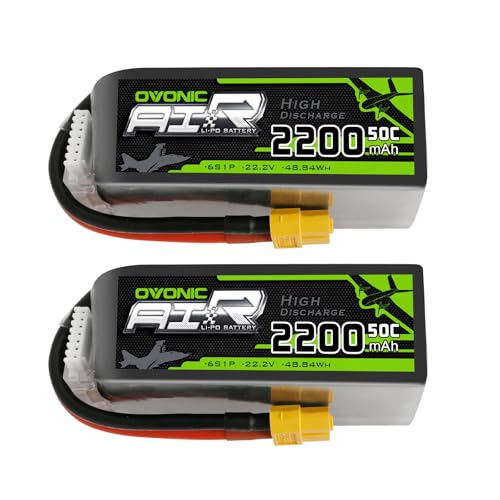
The OVONIC 6S LiPo battery delivers 22.2V with a 2200mAh capacity and a 50C discharge rate, providing strong and stable power for RC airplanes, helicopters, drones, and FPV applications.

【Zeee 6S 2200mAh Lipo Specification】- Battery Voltage: 22.2V; Configuration: 6S1P; Cell voltage: 3.2~4.2V; Capacity: 2200mAh; Discharge: 120C; Connector type: XT60 Plug.
Why Battery Configuration Matters for Performance
You know, battery configuration is really important when it comes to getting the best performance out of our drones. For example, when we use LiPo batteries in a 4S setup, we get around 14.8 volts, which really cranks up those motor speeds and helps everything run smoothly. Think about it this way: that extra power not only boosts the RPM but also keeps the drone steady, especially when we’re trying to capture those perfect aerial shots.
Another neat aspect is the C rating of the battery. A higher C rating means the battery can discharge more power at once, which is super useful for those times when we need to make quick altitude changes or sharp turns. It’s all about finding that sweet spot where we maximize battery capacity without adding too much weight, ultimately giving us longer flight times. Choosing batteries with a suitable discharge rate is essential to improve acceleration and overall performance in RC applications.
Recognizing Potential Hazards of LiPo Batteries
Hey! So, let’s chat about LiPo batteries. You might not think much about the potential hazards with these advanced battery technologies, but they do come with some risks. For example, overcharging a LiPo battery can be really dangerous. If you push it beyond 4.2 volts, you can set off something called thermal runaway, which can actually lead to a fire.
Now, if you ever find that your LiPo battery is swollen, that’s a big red flag that something’s not right. It means the battery is probably damaged or has reached the end of its life. It’s super important to handle it carefully at that point. To keep things safe, aim to charge each cell to around 3.8 volts instead.
Another smart tip is to use the low voltage cutoff (LVC) feature in your equipment. This nifty little setting helps prevent the battery from discharging too much, avoiding excessive current draw that could cause problems or even accidents. Staying aware of these details can help you use your batteries safely and avoid those nasty surprises. What’s interesting is that taking care of these batteries can really extend their life and performance. Let’s look at some safe charging practices next!
Using a pure sine wave inverter can also protect your sensitive electronics by providing stable and clean power during charging and operation.
How to Choose the Right LiPo Battery for Your Camera Drone?
Have you ever wondered how to choose the right LiPo battery for your camera drone? It’s actually pretty straightforward once you break it down. Start by looking at the battery’s capacity, which is measured in milliamp hours (mAh). For example, if you’re aiming for longer flight times, a battery between 1300mAh and 5000mAh would be ideal.
Next up is the C rating, which tells you how much current the battery can deliver. Going for a higher C rating, like 30C, is a smart move since it ensures that your drone can handle quick maneuvers without overheating. Imagine trying to do a fast turn—without enough current, it could struggle or even crash!
Then there’s the voltage configuration. Most camera drones typically use either a 4S (14.8V) or 6S (22.2V) battery setup. Make sure to check what your drone requires before purchasing. Lastly, pay attention to the battery’s weight. Yes, bigger batteries give you longer flight time, but they can also make your drone less nimble.
To wrap it all up, consider testing the maximum current draw of your battery against your drone’s specifications. This ensures you can achieve longer flight times while keeping everything running smoothly. You’ll be flying around in no time! So, now that you’ve got the battery basics covered, let’s talk about some tips for optimizing your drone’s performance in the air. Remember, using batteries with low self-discharge rates helps maintain charge even after long periods of storage.
Recommended Products

【Advantage】CNHL 1500mAh 4S lipo battery XT60 is designed with high-performance in mind, offering a discharge rate of up to 130C (Burst 260C). It has a fast charging capability and can quickly discharge high voltages, ensuring long cycle life.

【Zeee 4S battery 2200mAh specification】- Battery Voltage: 14.8V; Capacity: 2200mAh; Discharge: 120C; Cell: 4S; Plug: XT60 Plug.

🔋Parameter - Material: Lithium polymer, Voltage: 14.8V, Cell: 4S, Capacity: 1300mAh, Discharge: 100C, Charging plug: JST-XHR-5P, Discharging plug: XT60, Pack: Soft case
Best Practices for Charging and Maintaining Your LiPo Batteries
Hey there! Let’s chat about how to keep our LiPo batteries in great shape. Taking care of these little powerhouses is super important if we want to avoid any surprises mid-flight. To keep our batteries performing at their best, here are some tips that are easy to follow.
First off, always grab a specialized LiPo balance charger when it’s time to charge up. This kind of charger makes sure that each cell in the battery stays at a safe voltage, ideally not exceeding 4.2V. Think of it like using a reliable oven to bake a cake rather than just popping it in the microwave. You’ll get better results and fewer issues down the line!
While you’re charging, keep an eye on your batteries. It’s not a great idea to leave them unattended. For instance, pop them in the garage or a safe spot where you can check in on them periodically. Just a little attention can prevent mishaps!
When it’s time to store your batteries, aim for that sweet spot of around 3.8V per cell and put them in a fireproof location. Sure, it might sound a bit excessive, but a little precaution goes a long way. Plus, check the internal resistance from time to time; if it’s higher than expected, it might be time to consider getting a new battery.
Lastly, make sure you don’t drain your LiPo batteries below 3.0V per cell. Ideally, land your drone when they hit around 3.5V to prolong their lifespan. Just like how you wouldn’t want to run your car on empty, keeping a buffer on your battery is key.
It’s also a smart move to store and transport your batteries in a fireproof LiPo safe bag to minimize risks and enhance safety.
Recommended Products
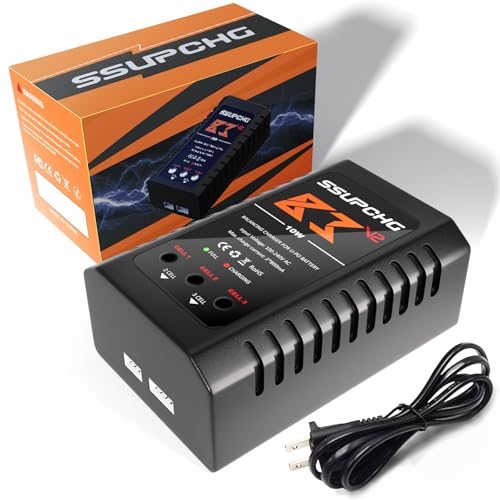
[Balance Charger with Smart Chip] Features a Smart Chip that ensures safe and optimal charging for every cell, extending battery lifespan and runtime while enhancing charging safety.
[Balance Charger with Smart Chip] Features a Smart Chip that ensures safe and optimal charging for every cell, extending battery lifespan and runtime while enhancing charging safety.

Type: USB Charger Cable; Quantity: 1 piece; Cable length: 63cm/24.8"
Reacting to LiPo Battery Issues and Emergencies
Hey there! You know, even with the best care, issues with LiPo batteries can pop up, so it’s important to be ready to handle them. If you ever notice that a LiPo battery is swelling, you have to act fast and dispose of it properly to avoid any risks. I recommend placing it in a fire-safe container and then checking for local battery recycling programs.
Now, if a battery catches fire—yikes!—here’s what to do: don’t pour water on it, as that could make it worse. Instead, grab some sand and smother the flames, or use a fire extinguisher designed for electrical fires. Believe me, keeping an eye on your battery’s temperature while charging is crucial too, because if it overheats, it can lead to something called thermal runaway, which is basically a fancy term for an explosion waiting to happen.
When you’re traveling with your LiPo batteries, make sure to follow TSA rules. Always keep them in your carry-on luggage and check that you’re within the watt-hour limits. And hey, investing in a fireproof bag for storage and charging is a smart move that adds an extra layer of safety. Additionally, using a Battery Management System can help monitor and protect your batteries against overcharging and overheating. So, what’s next? Let’s talk about the best practices for charging these batteries to keep your devices running smoothly!
Signs Your LiPo Battery Needs Replacement?
Hey! So, let’s chat about LiPo batteries and how to know when it’s time to replace them. Spotting the signs of a failing battery is super important, not just for your drone’s performance, but also for safety.
First off, one big red flag is swelling. If you see your battery puffing up a bit, that’s a sure sign it’s damaged—dispose of it immediately. Then there’s voltage to consider. If you ever notice a cell dropping below 3.0V while in use, it could be on its way to becoming unusable. For instance, if you have to land your drone earlier than normal because the battery is giving out, that’s something to note.
Another point to think about is flight time. If you used to get 20 minutes in the air and suddenly it feels more like 10, that’s a clear hint your battery’s capacity is waning. Similarly, if your battery struggles to hold a charge or takes ages to fill up again, it might be nearing the end of its lifecycle. And don’t forget about overheating! If your battery tends to get really hot after just a short flight or charge, that’s another sign of something going wrong.
Being aware of these signs helps keep your flying experience safe and fun. Once you get the hang of checking for these indicators, you’ll feel more confident about maintaining your equipment. And speaking of maintenance, let’s talk about how to properly care for and store your LiPo batteries to prolong their life! Regular inspection and testing are crucial to uphold battery performance and safety.
Recommended Products

Compatible with WLtoys SYMA Most Drone Quadcopters, Aerial drones, Gliders, Robot.

★ Size:L18*W14*H7mm;Weight:2.8 gram.Discharger Plug:1.25-2P Plug;Discharge Rate: 20C
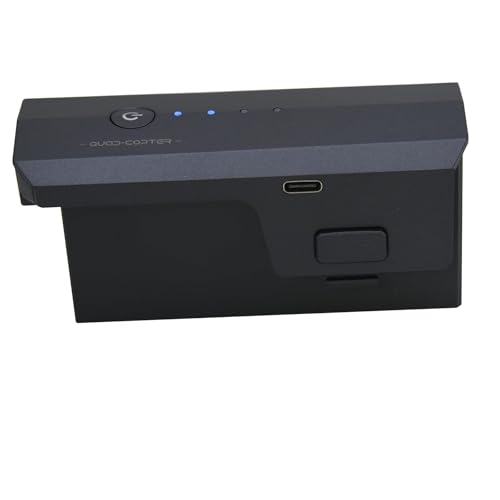
Battery capacity 11.1V 3S 2500mAh, Li-ion-polymer rechargeable battery. 27.75Wh. Package include:1 Battery, Battery dimensions approx L*W*H: 4.08*1.7*1.88 inch/ 103.5*48*43mm .
Tips for Safe Transport and Disposal of LiPo Batteries
Hey there! Let’s chat about the safe transport and disposal of LiPo batteries. These little powerhouses can be quite handy, but we need to handle them carefully to avoid any potential hazards. For starters, a great tip is to store your LiPo batteries in something fireproof—like a fire-resistant bag or a sturdy metal box. It’s all about keeping them safe when they’re not in use!
When you’re traveling, especially by air, you’ve got to follow TSA rules. They allow you to bring along up to three spare LiPo batteries in your carry-on luggage, which is pretty cool. Just make sure to check their condition. If you notice any swelling or damage, it’s a red flag. Also, keeping them at a storage charge of around 3.8 volts per cell can help them last longer.
And what about disposal? It’s super important! If you have a damaged battery, make sure to discharge it completely before recycling it. Look for dedicated recycling centers in your area—this helps prevent fire hazards and is good for the environment too. So, next time you’re thinking about using LiPo batteries, remember these tips to keep things safe and sound! Using certified fireproof battery bags adds an extra layer of safety by preventing heat penetration and minimizing fire risks during storage and transport.
Frequently Asked Questions
Can I Use a Lipo Battery From Another Drone?
We can use a LiPo battery from another drone, but we must consider battery compatibility issues, weight differences, and connector types. Let’s not overlook voltage matching and discharge ratings; safety precautions are essential too.
What Tools Do I Need for Lipo Battery Maintenance?
For proper LiPo battery maintenance, we need balance chargers, voltage regulators, discharge test equipment, and protective cases. Also, let’s follow maintenance schedules, charging etiquette, check connector types, and always observe safety precautions when handling.
How Can Temperature Affect Lipo Battery Performance?
When we use a LiPo battery in a hot environment, we notice a voltage drop and performance degradation. Cold temperatures can increase self-discharge rates, so managing thermal conditions is essential for battery efficiency and charging safety.
Are There Alternative Battery Types for Camera Drones?
Yes, we’ve explored alternatives like NiMH batteries, lithium ion technology, fuel cell options, and supercapacitors. Innovations like solar panel charging and battery swap systems also exist, but we must consider safety and industry trends when choosing.
How Long Do Lipo Batteries Typically Last?
LiPo batteries typically last about 300-500 charging cycles. Battery lifespan factors include maintenance best practices and storage conditions impact, while voltage stability effects and discharge rates influence capacity degradation signs we should monitor frequently.