As an Amazon Associate, we earn from qualifying purchases. Some links on this site are affiliate links at no extra cost to you. Our recommendations are based on thorough research and editorial judgment.

Understanding Weight Distribution in Drone Backpacks

When we pack our drone backpacks, understanding weight distribution is essential for balance and comfort during our adventures. We should pack heavier items, like batteries and cameras, close to the back and center, while lighter gear belongs at the bottom for stability. Distributing weight evenly side to side helps prevent soreness. Using waist belts and chest straps reduces shoulder strain. With the right techniques, we can optimize our packing and guarantee a more enjoyable experience on our trips. More insights await us ahead.
Key Takeaways
- Pack heavier items close to the back and center to maintain balance and prevent tipping during transport.
- Distribute weight evenly from side to side to avoid discomfort and soreness after long hikes.
- Utilize designated compartments and custom foam inserts to protect gear and prevent weight shifts.
- Position lighter items at the top and heavier items at the bottom for enhanced stability.
- Use adjustable straps, including waist and chest straps, to help relieve shoulder strain and improve weight distribution.
Foundational Understanding of Drone Backpack Weight Distribution

Packing a drone backpack the right way—especially focusing on weight distribution—can really make a difference in how easily you can carry it. Imagine this: you’re hiking a few miles to your perfect filming spot, and if your gear isn’t balanced, it can start to feel like a workout!
Start by putting the heavier items, like your drone and extra batteries, close to your back and centered. This helps keep your balance steady as you move. For lighter items, such as clothing or a rain jacket, pack those at the bottom. This adds stability and prevents your backpack from toppling over when you set it down.
Now, if you’ve got moderately weighted items, try to position them further away from your back. This can help reduce any jostling as you hike. And when you’re loading everything in, aim to distribute weight evenly side to side. This simple trick can save you from annoying soreness after a long day of shooting.
Also, don’t forget about the little things that can make a big difference. A good backpack with features like a waist belt and chest straps can take a lot of weight off your shoulders. With these adjustments, you’ll feel lighter on your feet and be ready to tackle whatever adventure comes your way!
To further enhance comfort, look for backpacks with padded straps and ergonomic designs that promote better support during long carries.
Importance of Correct Weight Placement for Optimal Stability

Hey there! You know how important proper weight placement is for your drone backpack, right? It plays a crucial role in keeping your drone stable during flight. If we want our flying buddy to soar smoothly, we really have to pay attention to how we stack our gear.
First off, it’s a smart move to pack heavier items close to the back and in the center. Think of it like balancing a seesaw: placing weight in the middle helps prevent tipping over. For example, if you have a bulky battery or some extra propellers, those should definitely go near your back. Then, for those moderate-weight items, try to position them a bit further from your back. This way, you’re balancing the load more evenly, which helps keep everything aerodynamic.
Now, let’s talk about those light items. Keeping them on top works wonders for overall weight distribution. Imagine if you stuffed all your snacks and spare cables at the bottom—it could really throw things off! And don’t forget about keeping everything even from side to side. If one side is heavier, your drone could veer off course and not fly as efficiently. Using a backpack with custom foam inserts can also help keep your gear securely in place, preventing shifts in weight while you move.
Recommended Products

𝐁𝐚𝐠 𝐒𝐡𝐚𝐩𝐞𝐫 𝐈𝐧𝐬𝐞𝐫𝐭: This backpack insert offers the only solution to an uncomfortable experience with any unframed backpack. Set your gear for ultimate support and comfort throughout your camp, hike, or survival training!

COMPATIBLE WITH DJI MINI 4 PRO/MINI 3/PRO: The shell shape of this mini 3/4 pro case is unique and specially designed based on a 3D diamond cut surface, making you stand out and your exploring adventures distinctive. The foam inserts inside of the mini 3/4 pro bag used for the equipment positions are custom cut and sized 100% compatible with DJI Mini 4 Pro/Mini 3/Pro accessories.

COMPATIBLE WITH DJI MINI 4 PRO/MINI 3/PRO: The shape of this Mini 4 Pro case features a sleek, 3D diamond-cut design that reflects a modern, tech-forward look. Custom-cut foam inserts for device locations are perfectly sized to fit DJI Mini 4 Pro/Mini 3/Pro drone, DJI RC 2/RC/N3/N2/N1 Controller, Two-Way Charging Hub, 3 Batteries, Charger and Cables. Plus, the Mini 3/4 Pro bag offers a mesh pocket to place Propellers, Screwdriver and other Fly More Combo accessories.
Effective Techniques for Organizing Your Drone Gear

When it comes to organizing your drone gear, proper weight distribution plays a big role in making sure everything is easy to access and transport. Think about it this way: if you place heavier items, like batteries and cameras, at the bottom of your backpack, you create a stable base that prevents your gear from tipping over during travel. This simple trick can really make a difference in keeping your setup balanced.
Now, for those medium-weight items, such as spare propellers and tools, try to spread them out evenly throughout your backpack. This helps avoid that awkward tilting you might have experienced before. And don’t forget to use the designated compartments in your pack! Keeping everything in its own designated spot not only minimizes damage but also lets you grab what you need quickly while you’re out in the field.
Another neat tip is to roll your clothing or any soft items vertically. This helps fill up any gaps and adds extra stability to your gear. Plus, once you’ve loaded everything, it’s a good idea to compress the backpack with straps to keep everything snug and secure during transport. This extra step ensures that your drone gear stays organized and ready for action, whether you’re heading to the park or flying at a scenic location.
Using a drone backpack with custom compartments can greatly enhance protection and organization for your gear.
With your gear neatly packed and balanced, you’ll be set to explore the skies without a hitch! Let’s move on to some essential accessories that can make your flying experience even better.
Weight-Bearing Techniques for Comfort
Hey there! You know, when you’re out there lugging around all that drone gear, figuring out how to keep comfortable is super important, especially on those long hikes. One big thing that helps with that comfort is using a properly fitted backpack. It’s amazing how much difference it makes when the weight is balanced on your hips and pelvis instead of just your lower back.
For example, consider getting a waist belt. It’s a simple addition that can take some of the weight off your shoulders when you’re toting more than 20 pounds. I’ve found that internal frame packs are awesome for support—they really help distribute the weight evenly and keep your center of gravity in check. Plus, don’t forget about chest straps! They can really hold everything in place, so you don’t feel like you’re fighting with your backpack as you trek through rough terrain.
Also, try regularly shifting the weight around as you walk. It might sound a bit tedious, but it really does help prevent sore spots from forming. Moving that load every now and then can keep you feeling fresh the whole journey. And remember, staying comfortable is all about listening to your body and adjusting as you go. Speaking of adjustments, let’s chat about how to plan your breaks strategically! Using protective gear such as padded straps and cushions can also reduce strain and enhance comfort during long carries.
Recommended Products

1. Keeps Shoulder Straps Securely in Place .That gives your hand free.

Made from lightweight and durable nylon RFID protection technology inside the waist belt

Superior Comfort for Long Days: Engineered with a wide, thickly padded, and breathable main belt that evenly distributes the weight of heavy gear. Features a unique abdominal pad behind the buckle to prevent digging and discomfort during extended shooting sessions.
How to Find the Perfect Backpack for Your Drone?
So, you’ve got your drone and you’re ready to hit the skies, but do you have the perfect backpack to carry all your gear? Finding a backpack specifically designed for your drone equipment is super important, and I’ve got some tips to help you choose the right one.
First off, consider going for an internal frame pack. These are great because they give solid support and distribute weight better, which means you can carry your drone and all its accessories without feeling like you’re lugging a ton of bricks. For example, a pack with an internal frame can help you stay comfortable on long hikes while capturing stunning aerial footage.
Next, make sure the backpack has adjustable straps. Look for ones with chest and waist belts—it really helps relieve pressure from your shoulders! Trust me, after a day of filming, you’ll be thanking yourself for choosing a backpack that prioritizes comfort.
Organization is key, so check for compartments or customizable dividers. This way, you can easily keep your drone parts sorted. Imagine reaching into your bag and quickly finding your extra batteries or propellers without having to dig through everything. It’s a game saver!
Now, let’s talk materials. You’ll want something that’s weather-resistant because the last thing you want is rain ruining your gear. A durable, water-resistant cover or fabric can make all the difference on those unpredictable days.
Lastly, always keep an eye on the backpack’s capacity and weight limits. You don’t want to overload your pack and risk damaging your gear or hurting your back during transport. Finding a balance between space and stability is crucial.
Considering the weather resistance features of the backpack can significantly enhance the protection of your drone equipment in various outdoor conditions.
With these tips, you’ll be well on your way to finding the perfect backpack for your drone. Now, let’s chat about some must-have accessories to make your drone experience even better!
Recommended Products
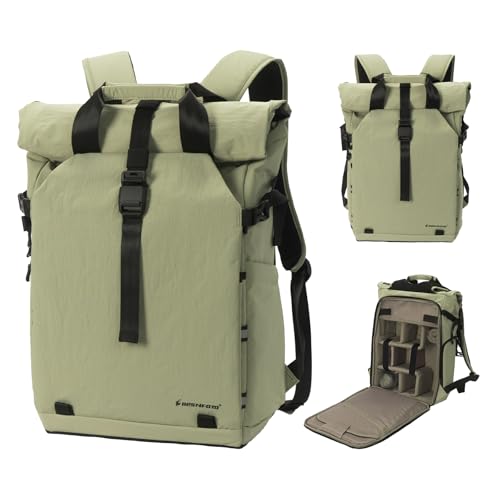
Features an innovative roll-top opening that easily expands from 18L to 22L, offering extra flexible space for clothes, travel gear, or daily essentials. The center internal divider can be fully removed to merge the upper and lower sections into one spacious main compartment, seamlessly adapting from a dedicated photography bag to a large everyday travel backpack.
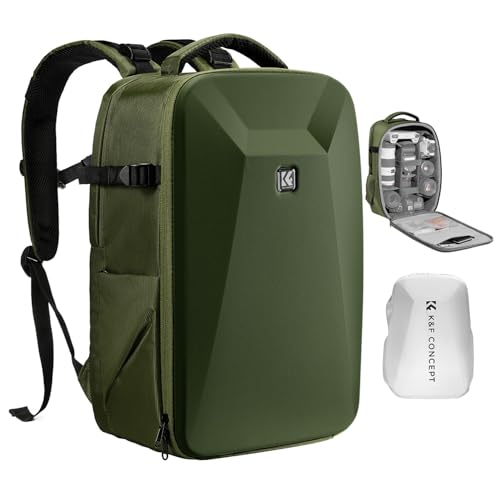
【Hardshell Camera Bag】Extenal Size:17.3 x 11 x 7 inches.Capacity:22L This multi-functional hard shell camera backpack is designed for different brands of DSLR/SLR/Mirrorless cameras. The removable modular inserts as customized dividers for different cameras, flashes and lens. The back pocket is a laptop compartment which can store up to 15.6 inches laptop.

Dimension:17.13 x 11.81 x 8.27 inch. 3 compartments included. The upper pocket is for storing clothes,shoes,towels or food,fruit and some daily necessities. The lower one (11.41 x 10.24 x 6.29 inch) is for different cameras, flashes, lens and drones. You can organize the inner padded to adjust the inner storage space according to your needs. The back laptop compartment is compatible with most 13-13.3 inch, 14 inch, 15 inch, 15.4 inch, 15.6 inch and up to 16 inch
Managing Drone Backpack Weight During Varied Weather
When you’re getting ready for a drone flight, managing the weight in your backpack is super important, especially when the weather keeps changing. For instance, if it’s windy, you’ll want to make sure any heavier gear, like extra batteries or tools, is packed close to your back and centered. This helps you keep your balance and avoid getting tossed around as you walk.
On those hot, sticky days, think about swapping out some heavier gear for lighter options. It not only saves you some effort but also helps your batteries last longer since they don’t have to work as hard. Now, if it’s raining, avoid putting heavy items on top. Instead, pack them at the bottom of your bag to keep the center of gravity low, making it easier to maneuver your drone.
And when temperatures drop, try to keep those high-capacity batteries at the top of your pack. Cold can sap their power, so keeping them warm means you’ll get more flight time. Regularly checking how you’ve packed your backpack helps prevent any performance hiccups, ensuring you have a great time flying. It’s all about being smart with your gear for whatever weather comes your way!
Additionally, using multi-coated filters—which provide enhanced light transmission and reduce glare—can improve your drone’s camera image quality, no matter the weather conditions.
Recommended Products

【6 Pack Snap On Drone Lens Accessories】 The kit for your drone gear includes 4 x Neutral Density filter (ND4/ND8/ND16/ND32), 1 x circular polarizing filter, and 1 x UV filter, compatible with DJI Mini 4K Drone with 4K UHD Camera for Adults/ Mini 2 / Mavic Mini / Mini SE / Mini 2SE and Fly More Combos, meeting various photography needs, from glare reduction to long exposure effects, as well as providing lens protection. Simple snap on design makes easy and swift filter attachment and dismounting

【3 Pack Drone Filter Set】 Compatible with DJI Mini 4K, Mini 2 SE, Mini SE, Mini 2, Mavic Mini and Fly More Combos, this circular polarizing neutral density drone filter set elevates your aerial photography and videography to a professional level. Each lens filter quickly snaps onto the camera and locks into place with a hook for secure attachment during flights

【Lightweight Design】 The filter frame is made of aviation aluminum alloy, and the edge of the frame adopts CNC non-slip design, which is easy to install and disassemble. It weighs only 1.2g without affecting drone calibration and balance.
Safety Tips for Carrying Heavy Drone Equipment
Carrying heavy drone equipment can really be tricky, especially when you want to stay comfortable and safe. One smart tip is to keep those heavier items close to the center of your backpack. This helps keep you balanced and reduces strain on your back, making it way easier to carry. Think about it this way: if you’ve ever tried to carry something lopsided, you know how awkward it can feel!
Also, when you’re packing your gear, aim to distribute the weight evenly from side to side. It can make a huge difference in how comfortable you feel during your trek. If you know your load will be over 20 lbs, consider using a waist belt and chest straps—they really help keep everything secure and stable. And don’t forget to adjust how your gear is positioned as your batteries drain; it’s just about keeping that balance.
Finally, be sure to take breaks every now and then. Not only will it relieve some pressure, but it also gives you a chance to check in with how you’re doing. Feeling fatigued? Maybe it’s time to lighten the load a bit! It’s all about making it comfortable for you while enjoying your time flying those drones, right?
Using durable gear with military-grade materials can also help ensure your equipment withstands the rigors of transport, so you can focus on your drone adventures without worry.
Frequently Asked Questions
What Is the Proper Weight Distribution in a Backpack?
To optimize backpack ergonomics, we should pack heavier items close to our backs for stability, distribute moderate weights properly, and balance lighter items on top, ensuring load balancing for comfort during our drone adventures.
How to Calculate How Much Weight a Drone Can Carry?
To calculate how much weight our drone can carry, we need to determine its payload capacity, ensuring it meets lift requirements. By optimizing drone efficiency and maintaining safe limits, we can achieve the best performance.
What Is the Ideal Thrust to Weight Ratio for a Drone?
In our experiments with a heavy-lift drone, we found that a thrust-to-weight ratio of at least 2:1 enhances drone performance. Effective thrust optimization and weight management guarantee reliable flights, even in challenging conditions.
How Does Weight Affect a Drone?
Weight affects our drone’s flight stability, battery performance, and payload efficiency. If we overload, we risk reduced flight time and maneuverability, so maintaining an ideal balance guarantees the safest and most effective flight experience.


