As an Amazon Associate, we earn from qualifying purchases. Some links on this site are affiliate links at no extra cost to you. Our recommendations are based on thorough research and editorial judgment.


How Altitude Affects Battery Consumption

At high altitudes, battery consumption can be considerably affected by several factors. We experience lower atmospheric pressure, which increases internal resistance and drains batteries faster. Additionally, colder temperatures can cause slower charging and reduced capacity. UV radiation exposure is greater, leading to faster degradation of battery materials. To mitigate these effects, keeping devices above 20% charge and minimizing the use of energy-draining features can help. Understanding these impacts better equips us for high-altitude adventures. Curious about more techniques to enhance battery life up there?
Key Takeaways
- Battery performance declines at high altitudes due to lower air pressure and colder temperatures, often exceeding 50% capacity loss at 5,500 meters.
- Increased internal resistance and charge-transfer impedance lead to faster battery drain in lower oxygen environments.
- UV radiation exposure at high altitudes shortens battery life significantly; one year at 4,000 meters equals 1.5 years at sea level.
- Fluctuating temperatures contribute to devices shutting down or charging slowly, exacerbating battery consumption issues.
- Utilizing energy-efficient practices, like minimizing high-drain features, can help conserve battery power in elevated terrains.
How High Altitude Affects Battery Performance
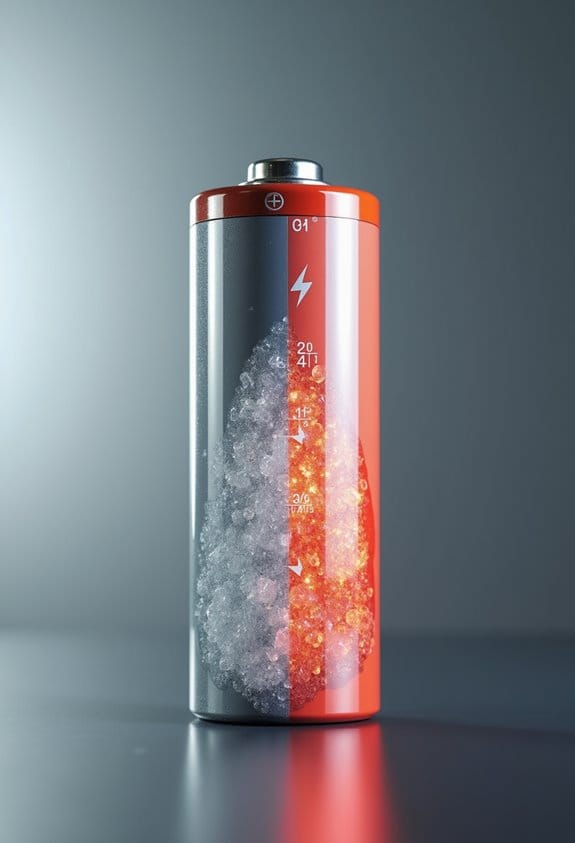
Hey there! Let’s chat about how high altitude affects battery performance, especially with lithium batteries. When you’re up around 4,000 meters, the air pressure drops significantly, which can actually cause the temperature of battery packs to rise by about 4–6 °C. That might not sound like much, but it can increase the chances of the battery overheating—a pretty big deal if you rely on it for your devices.
And it gets even trickier when the temperature dips; at high altitudes, it can be more than 25 °C colder than at sea level. This cold weather thickens the electrolytes inside the battery, which slows down the movement of lithium ions. As a result, you end up with less efficient charging, and your battery simply doesn’t perform as well. For instance, pouch cells can lose over 50% of their capacity after just 200 charge cycles in these conditions.
To add to that, there’s something called charge-transfer impedance, which can increase by as much as 70% at high altitudes. This means that the battery struggles even more to function properly, leading to a loss of active lithium, which directly impacts performance. Plus, don’t forget about the heightened UV exposure at these elevations; it can lead to faster degradation of battery materials and structural issues. So, when you’re planning a mountain trip or ascent, keeping these factors in mind can help you take better care of your batteries and maybe even avoid some frustrating downtime! Furthermore, choosing batteries with low self-discharge rates can help maintain better performance in such challenging environments.
The Role of Atmospheric Pressure in Battery Efficiency

Hey there! So, you know how being at high altitudes can mess with your breathing? Well, atmospheric pressure does something similar to batteries, especially lithium ones. As we climb higher—say, up to 4,000 meters—the pressure really drops, hitting about 60 kPa. This change can lead to increased internal resistance in the battery, meaning it struggles to perform efficiently and doesn’t produce as much power.
But it’s not just about performance; the lower pressure affects battery cooling too. When we’re up high, batteries can heat up by 4 to 6 °C. This extra heat can raise the risk of thermal runaway, which is when a battery overheats and can potentially fail. Imagine if your phone started getting super hot during a mountain hike; that’s a pretty big concern!
And there’s more: the reduced oxygen at high elevations can hurt the battery’s chemistry. In fact, lithium batteries can lose over 50% of their capacity after just 200 charging cycles due to something called charge-transfer impedance, which is just a fancy way of saying that it gets harder for the battery to push energy around.
On top of that, as the vapor pressure of the electrolyte increases, we might see pouch cells swelling up. That swelling compromises the battery’s overall integrity. So, keeping an eye on atmospheric pressure and its effects is crucial if we want our batteries to perform well at high altitudes. It’s always good to consider how these factors might play a role in our next adventure or technological challenge! Speaking of challenges, let’s talk about how we can further enhance battery technology to adapt to such conditions.
To help mitigate these issues, integrating real-time monitoring systems into batteries can optimize their performance and provide early warnings of potential problems.
Impacts of Temperature on Battery Life at Elevation
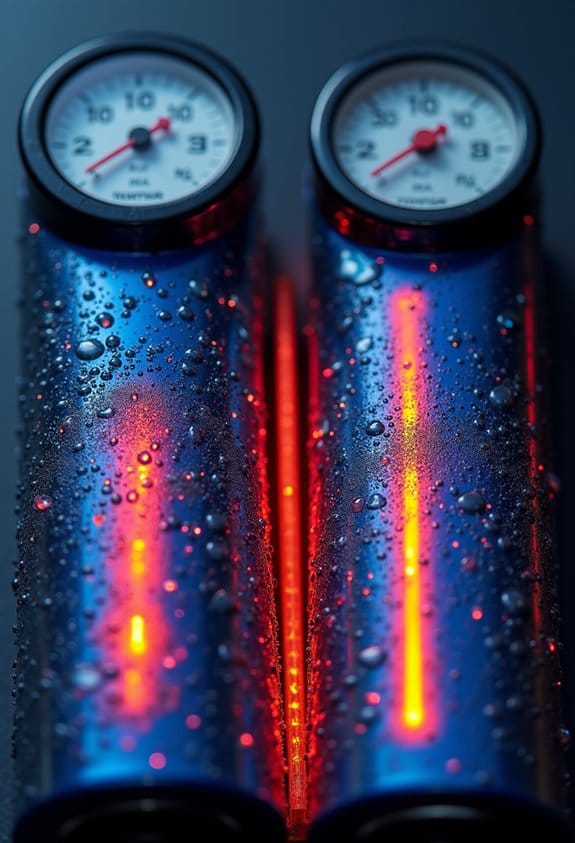
You know, when you’re out exploring high elevations, temperature really impacts how our batteries work and last longer. At those lofty heights, the air gets thinner and the cold can really hit hard, which means our lithium batteries face some serious challenges. For example, when it’s chilly, the liquid inside the battery gets thicker, making it harder for lithium ions to move around. This slows down their performance and decreases their overall capacity.
Plus, in cold weather, there’s a risk of lithium plating and dendrite growth, which can mess with the battery’s efficiency and lead to damage that you simply can’t fix. You might notice that your phone takes forever to recharge when you’re at higher altitudes, thanks to those slow chemical reactions happening inside. And if the temperature drops too much, your devices might lose power way sooner than you’d expect.
Being aware of these issues can really help you plan better for your adventures. It’s wise to keep your batteries warm and fully charged before hitting the trails, so you don’t get stuck without a reliable device when you need it most. Using battery protection circuits with overcharge and overcurrent protection can also safeguard your devices during these extreme conditions. Next up, let’s look at some tips for ensuring your electronics keep up with your high-altitude escapades!
Recommended Products

One-Click Airdrop & Stunning 4K Aerial Footage: Experience the convenience of one-click airdrop for various outdoor scenarios. The 4K Ultra-HD dual cameras with 110° ultra-wide angle and 5x digital zoom capture crystal-clear images and videos. Paired with 3-axis mechanical gimbal and EIS stabilization, it delivers ultra-smooth footage, making it ideal for aerial photography, videography, and event recording

Capture Urban Nightscapes - Osmo Action 5 Pro features a new 1/1.3″ sensor for stunning low-light. Great for nighttime biking adventures in dark environments.

EXTENDED FLIGHT TIME – Adds up to 42 minutes of additional air time so you can capture longer aerial sessions without interruption.
How Low Oxygen Levels Reduce Battery Capacity?
When we’re out there on a mountain, we usually think about how the cold affects our battery performance. But did you know that low oxygen levels can hit your battery’s capacity just as hard? As you climb higher, the air gets thinner and that affects how well lithium-ion batteries work.
For example, at around 18,000 feet (or about 5,500 meters), the performance can drop significantly. You might notice a capacity loss exceeding 50% after 200 charging cycles, which is pretty startling. This happens largely because the battery’s charge-transfer impedance can shoot up by as much as 70%. In simple terms, that means lithium ions have a tougher time moving around inside the battery—something that’s crucial for keeping your devices powered.
Also, the low oxygen levels can weaken the battery’s protective layers, leading to unwanted chemical reactions that can further drain your energy. You’ve probably experienced a situation where your phone or camera suddenly died on a hike; it’s frustrating, right? Understanding this connection between oxygen levels and battery performance can be a real game changer for planning your high-altitude adventures. To mitigate these effects, it’s important to prioritize batteries with built-in Battery Management System protection to enhance safety and longevity in challenging environments.
Recommended Products

True 360° Immersive Flight: Experience the Vision Goggles' massive 90° FOV, 66% wider than standard goggles*, with dual 1-inch Micro-OLEDs and Pancake optics that deliver uncompromised immersion. Its lightweight, 340g design with built-in diopter adjustment ensures a sharp, glasses-free view for every pilot.
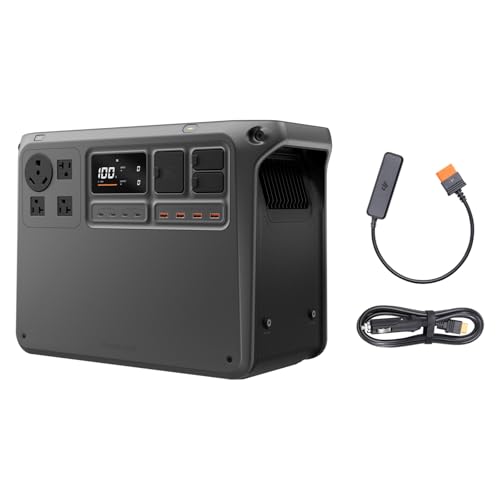
Power More Than Ever - DJI Power 2000 Solar Generator runs 99% of appliances [1] like kettles, cookers, projectors, electric saws and impact drills—perfect for camping, DIY, or outdoor work without limits.

𝐘𝐨𝐮𝐫 𝟏𝐬𝐭 𝐃𝐈𝐘 𝐃𝐫𝐨𝐧𝐞 - F450 is the best DIY drone for both beginners to learn the basics and experts to conduct research or secondary development.
The Effects of Increased UV Radiation on Battery Durability
Hey there! So, have you ever thought about how being at high altitudes affects battery durability? It’s pretty intriguing! As you climb higher, like to a mountain peak, you’re actually exposing batteries to increased UV radiation—about 10 to 12% more for every 1,000 meters. This heightened UV exposure can really wear out batteries much faster than at sea level.
For instance, if you keep a battery at 4,000 meters for just a year, it’s like it’s been sitting at sea level for 1.5 years. Imagine that stress on all those tiny components! You know PET? It’s commonly used for packaging lithium cells, but under intense UV, it breaks down about 2 to 3 times quicker. So, if you notice yellowing on your devices or they seem to get weaker over time, that’s a sign of the UV rays doing their thing.
And on top of that, things like thermal cycling and dry air can create micro-cracks in the battery. These tiny cracks can lead to serious problems, like leaks or even complete failure. It’s a bit concerning, right? The way our environment impacts our tech is a reminder of how crucial it is to consider battery care at different altitudes. But hey, speaking of keeping devices safe, let’s chat about the ways we can protect our batteries from these effects. Choosing batteries with longer shelf life can also help mitigate the accelerated degradation experienced at high altitudes.
Common Battery Issues at High Altitudes
Hey there! Did you know that battery performance takes a nosedive at high altitudes? It’s pretty fascinating how factors like lower air pressure and colder temperatures can have such a big impact on lithium-ion batteries. For example, they can lose more than half their capacity after just 200 charging cycles when you’re up around 5,500 meters. That’s something to keep in mind if you’re planning a mountain adventure!
One key issue at high altitudes is increased internal resistance. This means that your battery drains faster than it would at sea level, which is a real bummer when you’re counting on your devices. Also, the mechanical stress from low air pressure can cause some batteries to shut down unexpectedly to prevent overheating. Imagine being in the middle of a hike and suddenly losing power on your phone because the battery can’t handle the altitude!
And let’s not forget about the cold—when temperatures drop, the chemical reactions in the battery slow down, leading to longer recharge times. So, if you’re up in the mountains, it might take a while to get that juice back.
Being aware of these common battery issues can really help you plan ahead for your next high-altitude trip. Whether it’s making sure you have backup power sources or keeping your devices warm, a little prep goes a long way.
To maximize safety and performance, it’s crucial to choose batteries with temperature resilience suited for extreme environments.
Recommended Products

Equipped with a Hasselblad L1D-20c camera with a 20MP 1” CMOS Sensor, the Mavic 2 camera drone lets you capture gorgeous aerial shots in stunning color detail.

🆕【𝗟𝗶𝗴𝗵𝘁𝘄𝗲𝗶𝗴𝗵𝘁 𝗮𝗻𝗱 𝗣𝗼𝗿𝘁𝗮𝗯𝗹𝗲】Autel EVO Lite 6K Enterprise is lightweight and compact, weigh only 𝟴𝟲𝟲 𝗴𝗿𝗮𝗺𝘀 which 10% less than that of the Mavic 3 E and have folded dimensions of just 210*123*95mm, making them easy to carry in a backpack. It's perfect for taking on hikes, road trips, and other adventures, allowing you to capture stunning aerial moments from above wherever you go. 📣For ass.istance with packaging, accessories, usage, firmware updates, or any other issues, please rea.ch our te.ch su.pport team at 💌autelofficial @ outlook . com💌

DJI USA Authorized - Includes Full USA Warranty + 26 Month CPS Exclusive Warranty! | DJI Mini 5 Pro is the perfect choice for content creators, photographers, and pilots looking for an ultra-portable drone with uncompromising image quality. It manages to combine power, safety, and ease of use, setting a new standard in the world of compact drones
Effective Techniques to Reduce Battery Drain at High Altitude
Hey there! If you’re planning a trip to high altitudes, you might be surprised to find that battery drain can become a real issue. To help reduce battery drain in those thinner air conditions, let’s talk about some straightforward techniques to keep your devices charged up longer.
First off, try to keep your battery levels above 20%. This helps you avoid those pesky deep discharges caused by lower pressure at high altitudes. A neat trick is to keep your device in an insulated bag when you’re not using it. This helps keep temperatures steady, especially since it can get pretty chilly up there, which can help your battery perform better. Speaking of performance, using devices that have smart battery management is a smart move. They can adjust settings based on temperature and voltage to optimize your battery life.
Also, during your adventures, be mindful of how much you rely on high-energy features like GPS or high screen brightness, especially when it’s cold outside. These can drain your battery much faster than usual. And don’t forget, when you’re heading downhill, you can actually recover some energy. It’s like a little boost that can help offset the energy you used while climbing! For added safety and to protect your batteries during your trip, consider using fireproof Lipo safe bags designed for safe storage and transport.
Recommended Products

𝗨𝗻𝗱𝗲𝗿 𝟮𝟰𝟵 𝗴, 𝗡𝗼 𝗥𝗲𝗴𝗶𝘀𝘁𝗿𝗮𝘁𝗶𝗼𝗻 𝗜𝘀 𝗥𝗲𝗾𝘂𝗶𝗿𝗲𝗱[1] - Travel light and skip registration for a user-friendly, easy-to-carry experience on all your journeys. Enjoy the fun of flying without the tedious application process and waiting time.
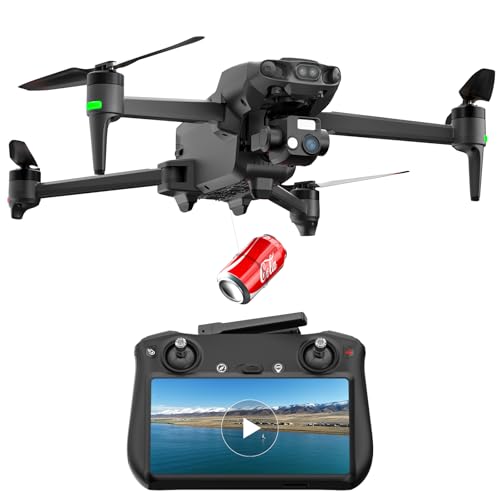
【Drone with 5.5-inch Touchscreen on Controller】Equipped with a 5.5-inch touchscreen, this drone with screen on controller, this drone with screen delivers real-time fpv drone view without extra devices, letting you enjoy clear, instant feedback as you fly.As a premium drone with screen, it requires no phone, serving as an exceptional drone professional setup.
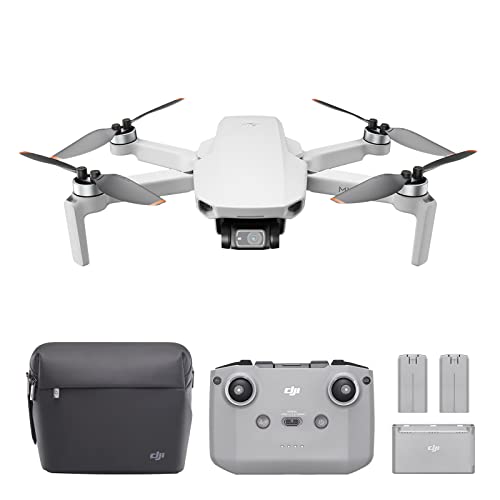
PACK LIGHT, FLY FREE: at less than 249 g, it weighs about as much as an apple and fits in the palm of your hand. compact and convenient, this small drone is your ideal travel companion, transforming how you capture your favorite memories.Max Wind Speed Resistance : 8.5-10.5 m/s (Scale 5).Operating Temperature : 0° to 40°C (32° to 104°F), Operating Frequency [2] : 2.400-2.4835 GHz, 5.725-5.850 GHz..Max Control Speed (tilt) : 100°/s. Shutter Speed : Electronic Shutter: 4-1/8000 s.
Key Monitoring Practices for Battery Lifespan at High Elevations
You know, when it comes to keeping our devices running smoothly at high elevations, battery health monitoring is key. At these altitudes, the battery temperature plays a huge role, especially since low air pressure can cause overheating. To put it simply, without proper cooling, we can see temperature spikes of around 4-6 °C. It’s like trying to run a race in the sun without water—you need to keep cool!
Also, keep an eye out for any signs that your battery might be struggling, like swelling, leakage, or even unusual smells. These can be serious red flags, hinting at potential failures in lithium batteries. A good practice is to always maintain your battery level above 20%. This helps prevent full discharge, which is particularly crucial when you’re at high altitudes where the air is thin.
Next, be mindful of how long it takes to charge your devices, as colder temperatures can slow everything down. Using a smart battery management system (BMS) can really come in handy here. It ensures you get real-time updates on your battery’s health and helps optimize its performance in challenging conditions. In addition, incorporating intelligent safety systems in your chargers can protect against overcharging and overheating, further enhancing battery longevity at altitude.
How User Habits Change Battery Usage at Elevation?
Hey there! Did you know that as we head to higher elevations, our habits can really affect how our devices use battery power? When we’re out hiking or making our way uphill, it’s easy to crank up those battery-draining features like GPS and Bluetooth. This heavy usage can lead to faster battery drainage than we might expect.
Also, in those high-altitude areas, temperature changes can play tricks on our devices, causing them to take longer to charge or even shut down unexpectedly. For example, if you’re relying on GPS for navigation, consider using a physical map every now and then—it’s a fun challenge and can really save your battery. And don’t forget, lower oxygen levels at elevation can make your battery work even harder, adding to its inefficiency. So, if we can cut back on those power-hungry features, we’ll keep our devices running longer during our adventures.
All this just goes to show how important it is to think about what we’re doing with our tech while we’re out in the great outdoors. Speaking of which, have you considered bringing a portable charger along? That could be your best friend when you’re hiking at high altitudes! Many of the best portable power stations come with fast charging capabilities that can quickly restore your device’s power even in remote locations.
New Solutions for High-Altitude Battery Performance
You know, high-altitude environments can really throw a wrench in the works for batteries. But luckily, there are some exciting solutions popping up that help improve battery performance and reliability in these challenging conditions. For example, advanced battery management systems (BMS) play a crucial role—they keep an eye on temperature and voltage so the batteries don’t overheat. This is especially important in low-pressure scenarios where lithium batteries might struggle.
Another interesting aspect is the use of pressure-resistant materials. These materials help keep batteries intact, minimizing leaks or structural failures that could arise at high elevations. Plus, flame-retardant separators and fire-resistant components work to lower the risk of any fire hazards, which is always a good thing to consider when you’re out in extreme environments.
Insulated bags can also make a difference by stabilizing battery temperatures, especially in chilly climates. You’d be surprised how something as simple as insulation can counteract the cold! And let’s not forget about rigorous testing—following UN 38.3 standards, altitude simulation tests ensure that these modern lithium batteries can truly handle the demands of high elevations. With everything in place, it’s fascinating to see how technology is evolving to keep our devices running smoothly, no matter where we are. Speaking of which, let’s take a look at how these advancements can affect battery life over time. Fireproof battery storage solutions also add an important layer of safety by using multi-layer construction that prevents heat penetration and potential fire hazards under extreme conditions.
Recommended Products

✅ Real-Time RI Drone Detection: Instantly detects drones using remote ID radio frequency (RI) signals – even when drones aren’t visible

【Wide Compatibility】: This is 2 pack of Fantasyo Mavic 2 replacement batteries from Satonaka, perfectly compatible with DJI Mavic 2, DJI Mavic 2 Pro, DJI Mavic 2 Zoom, DJI Mavic 2 Enterprise / Advance, and the official charger. Please NOTE: NOT for Mavic Mini or Mavic Air.

【Perfect Compatibility】Well compatible with DJI Mavic 2 Pro and DJI Mavic 2 Zoom drone, and great work for DJI Mavic 2 Charger. Quick charge, quick change.
Frequently Asked Questions
Does High Altitude Affect Batteries?
High altitude definitely affects batteries. For instance, our drone’s battery efficiency dropped considerably during a mountain flight, highlighting altitude’s impact on temperature effects and energy loss, as it struggled to maintain performance in thinner air.
What Is the 40 80 Rule for Batteries?
The 40-80 rule for batteries recommends keeping charge between 40% and 80% for ideal battery performance. This helps mitigate altitude impacts, ensuring we’re using the right charging methods and improving overall battery longevity in various conditions.
Why Do Batteries Drain Fast in High Altitude?
Batteries drain fast at high altitudes due to battery chemistry changes. Altitude effects, combined with temperature influence, increase internal resistance and reduce power storage efficiency, leading to quicker depletion than we experience at sea level.
How Much Does 4000 Ft of Elevation Affect Running?
At 4,000 feet, elevation impacts our running performance considerably. With lower oxygen levels, we face altitude training effects, reducing stamina and speed. We gotta adjust our pacing and breathing to adapt effectively in these conditions.