As an Amazon Associate, we earn from qualifying purchases. Some links on this site are affiliate links at no extra cost to you. Our recommendations are based on thorough research and editorial judgment.

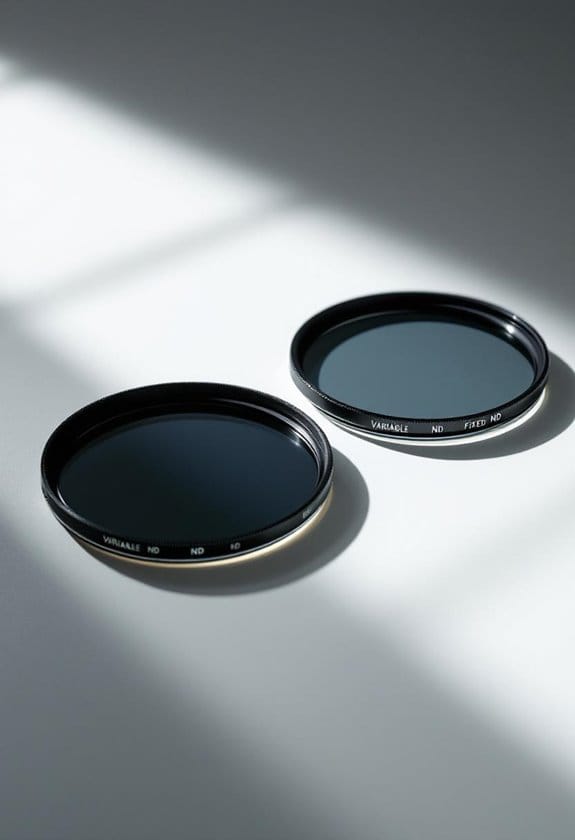
How Variable ND Filters Compare to Fixed ND Filters

When we compare variable ND filters to fixed ND filters, we see several key differences. Fixed ND filters provide consistent light reduction, maintain image quality, and minimize vignetting. In contrast, variable ND filters offer flexibility for adjusting light levels, but they can introduce color shifts and potential optical artifacts. For sharpness in landscapes, fixed filters are often preferred, while variable filters save space in our gear. Let’s explore how to choose the right ND filter for our photography style.
Key Takeaways
- Variable ND filters offer adjustable light reduction, while fixed ND filters provide consistent, specific stop values for stable lighting conditions.
- Fixed ND filters generally yield better image quality by avoiding optical artifacts and color shifts that may occur with variable filters.
- Variable ND filters can be more convenient for dynamic lighting environments, allowing for quick exposure adjustments without changing filters.
- Fixed ND filters often have minimal vignetting and superior durability, making them a long-term investment for photographers seeking reliability.
- Variable ND filters are more space-efficient for travel, as they can replace multiple fixed filters, but may come with a higher upfront cost.
Understanding ND Filters: What Are They and How Do They Work?
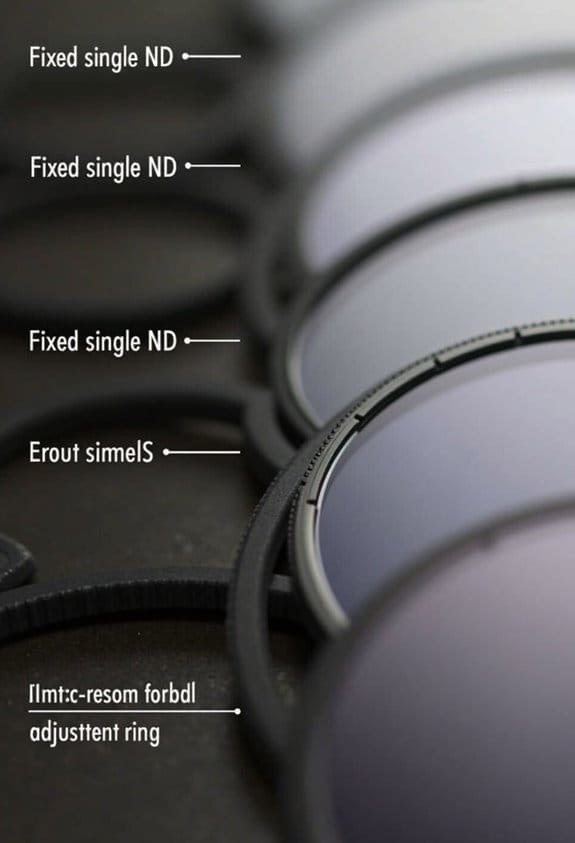
Hey there! Let’s chat about ND filters and how they can really amp up your photography game. You know how important light is in photography, right? Neutral density (ND) filters are like magic sunglasses for your camera—they cut down the light hitting your lens without messing with the colors. Pretty cool, huh?
Think of it this way: Have you ever tried to take a picture at the beach on a sunny day and ended up with a really bright photo that lacks detail? That’s where ND filters come in handy. They come in two flavors: fixed and variable. Fixed ND filters offer you a steady reduction of light, like a 3-stop or 6-stop filter. On the other hand, variable ND filters let you twist and turn until you find the perfect light reduction—anywhere from 2 to 10 stops. This flexibility means you can use a wider aperture for a blurred background or slow down your shutter speed to capture smooth waterfalls, all while keeping image quality sharp. Many photographers now prefer magnetic ND filters for their quick one-second attachment and easy workflow simplification.
What Makes Fixed ND Filters Beneficial?
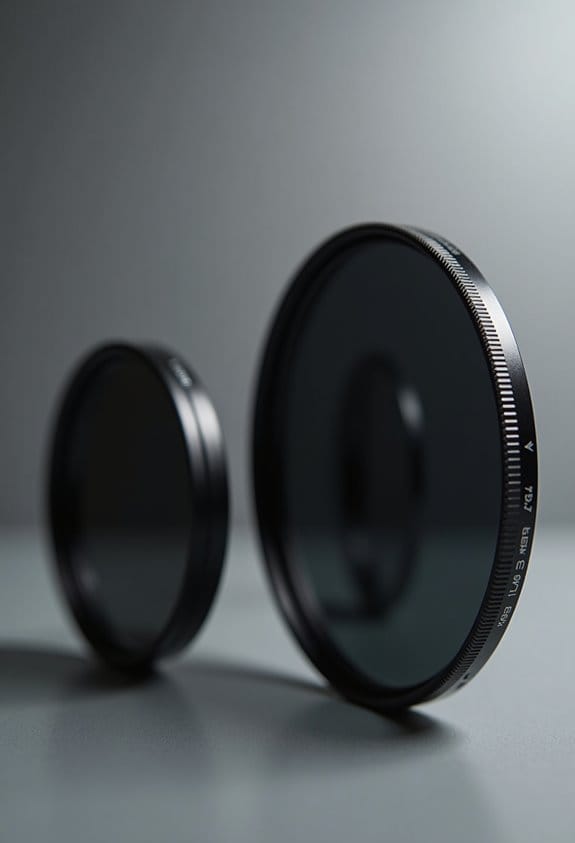
Fixed ND filters are fantastic tools for photographers who crave consistency and reliability in their images. One awesome perk of these filters is that they reduce light evenly, which means you can maintain high image quality without those pesky polarization artifacts. For example, if you’re shooting landscape photos during a bright sunny day, a 6-stop ND filter can help you slow down your shutter speed, allowing for that silky-smooth waterfall effect you often see in stunning nature shots.
Another great thing about fixed ND filters is their precision. With specific stop values like 2-stop or 6-stop, you can easily dial in the right exposure for stable lighting conditions. Plus, the vignetting—those dark corners that can happen in photos—is usually minimal, especially with rectangular filters, making them a top choice for landscape photography.
You know what’s even better? Their solid build quality often makes them a smarter investment in the long run. Instead of buying a whole set of variable filters, you can rely on a couple of specialized fixed options and save some cash. Overall, they streamline your workflow so you can focus more on capturing that perfect shot rather than fiddling with adjustments. Speaking of getting that perfect shot, let’s talk about how to choose the right ND filter for your photography style!
Many high-quality fixed ND filters use AGC glass and multi-layer coatings to ensure optimal performance and durability over time.
Limitations of Variable ND Filters
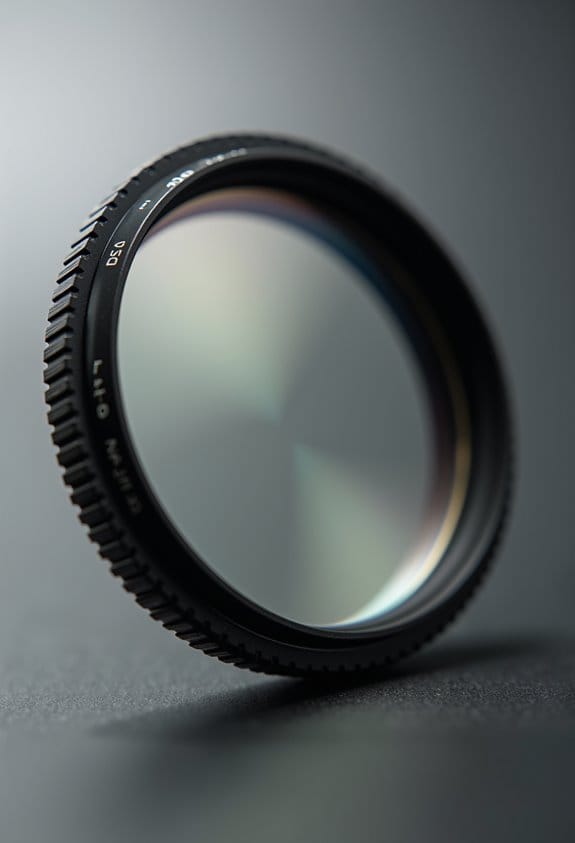
Hey! So, let’s chat about variable ND filters and why they’re pretty handy but also come with some quirks. These filters let you adjust how much light gets into your camera, which is awesome for creating perfect exposure in different lighting conditions. However, they have a few limitations that can trip you up if you’re not careful.
First off, you might notice some color shifts in your images. This means those beautiful sunsets can come out looking a bit off, with unwanted color casts messing with your overall vibe. Then there’s the issue of vignetting. If you’re shooting with a wide-angle lens, you might see darker corners in your photos, which can be distracting. I’ve definitely had to fix that in post-processing more times than I’d like to admit!
Another thing to watch out for is cross-polarization, especially when you crank the filter up to its maximum density. This can create strange hues—definitely not what you want if you’re trying to capture a natural-looking scene. Plus, the quality of these filters can vary a lot. Cheaper ones can introduce all sorts of artifacts, like fuzzy edges or those pesky “X” marks when you’re using higher stop settings.
Knowing these potential pitfalls will help you make better choices in your photography. So, before you reach for that variable ND filter, consider testing it out and checking how it affects your shots. Choosing filters made with Schott B270 Pro Cinema Glass can help minimize some of these issues. Let’s move on and look at some tips for choosing the right filter for your needs.
How Does Image Quality Compare Between Fixed and Variable ND Filters?
Understanding how image quality stacks up between fixed and variable ND filters is super important for anyone who loves photography. If you’re serious about capturing those stunning shots, you might want to lean towards fixed ND filters. They generally deliver better image quality because they don’t mess with your photos by introducing weird optical artifacts, color casts, or other annoying effects. For example, landscape photographers really appreciate this consistency when trying to capture sharp, vibrant images of nature.
On the flip side, variable ND filters come with their own quirks. These filters use two layers, which can sometimes lead to vignetting, especially if you’re shooting with wide-angle lenses. If you’re using a lower-quality variable ND filter, you could end up with blurry or less sharp images, especially at higher densities. So, if you’re looking for the best possible light exposure while keeping your image quality intact, investing in a high-quality fixed ND filter might just be your best bet. Additionally, always ensure filter compatibility with your lens size to maintain optimal performance and avoid issues such as vignetting or fit problems.
What Makes a Great ND Filter for Videography?
You know how when we’re out filming, the light can change on us in an instant? That’s where a solid ND filter comes into play. A great ND filter for videography helps us keep our exposure just right, so we can stick to our preferred shutter speed and aperture settings without a fuss. For instance, having a variable ND filter that can adjust between 2-9 stops really gives us the flexibility to shoot in bright sunlight or softer evening light without skipping a beat.
When you’re shopping for one, keep an eye out for some key features. First off, precise laser markings on the filter frame make adjusting it a breeze—no more guessing where you’re at. And of course, high-quality construction is crucial to avoid vignetting, which can ruin a shot; you want that even light across the whole frame. Trust me, these little details can make all the difference in your footage! Speaking of which, let’s explore how these filters impact the overall look of your video. Additionally, using filters with multi-layer coatings can significantly reduce glare and enhance image clarity, essential for professional videography.
How to Choose the Right ND Filter for Your Photography Style?
When it comes to choosing the right ND filter for your photography style, it’s all about understanding your needs. Think about where you’ll be shooting. If you’re often in stable lighting conditions, a fixed ND filter is a great choice because it does its job without changing. But if you find yourself in environments where the light shifts quickly—like when you’re shooting at sunrise or sunset—a variable ND filter is super handy because you can adjust it as the light changes.
Next, let’s chat about the number of stops you need. Fixed ND filters give you a set number of stops—like 3 stops or 6 stops—while variable ones let you slide between a range of stops, usually from about 1.5 to 5 stops or even more. This means you can fine-tune your exposure more easily with a variable ND filter, which is fantastic when you’re on the move.
Now, consider how often you’ll be traveling with your gear. A variable ND filter will save space in your bag since it can replace several fixed filters. But don’t forget about image quality; often, fixed ND filters offer clearer images with less color distortion. And of course, budget matters! You might find it more cost-effective to invest in a single high-quality fixed filter rather than a variable one over time.
In addition, filters with multi-layer nano-coatings can reduce reflections and improve image quality, making them a smart choice regardless of the type you select.
In the end, the choice really depends on your shooting style and circumstances. Once you have that figured out, you can move on to the fun part—how to actually use those ND filters to create stunning images!
Frequently Asked Questions
Can Variable ND Filters Be Used for Astrophotography?
Absolutely, we can use variable ND filters for astrophotography. They help manage light pollution effects and exposure settings adjustment, though we should be mindful of filter color balance, especially for Milky Way photography and star trails.
Do Fixed ND Filters Come in Different Shapes and Sizes?
Yes, fixed ND filters come in various shapes and sizes, catering to different filter mount types. We’ve encountered compatibility issues and optical quality differences, leading to diverse application use cases and brand comparisons based on user experiences and DIY alternatives.
How Do ND Filters Impact Lens Flare and Ghosting?
When we wield ND filters, we’re playing with light like a painter on canvas. Quality matters; poor optics may cause lens flare and ghosting effects, reducing subject contrast and altering light transmission across varying focal lengths.
Are There Specific Brands Known for High-Quality ND Filters?
When searching for high-quality ND filters, we recommend brands like B+W filters, Hoya optics, and Lee filters. Tiffen quality, Breakthrough photography, Formatt hitech, Singh Ray filters, NiSi systems, and Heliopan products are also excellent choices.
What Is the Ideal ND Filter Strength for Bright Sunny Days?
On bright sunny days, we recommend a filter strength around 6 to 10 stops. Understanding filter density impacts our exposure adjustments, so let’s explore creative photography solutions together with effective daylight shooting tips!