As an Amazon Associate, we earn from qualifying purchases. Some links on this site are affiliate links at no extra cost to you. Our recommendations are based on thorough research and editorial judgment.


Understanding Battery Cycle Life and Longevity

Understanding battery cycle life and longevity is essential for maximizing our devices’ performance and lifespan. Battery cycle life refers to how many complete charge and discharge cycles a battery can undergo before significant capacity loss occurs, typically below 80%. Factors affecting this include depth of discharge, operating temperature, and charging methods. For instance, lithium-ion batteries perform best when charged between 20%-80%. By applying effective strategies like maintaining proper charge levels and using a Battery Management System, we can prolong battery life. Continue exploring to uncover more insights and tips.
Key Takeaways
- Battery cycle life measures the number of full charge-discharge cycles before significant capacity loss occurs, typically ranging from 300 to 500 cycles for lithium-ion batteries.
- Factors impacting battery longevity include Depth of Discharge (DoD), temperature, charging methods, usage patterns, and regular maintenance.
- Different battery chemistries affect cycle life significantly, with lithium iron phosphate offering the longest lifespan, up to 5,000 cycles.
- Best practices to maximize lifespan include maintaining a charge level of around 50%, avoiding extreme temperatures, and using appropriate charging methods.
- Regular monitoring of battery health, including state of charge and temperature, helps detect issues early and supports effective maintenance.
Understanding Battery Cycle Life: Why It Matters
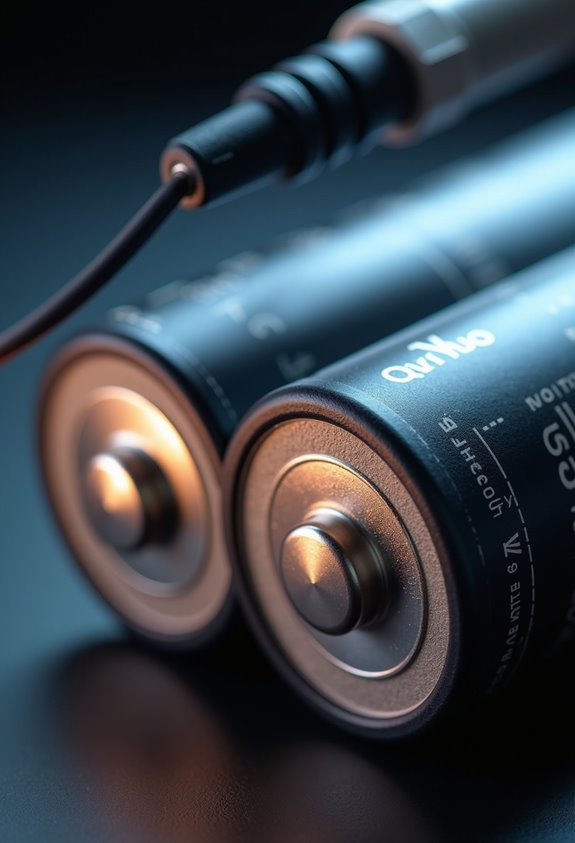
Have you ever thought about how long our batteries actually last and what shapes their lifespan? Well, understanding battery cycle life is super important, especially if you’re into electric vehicles. Simply put, battery cycle life refers to the total number of times a battery can be fully charged and discharged before it starts to lose its capacity—typically, when it drops below 80%. For example, lithium iron phosphate (LiFePO4) batteries can handle anywhere from 2,000 to 5,000 cycles, making them a solid choice for many applications.
There are a few key factors that can really impact a battery’s longevity. One major one is the Depth of Discharge (DoD). Keeping the DoD shallow—meaning you don’t use the battery all the way down to zero—can significantly extend its lifespan. Plus, using a good battery management system (BMS) can help keep everything running smoothly. By understanding cycle life, you can make smarter choices about which batteries to buy, which in turn helps save money on replacements and is better for the environment. As technology progresses, staying in the loop about these details can make all the difference in maximizing our battery investments. Additionally, using accurate voltage checkers regularly helps monitor battery health and prevents unexpected failures.
Recommended Products

APPLICATION --- The battery testers can be used for testing battery voltage and capacity for electric motorcycle, motorcycle,golf cart, automotive , car, marine, RV, boat, etc.

Battery Voltage Meter for Golf Cart - Default 48 volt lead acid battery .
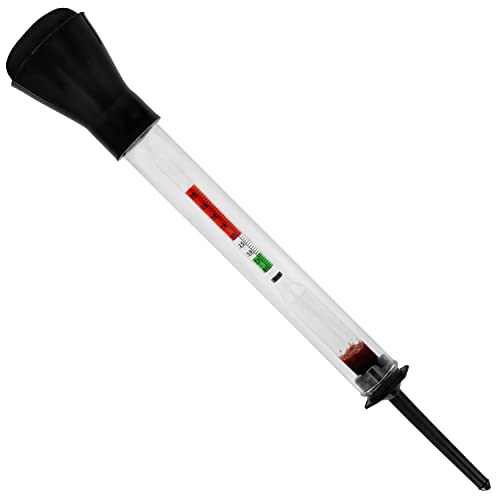
Professional Battery Tester
Key Factors Affecting Battery Cycle Life

Hey there! You know, understanding what affects battery cycle life can really help you get the most out of your devices. It’s a simple thing that can save you time and money in the long run.
First off, let’s talk about Depth of Discharge (DoD). Basically, if you keep your battery from going all the way down to zero, it will last longer. For lead-acid batteries, aim to keep it above 50%, and for lithium-ion, stick to around 80% if you can. For instance, if you have an electric bike, try to charge it before it drops too low for the best performance.
Next up is Operating Temperature. Batteries don’t love the heat! High temperatures can speed up how fast they wear out. So if you can avoid leaving your devices in hot places—like your car on a sunny day—you’ll help extend their life.
Now, let’s chat about Charging Methods. Slower, steady charging is usually kinder to your battery than rapid charging. If you have the option to use a charger that isn’t super quick, it’s worth it! It’s like how a slow, comforting meal does less damage than a fast-food binge.
And don’t forget Regular Maintenance! Keep an eye on the state of charge (SoC) and check the temperature. It helps to use quality chargers, too. Always be on the lookout for small issues before they become big problems.
Lastly, consider the Battery Chemistry. If you’re looking for longevity, lithium iron phosphate (LiFePO4) batteries are fantastic, giving you around 2,000 to 5,000 cycles! That’s way more than some other types, making them a solid investment. Using a Battery Management System (BMS) with features like real-time monitoring and cell balancing can further optimize cycle life and overall battery health.
Recommended Products

【Heavy-Duty Design】Our reinforced circular handle redefines durability. Seamlessly connected to the bag’s bottom in a continuous O-loop, it resists tearing and boosts load capacity 5-10x. Built to last, it offers standout strength and comfort.

How to Recharge Your C200 DC: Recharge with a 9V/2A, 18W or higher USB-C wall charger, such as an Anker USB-C charger or laptop charger. Note that only the and USB-C3 ports can be used.

For H99W H31 H6C H98 AT-96 TR-C385 TR-P51 TR-F22 SYMA Q11 quadcopter
Examining the Impact of Battery Chemistry on Cycle Life

Hey! Let’s chat about how battery chemistry really affects cycle life. You know, not all batteries perform the same way. Take lithium iron phosphate (LiFePO4), for example. It’s known for its incredible cycle life, lasting anywhere from 2,000 to 5,000 cycles. That makes it a go-to choice for everything from electric vehicles to solar energy storage.
Now, compare that with lithium nickel cobalt manganese (NCM), which typically lasts around 1,000 to 2,000 cycles. Then there’s lithium cobalt oxide (LCO)—it doesn’t fare as well, with a lifespan of just 500 to 1,000 cycles, which can limit its applications. And we can’t forget about lithium manganese oxide (LMO), which usually offers around 300 to 700 cycles—not the most reliable option out there, right?
But here’s the standout: lithium titanate (LTO) can last up to an astonishing 10,000 cycles! That’s why understanding these differences in battery chemistries is so important. It helps us choose the best options based on our needs. So, whether you’re powering up your laptop or an electric car, knowing the cycle life can really make a difference in performance.
For anyone using these batteries, storing and charging them safely in fireproof storage bags is essential to prevent hazards and extend battery longevity. Next, let’s see how these battery types fare under varying environmental conditions!
Recommended Products

【Compact & Mighty Power for Your Essentials】With 300W rated power (600W surge), this portable station is your go-to power source for a wide range of devices. The 192Wh capacity can recharge a smartphone over 8-10 times(The difference lies in the watt-hour and milliampere capacity.), ensuring you stay connected and powered during outages or adventures. For example, a40W Audio can operate for about 5 hours (192Whx*0.85 conversionrate/40W=4.08 hours). Similarly, if your device is a 45W Mini Fridge , then(192Whx0.85 conversion rate/45W=3.6hours). (Only suitable for powering devices within 300W)
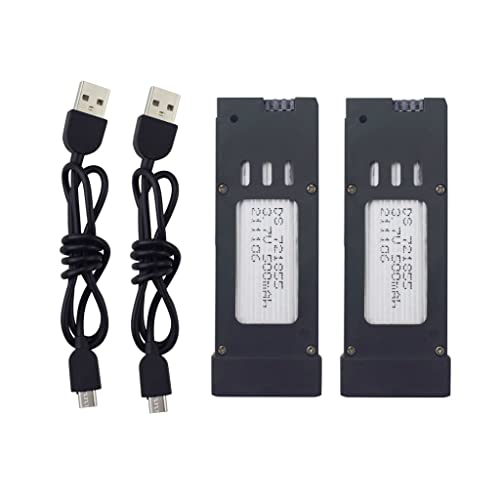
Battery compatible with E58 S168 folding quadcopter

Wide Application: This lipo battery charger can charge various types of batteries, supporting 1.2V-18V NiMH/NiCD batteries (1-15S), 3.7V-22.2V LiPo/ li ion batteries (1-6S), 3.2V-19.2V LiFePO4 batteries (1-6S), 2V-20V Pb batteries, etc. The output power of the battery charger is 80W and the charging current is 6A.
Effective Strategies to Maximize Your Battery’s Lifespan
Want to make sure your batteries last as long as possible? To really maximize battery lifespan, especially for lead-acid batteries, it’s best to keep the Depth of Discharge (DoD) below 50%. For lithium-ion batteries, try not to let them go below 20% charge or above 80%. This helps avoid overcharging, which can create heat that’s detrimental to battery health.
When you’re not using your batteries, store them at about 50% charge. Keep them in a cool, dry place to really give them the best chance at longevity. For example, if you’re putting away a battery for the winter, just make sure it’s halfway charged and in a cellar rather than a hot attic. Another trick is dynamic cycling—this means charging and discharging your batteries at varying rates, which can boost their lifespan by as much as 38%.
Regular maintenance is key here. Check on the state of charge (SoC), temperature, and voltage—this way, you catch any issues early. You might consider using a Battery Management System (BMS) to keep everything running smoothly. This really helps ensure your energy storage system is as efficient as possible, paving the way for longer-lasting batteries. So, whether you’re powering your home or your gadgets, these straightforward tips can go a long way in keeping your batteries healthy. Advanced devices with long flight times rely heavily on optimized battery health for their superior performance.
Recommended Products

3Pcs 3S 12V 18650 10A 3S BMS 12V Charger Li-ion Lithium Battery Protection Board Module Anti-Overcharge Over-Discharge Over-Current Short Circuit


Intelligent Charging Management: NEO drone Charging Manager adopts an advanced charging management system that can intelligently detect and optimize the battery charging status, ensuring that each charging achieves the best results.
Common Questions About Battery Cycle Life?
Batteries play a huge role in our daily lives, and understanding their cycle life can really help us take better care of them. So, let’s chat about some common questions people have.
First up, “What affects battery cycle life?” Well, a few key things come into play. For example, Depth of Discharge (DoD) is super important—lithium-ion batteries tend to perform best if you don’t let them discharge more than 80%. In contrast, lead-acid batteries are happier if you keep that DoD below 50%. Plus, the temperature where you’re using or charging the battery can make a big difference, and using a Battery Management System (BMS) can really help you keep track of all this and give your battery a longer life.
Another question I often hear is, “What happens when capacity drops?” If you notice your battery’s capacity falls below 80%, that’s usually a sign it’s nearing the end of its effective life. For example, if you’re using an old smartphone battery and notice it doesn’t hold a charge like it used to, it might be time to start looking for a replacement.
Rechargeable batteries typically offer up to 1200 cycles and can retain 70% to 85% capacity after extended periods without use, which underscores the importance of choosing high-quality batteries.
Staying informed about these factors can help you choose better batteries and take care of them efficiently. So, now that we’ve covered this, let’s move on to some tips for extending battery life even further!
Frequently Asked Questions
What Is a Good Battery Life Cycle?
A good battery life cycle ranges from 1,000 to over 4,000 cycles, depending on usage patterns and charging habits. By following manufacturer guidelines and utilizing maintenance tips, we can enhance battery capacity and optimize performance longevity.
What Is the 80 20 Battery Rule?
The 80/20 battery rule suggests we maintain our energy storage usage between 20% and 80% for ideal battery efficiency. This practice minimizes battery degradation, impacts charge cycles, and extends lifespan across various battery types, enhancing performance under different temperature effects.
Is 85% Battery Health Good After 2 Years?
An 85% battery health after two years is quite impressive! We should consider factors like charging habits, usage patterns, and environmental impact. Regular maintenance can enhance longevity, but let’s be mindful of future replacement options.
How to Interpret Battery Cycle Count?
To interpret battery cycle count, we must evaluate battery life indicators and performance metrics. Understanding cycle longevity involves analyzing degradation rates, charging habits, and the impact of temperature on battery management systems for accurate lifespan predictions.