As an Amazon Associate, we earn from qualifying purchases. Some links on this site are affiliate links at no extra cost to you. Our recommendations are based on thorough research and editorial judgment.

Understanding Thermal Imaging Applications With Camera Drones

When we think about thermal imaging applications with camera drones, it’s clear that they revolutionize various industries. For instance, they allow us to monitor agricultural health, identify electrical issues in utility inspections, and assist in search and rescue operations by detecting heat signatures. These drones enhance our ability to capture real-time data, making operations more efficient while ensuring safety. As we explore this topic further, you’ll discover even more fascinating applications and advancements in thermal drone technology.
Key Takeaways
- Thermal drones enhance search and rescue operations by locating individuals using their heat signatures, improving response times significantly.
- In agriculture, thermal imaging allows for monitoring crop health and irrigation needs, leading to better decision-making for growers.
- Utility inspections with thermal drones identify potential electrical issues proactively, thus saving time and reducing costs in maintenance.
- Thermal drones are used in firefighting to monitor hotspots, aiding in effective fire management and response strategies.
- Advanced dual-sensor systems combine thermal and RGB imaging, enhancing data analysis capabilities across various industries like construction and oil refining.
How Thermal Imaging Works: A Deep Dive Into the Technology

Hey there! You know, when we talk about thermal imaging, it’s really cool how this technology lets us see heat patterns that our eyes miss entirely. Essentially, thermal cameras pick up infrared radiation—essentially the heat that everything around us gives off—and turn it into images we can easily understand. For instance, if you point a thermal camera at a warm object, like a cup of coffee, you’ll see it glowing much brighter than the cooler surroundings, even in total darkness.
The neat part is that thanks to advancements like microbolometers, we no longer need to cool these devices down just to take accurate readings. Still, interpreting what we see isn’t always straightforward. Factors like the material’s emissivity—the ability of a surface to emit infrared radiation—can change how we understand the data. Think about it: A shiny glass window reflects more heat than a matte surface, so it can throw off readings.
Moreover, modern thermal imaging systems use sophisticated software that helps us analyze and interpret the images better, so we can really dig into those temperature variations and how heat spreads. This could be super helpful, for example, in identifying energy leaks in a home or spotting overheating components in machinery. Each small detail adds layers to what we see and allow us to make more informed decisions based on the thermal images we capture. Additionally, combining thermal imaging with high-resolution sensors in drones enables capturing stunning detailed footage useful for various inspections and surveys.
Key Benefits of Thermal Drones for Various Operations

Hey there! Have you ever heard about thermal drones? These incredible gadgets are really making waves in various fields by providing insights that we used to struggle to get. Imagine being able to see heat signatures from the air—that’s what thermal imaging drones do!
For example, in search and rescue missions, these drones can spot the body heat of stranded individuals even in dense forests or during nighttime. This means rescuers can reach people much faster, which is crucial when every second counts.
In agriculture, farmers are using thermal data to keep an eye on their crops. If a field is getting too much water or if the plants are stressed, the farmers can take action early on, ensuring healthier yields.
Utility companies love using thermal drones, too. They fly them over power lines to find potential electrical issues before they become a headache, which saves both time and money during inspections. Overall, thermal drones help everyone make better decisions quickly, whether it’s monitoring wildfires or handling emergencies at industrial sites.
They often feature advanced thermal imaging capabilities that combine high resolution with long flight times, significantly boosting operational effectiveness.
Top Real-World Applications for Thermal Drones
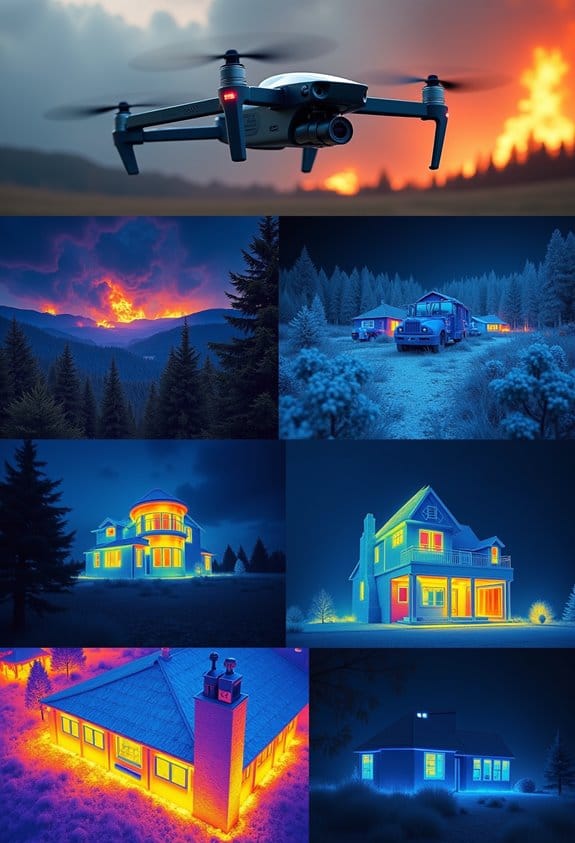
Have you ever thought about how thermal drones are changing the way we approach safety and efficiency in different industries? These high-tech devices are really making a difference in places like Vietnam, where they assist in search and rescue operations during floods. Imagine being able to spot people in distress from above, thanks to those heat signatures that thermal imaging can detect. It’s a real lifesaver!
In Texas, firefighters in Cleburn are using thermal drones to keep an eye on wildfires. This technology allows them to monitor hotspots and improve their response times, which can save not only property but also lives. Pretty impressive, right?
But thermal drones don’t stop there; they’re also used for inspecting things like power lines and oil refineries. By detecting heat anomalies, these drones help ensure that everything is safe, keeping workers secure while saving time and money. And let’s not forget about the agriculture side of things! Farmers can monitor their crops with these drones, making informed decisions that lead to better yields.
With so many practical applications, it’s clear that thermal drones are becoming essential tools in various fields. Speaking of technology, let’s explore some other innovative tools that are making an impact today. The image resolution quality of these drones plays a crucial role in providing clear and detailed thermal imaging for all these applications.
Recommended Products

🏆【AUTEL ROBOTICS USA AUTHORIZED】We are the longest and largest distributors of Autel Robotics. Over the years, we have maintained a close partnership with Autel, providing customers with high-quality products and excellent after-sales service. With extensive experience and strong technical expertise in this industry, we are able to offer customized solutions and professional technical support to our customers. All the UAVs we offer include FULL USA WA-RRANTY. 📣For ass.istance with packaging, accessories, usage, firmware updates, warranty repair or met any issue, please rea.ch our su.pport team at 💌autelofficial @ outlook . com💌


👍【2026 NEW: AUTEL EVO LITE 640T ENTERPRISE】Weighing just 866g and featuring a compact foldable design (210×123×95mm), the Autel Robotics EVO Lite 640T Enterprise is easy to carry in any backpack. Its user-friendly operation allows for efficient mission execution by a single p~i~lot. 🩷Friendly NOTE: Autel Lite 640T Enterprise supports Remote ID. 📩 Need help? R.each out to us at: 📩📩AutelStoreOnline @ outlook . com📩📩
Essential Factors for Selecting the Ideal Thermal Camera?
When it comes to picking the perfect thermal camera for drone operations, there are a few key things you want to keep in mind. The right thermal camera can really boost your effectiveness, especially with all the different ways you might use it.
First off, let’s talk about resolution. A camera with a resolution of 640×512 pixels means you’ll get much clearer images, which can help with accurate temperature readings. So, if you’re using it for things like building inspections, this clarity will be super useful for spotting issues.
Next on the list is thermal sensitivity. You’ll want to find a camera with a lower NETD value, ideally below 50 mK. Simply put, this makes it easier to detect slight changes in temperature, which is crucial when monitoring equipment or looking for heat leaks. Think of it like trying to find a needle in a haystack—you want the best tools to help you spot those subtle differences.
Don’t forget to consider the weight of the camera. A heavier camera could cut down on your drone’s flight time, which means less time in the air getting the data you need. It’s like taking a heavy suitcase on a trip—you might be able to carry it, but it’ll tire you out faster.
Also, if you can, look for thermal cameras that come with dual sensors. This feature allows you to capture both RGB and infrared images at the same time. It’s kind of like adding an extra dimension to your data, making it easier to analyze and understand what’s going on.
Finally, check that the camera integrates well with your existing drone platform. You want everything to work smoothly together, so you can collect and interpret your data without a hitch. If you’re planning to use the camera for something specific, such as wildlife monitoring, make sure it fits your setup and meets your needs.
Additionally, consider the camera’s adjustability and comfort features to ensure ease of handling and operation during extended drone flights.
As you explore your options, keep these factors in mind to ensure that you find a thermal camera that suits your specific drone operations. With the right choice, you’ll be well-equipped for whatever task lies ahead!
Recommended Products

[Advanced Thermal Precision] Features a highly sensitive infrared sensor with multiple resolution options (up to 640x512), providing clear thermal signatures for industrial inspection and nighttime navigation.

👍【REACH NEW FRONTIERS】Autel Robotics EVO Max 4T V2 perfectly integrates a wide camera, Zoom Camera, L~aser R~angefinder, and T~hermal Camera. Ultra-sensitive wide-angle camera supports 48MP 1/2" CMOS, max ISO 64000, Moonlight Algorithm 2.0 allows capturing crisp even in low-light environments. Zoom Camera supports 48MP 8K 10x optical zoom (160x Max). L~aser R~angefinder's Measuring Range: 16.4–3737 ft, Measuring Accuracy: ± (1 m + D×0.15%). T~hermal Camera with 640*512 30Hz t~hermal imaging and 9.1mm focal length and 16x digital zoom.
How to Maintain Your Thermal Imaging Equipment
Hey there! Let’s chat about how to maintain your thermal imaging equipment. It’s super important to keep these devices in tip-top shape so they perform well and last a long time. One of the simplest things you can do is regularly clean the lens. Think about it: if there’s dust or smudges on it, that can really throw off your readings, right?
Also, be mindful of where you’re using the cameras. Extreme temperatures or harsh weather can be pretty tough on thermal sensors, and that could lead to some serious damage. For example, if you’re working in a super hot area, try to keep the camera shaded as much as possible.
Before you head out with your camera, take a quick moment to inspect it for any signs of wear or damage. This little check can save you from surprises when you need it most. And don’t forget to check for firmware updates! They can really boost performance or even add some nifty new features.
Lastly, store your thermal imaging equipment in a safe, dry place. This will ensure it’s always ready when you need it. By following these straightforward tips, you’ll keep your equipment in great shape for future use. Using a Nanuk case designed for drones and electronics can also provide durable protection during storage and transport. Now, let’s talk about what you might want to look for when buying new thermal imaging gear!
Emerging Trends in Thermal Drone Technology
Hey, have you heard about the latest advancements in thermal drone technology? It’s super fascinating! You know, these new thermal imaging systems are really transforming how we use drones in different industries. For instance, now that thermal sensors are getting smaller, drones can fit into tighter spaces for inspections—think about checking rooftops or chambers where larger drones just can’t go.
And then there’s the impressive progress in battery technology, which means drones can stay in the air much longer. This is a big deal for tasks like search and rescue, where every second counts. Plus, with the rise of dual-sensor systems—which combine thermal and regular camera images—emergency responders have a more complete view of the situation. They can analyze data more thoroughly, faster, and that can make all the difference when lives are at stake.
Don’t you think it’s amazing how integrating specialized software with these drones can help process data in real time? This really boosts their efficiency and helps operators make smarter decisions on the fly. It’s like giving them a supercharged set of eyes! But the best part? We’re just scratching the surface of what’s possible with thermal drones, so it’ll be exciting to see what comes next! Advanced features like MSX technology enhance image detail by merging thermal and visual inputs for better analysis.
Recommended Products

【Dual Mode Inspection】Combines conventional thermal imaging (Center/Hot/Cold spot modes) with thermometer mode for flexible temperature analysis. Use full-screen thermal imaging to monitor moving animals, machinery, automotive, or HVAC systems in real time, ensuring continuous observation with no detail loss. When you need exact numbers such as kitchen use, thermometer mode provides quick, point-and-shoot readings with a clear digital display.

MODEL TG165-X: 4,800 pixel IR camera measures temperatures from -25°C to 300°C (-13°F to 572°F)

Frequently Asked Questions
How Do Weather Conditions Affect Thermal Imaging Performance?
Weather conditions considerably impact thermal imaging performance. High humidity and cloud cover can increase thermal reflection and atmospheric interference, while temperature variance, wind effects, and precipitation influence thermal sensitivity, posing daylight challenges for accurate readings.
What Legal Regulations Govern the Use of Thermal Drones?
Legal regulations for thermal drones include FAA guidelines, operator licensing, and public safety regulations. We must consider drone regulations regarding privacy concerns, data protection, commercial usage, and flight restrictions, along with environmental impacts during operations.
Can Thermal Cameras Detect Objects in Total Darkness?
Yes, thermal cameras can detect objects in total darkness through their thermal detection capabilities. They excel in heat signatures analysis for wildlife monitoring, search and rescue, fire detection, energy audits, and security surveillance techniques.
How Long Can Thermal Drones Operate on a Single Battery Charge?
Imagine soaring like a bird; most thermal drones can fly 20 to 40 minutes per charge. Battery technology, energy consumption, and payload capacity all impact flight duration, but charging options are improving rapidly for our adventures.
What Are Common Misconceptions About Thermal Imaging Technology?
We often misinterpret thermal imaging’s capabilities, thinking higher resolution equals better performance. Misconceptions include sensor sensitivity’s role, heat signatures’ detection ranges, and the importance of image calibration, user training, and noise reduction in effective applications.