As an Amazon Associate, we earn from qualifying purchases. Some links on this site are affiliate links at no extra cost to you. Our recommendations are based on thorough research and editorial judgment.

What Are ND Filters and Why Do Drone Photographers Need Them

ND filters are essential tools for drone photographers, as they reduce light entering the lens, allowing for better exposure control. These filters help achieve smooth, cinematic motion blur by maintaining ideal shutter speeds, reducing glare, and balancing challenging lighting conditions. High-quality ND filters guarantee vibrant images while preventing issues like color casts. Choosing the right filter rated for specific conditions, and understanding their creative applications can elevate your footage. Let’s explore how to select the best ND filter for your drone.
Key Takeaways
- ND filters reduce light entering the camera, allowing for better exposure control and preventing overexposure in bright conditions.
- They help maintain the ideal shutter speed, resulting in smooth, cinematic motion and enhanced video quality for drone footage.
- ND filters minimize glare from reflective surfaces, leading to clearer images in challenging lighting situations, such as over water.
- Multi-coated ND filters improve image quality by reducing unwanted reflections and color casts, enhancing overall footage clarity and vibrancy.
- Using a variety of ND filters prepares drone photographers for varying conditions, ensuring they achieve optimal results across different shooting scenarios.
What Are ND Filters and How Do They Work?
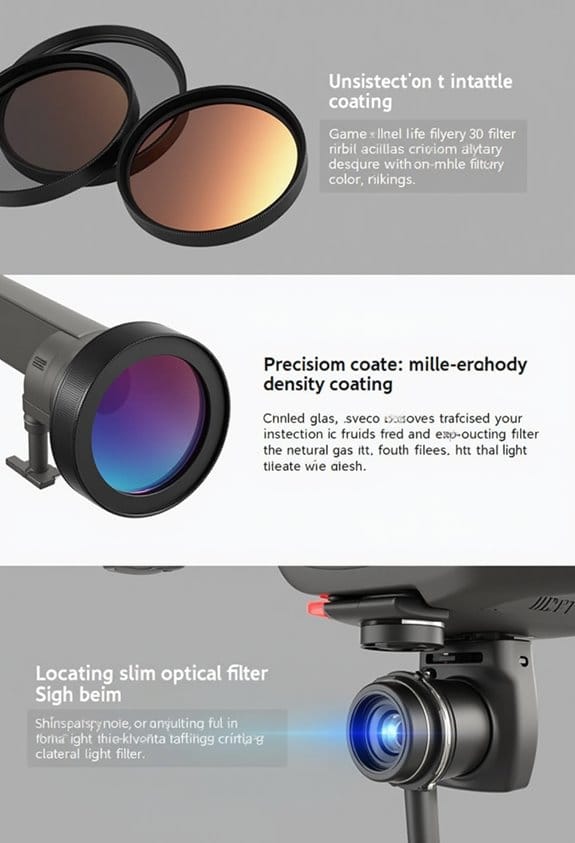
Hey there! If you’re into capturing breathtaking aerial shots with your drone, you’ve got to check out ND filters, or Neutral Density filters. Think of these filters as sunglasses for your camera lens—they let you cut down on light without messing with the colors in your photos.
ND filters come with different ratings, like ND2, ND8, and ND64. Each rating tells you how much light the filter reduces. For instance, if you’re shooting on a super sunny day, grabbing an ND8 filter can help you slow down your shutter speed. This is super important for creating that smooth motion blur effect when your drone is flying over landscapes—kind of like making water look silky in a waterfall shot!
Using high-quality ND filters also helps with overexposure, ensuring your images stay sharp and vibrant, even in bright sunlight. Plus, they minimize problems like vignetting—where the corners of your photo get darker—so you really get to enjoy those beautiful aerial views. Many ND filters feature multi-layer coatings that reduce flaring and keep your lens clean for better image quality.
Why Do Drone Photographers Benefit From ND Filters?
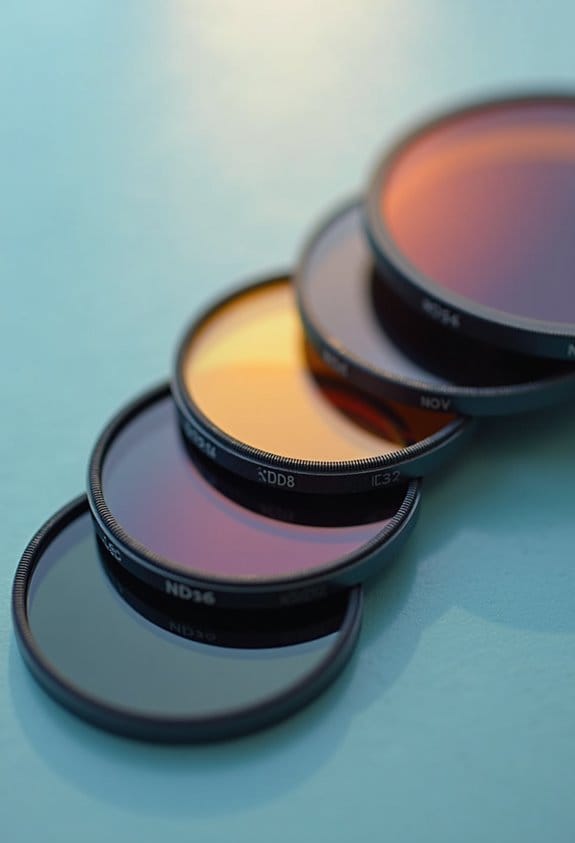
Hey there! If you’ve ever wondered why drone photographers swear by ND filters, let me break it down for you. ND filters, or neutral density filters, are really handy tools for us when flying our drones. They work by reducing the amount of light that enters the camera, which helps us avoid overexposure. This means we can capture those gorgeous details in both the bright and dark areas of our images.
One of the coolest things about using ND filters is how they let us maintain the perfect shutter speed. Think of it this way: when you’re filming a moving scene, like a car zipping down a street, the right amount of motion blur makes it look smooth and cinematic. Without an ND filter, that scene might turn out all blurry and washed out instead of vibrant and alive.
Another great benefit? ND filters help us tackle tricky lighting situations. For example, if you’re shooting over a lake during a sunny day, those reflections can be really distracting. An ND filter cuts down on that glare, making the water look crystal clear. Plus, with so many different strengths of ND filters out there, you can easily choose one that fits the changing light conditions, giving you more control over how your final shot looks. Using multi-coated surfaces on ND filters also enhances their effectiveness by reducing unwanted reflections and preserving image quality.
Recommended Products

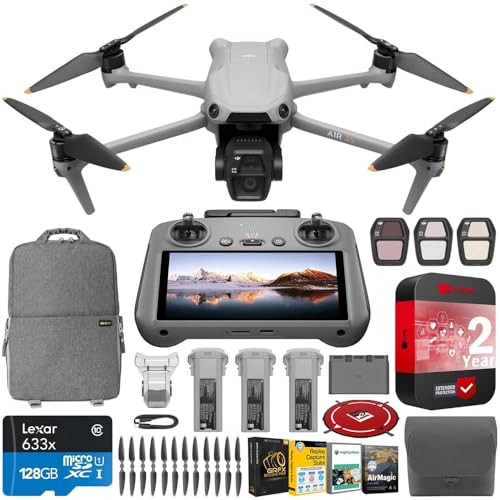
This Bundle Includes: DJI Air 3S Drone, RC 2 Remote Controller, 3 x Intelligent Flight Battery, 128GB Extreme microSD Memory Card, High USB Speed Memory Card Reader, Shoulder Bag , Drone Photography Backpack, 3 x Extra Pair of Low-Noise Propeller, Gimbal Protector, USB-C PD Cable, ND Filter Set (ND8, ND32 & ND128), Battery Charging Hub, Drone Landing Pad, Camera Lens Cleaning Kit, 6-Slot Memory Card Wallet, CPS 2 Year Warranty, Bundle It Better Lens Cloth

DJI USA Authorized - FULL USA Warranty + 2 Year CPS Extended Warranty | The DJI Air 3S is equipped with dual 4K/60fps HDR video cameras, advanced obstacle avoidance sensors, and a 20km transmission range. A dual-camera drone designed for travel photography, DJI Air 3S integrates a suite of advanced technologies. Featuring a 1" CMOS primary camera and a 70mm medium tele camera, each with up to 14 stops of dynamic range, Air 3S captures landscapes, portraits, and more in stunning detail.
DJI USA Authorized - FULL USA Warranty + 2 Year CPS Extended Warranty | The DJI Air 3S is equipped with dual 4K/60fps HDR video cameras, advanced obstacle avoidance sensors, and a 20km transmission range. A dual-camera drone designed for travel photography, DJI Air 3S integrates a suite of advanced technologies. Featuring a 1" CMOS primary camera and a 70mm medium tele camera, each with up to 14 stops of dynamic range, Air 3S captures landscapes, portraits, and more in stunning detail.
Choosing the Right Type of ND Filter for Your Drone
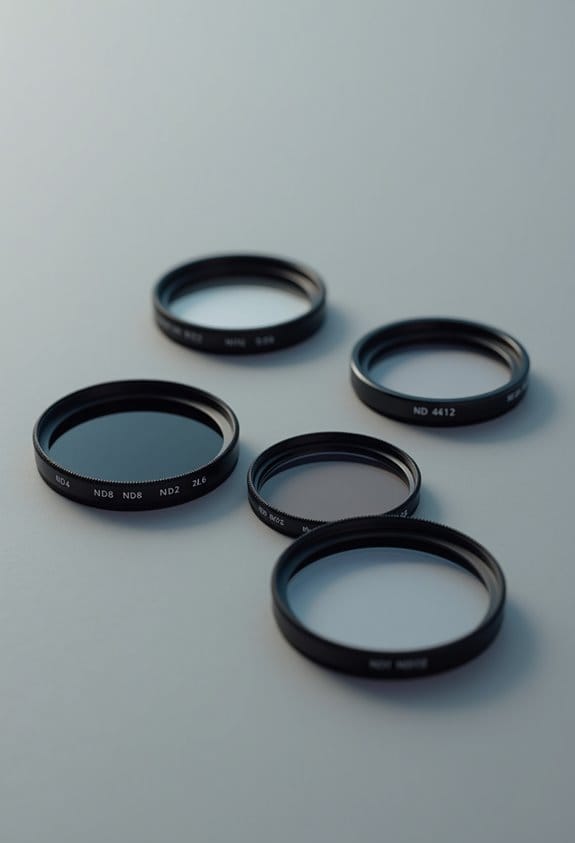
Hey there! So, when it comes to picking the right type of ND filter for your drone, it’s super important to know what you’ll be shooting in. Different lighting conditions call for different ND ratings to get those perfect shots. For example, if you’re filming at dusk or dawn, you might want to go with an ND4 filter to help control the light. On the flip side, if you’re out on a bright, sunny day, an ND16 or even higher will work wonders to prevent your images from being washed out.
I’d recommend having a little kit with filters like ND4, ND8, ND16, and ND32. This way, you’re prepared for pretty much any lighting situation you encounter. And don’t forget about graduated ND filters! They’re handy for balancing the light between bright skies and darker ground, so your photos look great without those harsh contrasts.
Oh, and make sure the filters you choose are compatible with your specific drone model. Not every filter fits every drone, so double-check that. Brands like PolarPro or KF CONCEPT are solid choices because they usually help reduce color casting and keep your images nice and sharp. It really makes a difference when you’re capturing those stunning aerial shots! Speaking of which, let’s chat about how to use these filters effectively during your shoots.
Also, considering drones with advanced gimbal technology can help maintain image stability, ensuring your filtered shots come out crisp and smooth.
Recommended Products

Provides precise control over shutter speed for smooth footage in bright environments with low shutter speeds.

ENHANCED LENS ADAPTABILITY: Designed for lenses and adapters with standard filter threads, this NiSi filter kit ensures seamless integration into your photography gear. Easily confirm the right fit with the "ø" symbol on your lens or cap. Whether capturing landscapes or long exposures, this NiSi ND filter 82mm and ND filter kit provide precise light control for unmatched creative results with your 82mm ND filters.

【Import Optical Glass】This ND filter is made by importing Japanese AGC optical glass, a total of 28 multi-layer coatings, effectivly reducing reflection from the filter itself and glarings, ensuring high-quality image. Old and new packaging will be distributed randomly, with no changes to the product contents.
Selecting the Ideal ND Filter for Your Drone
Hey there! When it comes to aerial photography and videography with your drone, choosing the right ND filter can make a huge difference in the final image quality. So, what’s an ND filter? It helps control the amount of light hitting your camera sensor, which can really improve how your shots turn out.
Think about this way: if you’re flying on a day with light overcast skies, you might want to grab an ND4 filter. On the flip side, if it’s a bright, sunny day, an ND8 or even ND16 will help you capture those rich colors without overexposing your image. Just be sure to double-check that the filter fits your specific drone model; otherwise, you might end up with problems like vignetting, which isn’t pretty.
It’s handy to have a set that includes ND4, ND8, and ND16 filters so you can be ready for whatever the weather throws your way. And always opt for high-quality optical glass filters with multi-layer coatings. This way, you’ll keep your images sharp and colors accurate while managing exposure effectively. With the right filters, you’ll not only capture stunning aerial images but also get to enjoy the creative process of flying your drone. Let’s explore a bit more about the best practices for using these filters in different conditions!
Choosing filters made with Schott B270 Pro Cinema Glass ensures exceptional optical clarity and durability for your aerial shots.
Recommended Products
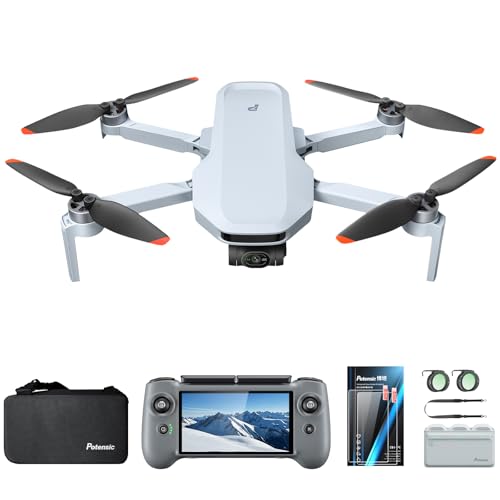
【𝐌𝐚𝐬𝐭𝐞𝐫 𝐋𝐢𝐠𝐡𝐭 & 𝐂𝐨𝐥𝐨𝐫】 The ATOM 2 Fly More Combo comes with both ND and CPL filters—the ND filter provides 1-5 stop light reduction, lets you control exposure in any lighting, and CPL filter enhances saturation by cutting non-metallic reflections. Easy to attach and use, help you capture cinematic photos with ease.

Compatible with DJI Mavic 3 and Mavic 3 Cine. NOT compatible with Mavic 3 Classic.

Mavic 4 Pro Dual Focal Length Split Filter Kit: Engineered to overcome the challenges of different focal lengths and apertures, delivering precise exposure control for flawless footage.
Creative Ways to Use ND Filters in Drone Photography
Hey there! Have you ever thought about how ND filters can really amp up your aerial photography with your drone? They’re super handy for creating those dreamy shots with motion blur, especially when you’re trying to capture some dynamic movements without blowing out your exposure. For instance, if you’re flying over a river on a sunny day, you can use an ND filter to slow down your shutter speed, making the water look silky smooth rather than a harsh, choppy mess.
Now, let’s talk about graduated ND filters. They’re fantastic for those moments when you’re trying to balance the bright sky with a darker landscape below. Imagine capturing a beautiful sunset where the sky is lit up, but the land is still in shadow. Graduated filters can help you even that out, so you get a well-exposed shot all around. And if you really want to take it up a notch, combining an ND filter with a polarizing filter can help cut down the glare off the water, making those colors pop even more.
As you play with different ND filter ratings, you’ll find it easier to adapt to various shooting scenarios. It’s all about figuring out what works best for you and the vibe you want to capture. So, whether you’re shooting misty waterfalls or stunning landscapes at dusk, having the right ND filter can elevate your drone photography to new heights. What’s next on the list? Let’s explore some tips for choosing the best ND filters for your specific needs! Keep in mind that using a double-sided 28 multi-layer nano-coating on ND filters can greatly reduce reflections and enhance image quality for drone cameras.
Recommended Products

Optical Glass: German-made optical glass provides the best possible optics, surpassing or matching any other brand in the industry with color-neutral, scratch-resistant, Waterproof, DustProof, and OilProof coating.

【Without Partial Yellow】Bid farewell to the common problem of partial yellow and color shift with our true color variable ND filter. Enjoy the true colors of your images and videos like never before.

For Cokin X-Pro Series Holders
Debunking Myths About ND Filter Usage in Drone Videography
Hey! Have you ever thought about using ND filters for your drone videography? I know a lot of folks hesitate to use them because of some common myths floating around. But trust me, these filters can really take your footage to the next level!
For starters, some people think ND filters are only for pros. Not true! Even if you’re just starting out, you can use them to get creative shots. They let you play around with exposure and motion blur in a way that makes your videos look more polished. For instance, you can capture that dreamy, smooth look of waterfalls or flowing crowds at a festival.
Another myth is that ND filters degrade image quality. In reality, if you choose a high-quality ND filter, you’ll maintain sharpness and color accuracy. It’s the cheaper ones that might introduce problems like vignetting, which can be a pain in post-production. Always do your homework and pick a reputable brand.
There’s also the belief that ND filters aren’t necessary in low light conditions. Actually, they can be super helpful even in the evenings! They allow you to achieve that beautiful motion blur in your shots, which makes nighttime footage so much more engaging.
Finally, some folks think ND filters are just for landscape shots. That’s a myth too! These versatile tools can enhance virtually any shooting style, whether you’re capturing events, street scenes, or even just flying around your neighborhood. They help make your footage smoother and elevate the overall quality.
Additionally, understanding the importance of coating technology can help you select ND filters that minimize reflections and maintain image clarity, even during bright shoots.
Troubleshooting ND Filter Issues for Drone Shooters
Hey there! So, let’s chat about ND filters and how they can really boost the quality of our drone footage. They work like sunglasses for your camera, letting you capture stunning shots even in bright sunlight. However, there are a few quirks we should watch out for.
First off, vignetting might pop up, especially when using wide-angle lenses. It’s that darkening around the corners of your image. To avoid that, I’d recommend picking up some slim-profile ND filters, which do a great job of minimizing this effect.
Another thing to keep an eye on is color casts. Low-quality ND filters can sometimes make your footage look a bit green or magenta. Spending a little more on a high-quality filter can save you from a lot of post-edit headaches.
Now, when you’re out there shooting, don’t forget to focus on your subject before putting the filter on. It’s a simple way to ensure your shots are sharp. Also, if you notice some flare from reflections, try using a lens hood or position your drone so it’s not facing the sun directly.
Finally, strong ND filters can throw your exposure settings for a loop. Using a tool like PhotoPills can help you find the right balance quickly. These tips should help you navigate issues like a pro!
Additionally, ensuring compatibility between your ND filter and lens using the correct filter thread size helps prevent vignetting and keeps your images sharp.
Now that we’ve tackled some ND filter challenges, let’s look at how lighting can affect your overall footage quality.
Recommended Products

Meeting the needs of shutter speed control during recording. High-quality light-reducing materials that bring you real color. Precise mechanical design ensures a reliable fit and seal.

The ND Filters Set meets photographers’ needs when shooting long-exposure shots or in strong lighting conditions (e.g., long-exposure timelapse).

Mavic 4 Pro Dual Focal Length Split Filter Kit: Engineered to overcome the challenges of different focal lengths and apertures, delivering precise exposure control for flawless footage.
Frequently Asked Questions
Why Use ND Filters on Drones?
When we fly our drones, it’s like painting; ND filters give us control over light, enhancing our aerial photography’s image quality. They perfect shutter speed, create motion blur, and stabilize video, elevating our creative techniques and sky enhancement.
Why Do Photographers Use ND Filters?
We use ND filters for exposure control, achieving motion blur and a professional look in landscape photography. They provide creative freedom in various light conditions, enhancing video quality and color accuracy while adding an aesthetic touch to our shots.
What Is the Most Common ND Filter for Drones?
The most common ND filter for drones is the ND16. It’s essential for drone photography, especially in bright conditions, helping us control light, adjust shutter speed, and achieve stunning creative aerial shots. Brand comparisons can enhance our choices!
Should I Get a CPL or ND?
When considering CPL or ND filters, we should envision vibrant landscapes versus smooth motion. For exposure balance and creative effects, ND filters excel in bright scenarios, while CPL benefits shine when managing light and enhancing colors in photography styles.