As an Amazon Associate, we earn from qualifying purchases. Some links on this site are affiliate links at no extra cost to you. Our recommendations are based on thorough research and editorial judgment.

Understanding TSA Regulations for Carrying Drones on Flights

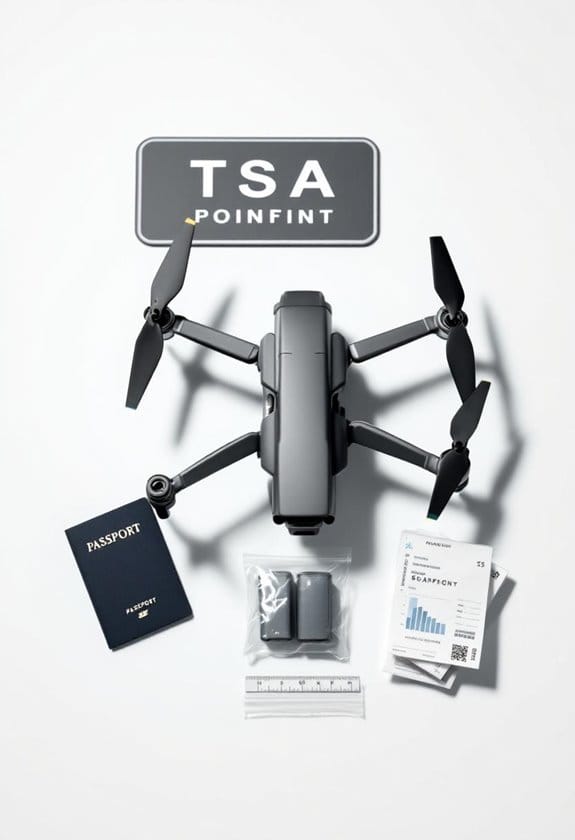
When traveling with drones, it’s essential we comprehend TSA regulations. Drones must be in carry-on luggage, as checked baggage isn’t allowed. We also need to carry lithium batteries in the cabin; those under 100 watt-hours (Wh) usually face no restrictions. However, we should carry batteries in fireproof bags, charge them to 30-50%, and remove propellers beforehand. By following these guidelines, we can help guarantee a smooth journey, and there’s more we should consider for international travel.
Key Takeaways
- Drones must be transported in carry-on luggage; they cannot be checked or placed in hold luggage.
- Lithium batteries under 100 watt-hours can be carried without restrictions, while those between 101-160Wh require airline approval.
- Use separate bins for drones and batteries during TSA security screening to ensure smoother inspections.
- Keep lithium batteries in fireproof bags and charge them to 30-50% before traveling to minimize risks.
- Confirm drone size and battery capacity compliance with airline regulations, as some may have stricter rules.
TSA Regulations for Traveling With Drones
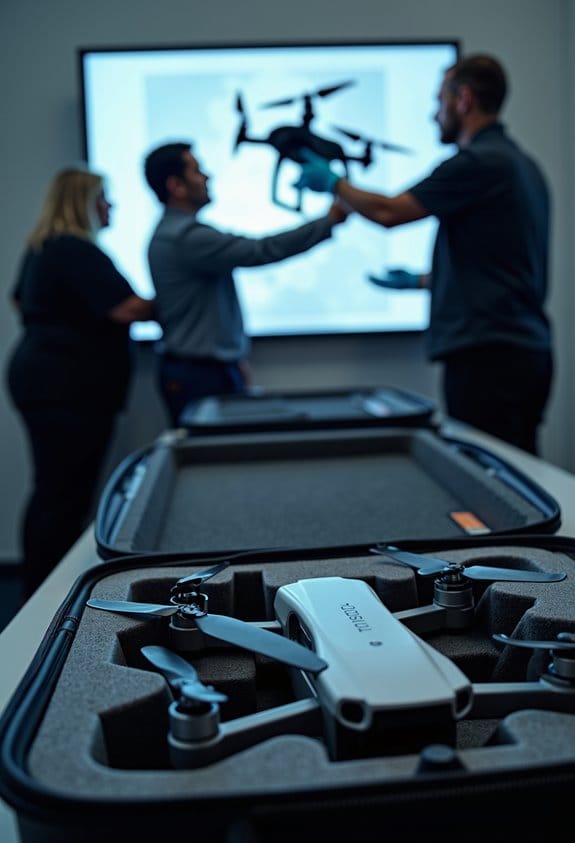
Hey there! So, if you’re planning to travel with your drone, you’ll want to get familiar with the TSA regulations. Trust me, it’s not as complicated as it sounds! For starters, you can’t check your drone in your luggage—it has to go in your carry-on. Also, those lithium batteries? Yep, they need to be with you in the cabin, not packed away in the hold.
Now, here’s how the batteries work: if they’re under 100 watt-hours (Wh), you’re in the clear; you can just toss them in your carry-on without any fuss. However, if they’re between 101 and 160Wh, you’ll need to get the airline’s approval first if you plan to bring along more than two spare batteries. And don’t forget, when you’re going through security, you should place your drone and those batteries in a separate bin for screening. Be prepared to chat with the TSA agents about what you’re carrying; they’re just keeping everyone safe.
Oh, and a quick tip: before you head to the airport, always check with your airline for any specific rules they might have about drones or batteries. It can sometimes vary from one airline to another! Also, using a lockable drone case approved by TSA can make the security process smoother.
Now that we’ve navigated the TSA regulations, let’s explore some best practices for flying your drone at your destination.
Best Practices for Packing Your Drone Gear
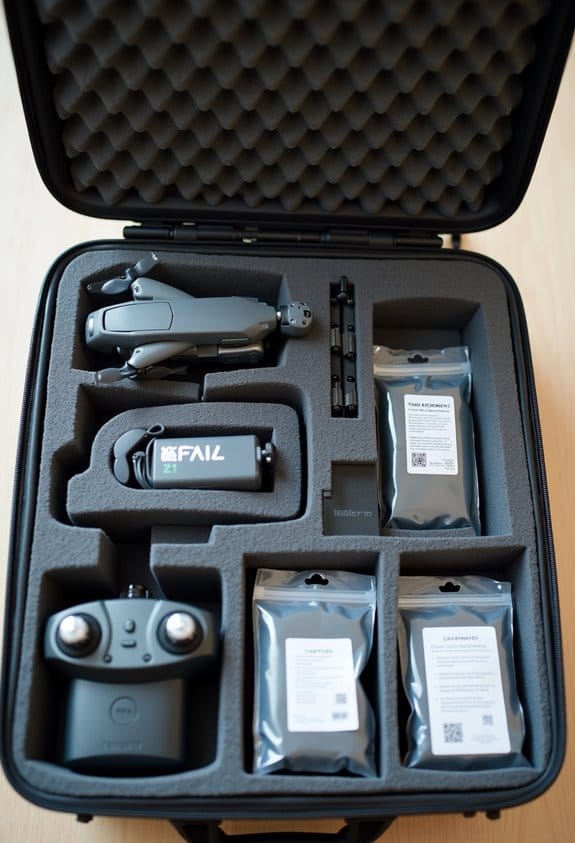
Hey there! If you’re planning to travel with your drone gear, packing it right is super important for a hassle-free experience. Start by grabbing a tough, durable drone case that fits within the airline’s size and weight limits. I can’t stress enough how important it is to make sure that pesky lithium batteries are kept in your carry-on. They can get a little tricky, so using fireproof or LiPo-safe bags is a smart move—this helps you avoid any fire risks.
When it comes to the batteries, aim to charge them to about 30-50% before your journey. This minimizes any potential hazards during transit. And don’t forget to take off the propellers—this simple step can save you from some serious damage. Store them in a separate pouch to keep everything safe. Before you head out, do a quick check of your gear. You’ll want to ensure everything’s in working order—from the drone’s gimbal stability to the camera quality. A little prep goes a long way in making your travels smooth and worry-free!
Using a hard-shell exterior drone case can further protect your equipment from shocks and impacts during travel.
Now that you’re all set for packing, let’s talk about how to get through airport security smoothly with your gear.
How to Calculate Battery Watt-Hours for Travel?
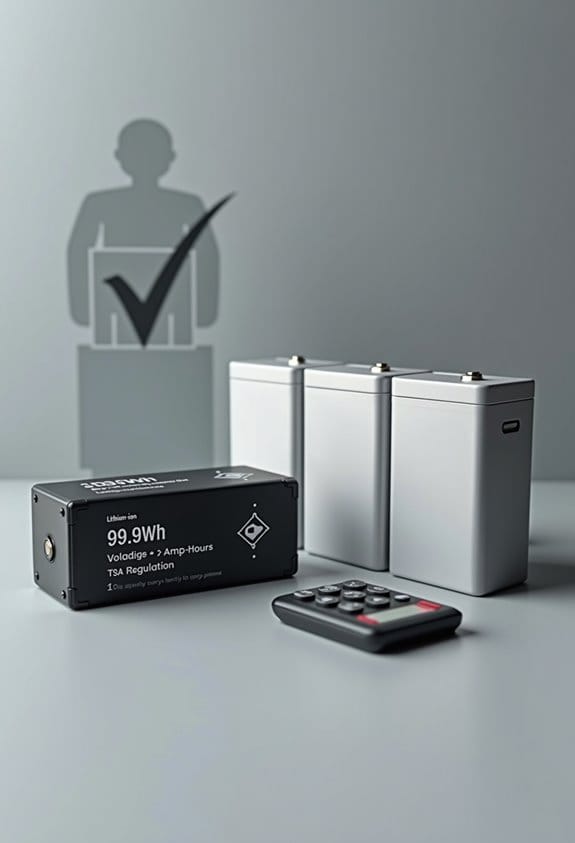
Hey there! If you’re planning to travel with your drone, calculating battery watt-hours is crucial—not just for keeping your gear in check, but also for staying within TSA regulations. It’s pretty easy, too! All you need to do is multiply the voltage (that’s the V) by the amp-hour (that’s the Ah) rating of your battery. So, the formula looks like Wh = V x Ah.
Let’s say you have a lithium battery with a voltage of 11.1 volts and a capacity of 2,600mAh (which is the same as 2.6Ah). You’d just do the math: 11.1V x 2.6Ah equals about 28.86Wh. Simple, right? The great news is that if your battery is under 100Wh, you can usually take it on a plane without any hassle.
But if you’ve got a battery that falls between 101Wh and 160Wh, you’ll need to get approval from the airline first. This makes it super important to get your calculations right before your trip. Just imagine showing up at the airport only to have your gear held up! So, take a moment to sort out those watt-hours, and you’ll save yourself a lot of trouble later. Also, choosing power supplies with overvoltage protection can help safely charge your drone batteries and maintain their health during travel preparations.
Best Practices for Navigating TSA Inspections
When it comes to traveling with your drone, understanding battery watt-hours is just the tip of the iceberg! Navigating TSA inspections smoothly can make all the difference in your travel experience. Here are some tips that I’ve found really helpful.
First off, always keep your drone and its batteries in separate bins when you go through security. This little trick can speed things up and keeps everything organized for the TSA agents. Plus, it’s a good idea to let them know you have a drone. This way, they’re prepared for any questions, and it helps create a smoother check-in.
Now, let’s talk about batteries. It’s crucial to pack your lithium batteries in your carry-on luggage – they’re not allowed in checked bags. Make sure the batteries are under the 100Wh limit unless your airline says otherwise. A quick tip here: use a fireproof battery bag. They not only minimize fire hazards but also make it crystal clear for agents what they’re looking at.
Lastly, keep some documentation about your battery specifications on hand. This can really help if the agents have any questions during the inspection. It’s like having your homework ready when the teacher asks for it!
Also, consider investing in Lipo safe bags to enhance the safety and organization of your drone batteries during travel.
With these tips in your back pocket, you’ll be better prepared for your time at the TSA checkpoint. Next up, let’s explore what gear you should prioritize packing for your drone adventures!
Navigating International Travel With Drones
Hey there! So, if you’re thinking about taking your drone on an international trip, that’s super exciting, but there are definitely some navigational challenges you’ll want to keep in mind. Each country has its own drone regulations and customs rules, which can differ a lot from what we’re used to.
First things first, check if your drone needs to be registered or if you need any special permits to fly it in the destination country. For instance, in countries like Brazil, you’ll need to register your drone with the national civil aviation agency. Also, don’t forget to carry documentation that outlines your drone’s specifications, like its weight and battery capacity—some countries want to see proof that you’re within their regulations.
Oh, and another thing to consider is power! Make sure you pack the right plug adapters and voltage converters, since power outlets can be quite different around the globe. For example, if you’re heading to Europe, you’ll need a Type C or Type F plug adapter to keep your drone batteries charged up.
Also, familiarize yourself with local no-fly zones. For instance, in cities like Paris, there are strict areas around landmarks like the Eiffel Tower where flying drones is off-limits, and breaking these rules could lead to fines or even the confiscation of your equipment. If you’ve got high-value gear, getting a carnet could save you from unexpected customs fees and make your life a lot easier.
Since many drones are now designed to be lightweight and foldable, choosing a portable drone design can ease travel logistics and comply with airline regulations.
With a bit of preparation, you can make sure your drone adventures go smoothly! Let’s move on to how you can capture the best shots while traveling.
Avoid These Common Drone Travel Mistakes
Hey there! So, as we’re gearing up for our thrilling drone adventures, let’s talk about some common drone travel mistakes we want to avoid. First off, it’s really important to remember that you should never pack your drone batteries in checked luggage. Always keep them in your carry-on bag. A little tip: discharge your batteries to around 30-50% before traveling; it reduces any fire risks.
Next, make sure you check your airline’s rules about drone size and battery watt-hour limits. For instance, some airlines may have stricter regulations than others, and you don’t want to face an unexpected issue at the check-in counter. When you get to the TSA screening, be sure to place your drone and batteries in separate bins. It makes the whole security process a lot smoother!
Lastly, take a moment to cover your battery terminals with insulated caps or some tape. This quick step helps prevent any short circuits while you’re traveling. Also, consider investing in a waterproof drone case to protect your gear from unexpected water exposure during your travels. Keeping these tips in mind will definitely set you up for a hassle-free experience. Ready for some fun adventures in the sky?
Frequently Asked Questions
How to Bring a Drone Through TSA?
We’ve got drone travel tips for you! To breeze through TSA’s inspection process, pack your drone in carry-on, keep batteries secure, and prepare for separate security checks. It’s all about being organized and informed!
Can You Take a Drone With Lithium Batteries on a Plane?
Yes, we can take a drone with lithium batteries on a plane. We should follow lithium battery regulations, adhere to battery capacity limitations, and apply drone transportation tips for a smooth travel experience.
Where to Put a Drone When Flying?
We can’t simply toss our drone in checked baggage—what fun would that be? For in-flight safety, drone storage tips suggest keeping it in carry-on, following airport security procedures for a seamless journey with our favorite gadget.
Should I Put a Drone in a Checked Bag or Carry On?
We should definitely pack our drone in carry-on luggage. It guarantees compliance with flight regulations and airline policies while allowing easier access and safer transport for our precious drone and its batteries.