As an Amazon Associate, we earn from qualifying purchases. Some links on this site are affiliate links at no extra cost to you. Our recommendations are based on thorough research and editorial judgment.


Understanding Airspace Restrictions and No-Fly Zones

Understanding airspace restrictions and no-fly zones is crucial for safe flying. These rules protect people and property below from potential hazards. They can be permanent, like around military bases, or temporary, activated during special events. We can identify these zones on sectional charts, which show restricted areas marked clearly. Violating these regulations can lead to hefty fines or even criminal charges. If we want to operate safely and legally, let’s explore how to navigate these complex airspace rules effectively.
Key Takeaways
- Airspace restrictions include permanent no-fly zones around airports and military bases, as well as temporary zones activated during specific events.
- No-fly zones are marked on US VFR sectional charts with blue hatched borders and an “R” marker, indicating restricted airspace.
- Violating airspace restrictions can lead to significant fines, criminal charges, and the potential revocation of pilot certificates by the FAA.
- Tools like the FAA’s B4UFLY app and geofencing technology help pilots stay informed and compliant with ever-changing airspace regulations.
- Always check for Temporary Flight Restrictions before flying, and apply for necessary permissions to operate in restricted areas.
What Are Airspace Restrictions and No-Fly Zones?
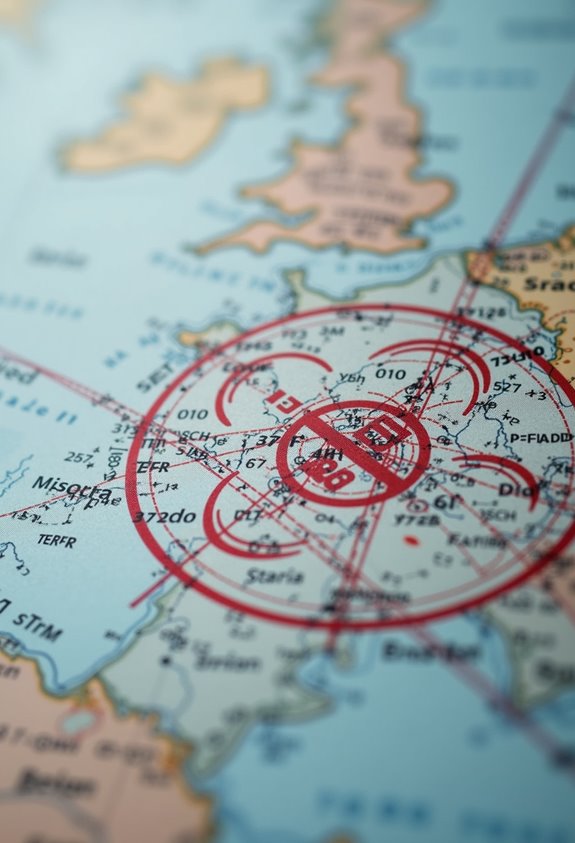
So, let’s talk about airspace restrictions and no-fly zones. These are crucial for keeping our skies safe and secure. For example, airports and some sensitive government sites have no-fly zones around them, which means you can’t just fly a drone there. The Federal Aviation Administration (FAA) is the agency in charge of regulating these rules. They classify airspace into different categories and set up Temporary Flight Restrictions (TFRs) when major events or emergencies occur, like a presidential visit or a natural disaster.
It’s important to know that if you violate these no-fly zones, you could face serious consequences, including hefty fines or even criminal charges. They’ll take it seriously to protect the public and sensitive areas. Plus, geofencing technology is used to help enforce these restrictions by blocking drone flights in designated areas. However, sometimes it can miss the mark if GPS isn’t perfectly accurate or if the database hasn’t been updated.
Understanding these regulations is key for anyone interested in flying drones safely. It’s all about keeping our airspace organized and secure for everyone. Speaking of organization, let’s move on to how you can stay updated on these rules and ensure your drone operations are in compliance. Using versatile landing pads can also enhance safe drone operations by providing stable touchdown zones in various environments.
How No-Fly Zones Affect Drone Operations: Permanent vs. Temporary

Hey there! Let’s chat about how no-fly zones impact our drone operations. It’s super important to understand these zones because they can really shape where and how we fly our drones. You can think of no-fly zones as falling into two main categories: permanent and temporary.
Permanent no-fly zones are, well, permanent! These are usually set up around critical spots like military bases or airports. You definitely need to keep a distance from these places at all times to ensure safety in the skies. For example, if there’s a military base nearby, you can’t just fly your drone in there; it’s off-limits all the time.
Now, temporary no-fly zones pop up for specific events—think of things like public gatherings, festivals, or even when there’s a natural disaster. These zones can change depending on what’s happening, so you have to stay on your toes. If there’s a big concert downtown, you’ll often see temporary restrictions that keep drones away to avoid any crowd chaos.
No matter which type they are, violating these no-fly zones can lead to hefty fines or even criminal charges. While it’s possible to get special permission to fly in some permanent no-fly zones, temporary ones tend to have even stricter rules. That’s why staying updated on these regulations is key to keeping our flights safe and responsible. Many drones come equipped with GPS navigation features that help maintain compliance with these restricted areas.
Next, let’s explore how to find out about these no-fly zones before you take to the skies!
How to Identify No-Fly Zones and Restricted Airspace?

When you’re gearing up to fly your drone, one of the most important things to know is how to identify no-fly zones and restricted airspace. It’s a key part of ensuring that your flight is safe and legal. A good starting point is to check out US VFR sectional charts. These charts show no-fly zones with blue hatched borders and an “R” marker, making it easy to spot areas where you can’t fly.
Restricted airspace is a bit more complex. You’ll typically need special permission to operate in these zones. You’ll see information about their vertical limits and which air traffic control (ATC) agency you need to contact for authorization. For example, if you’re near a military base, it’s crucial to check the associated restricted airspace details before planning your flight. Don’t forget to keep an eye on Temporary Flight Restrictions (TFRs) too. These are often issued for special events like sports games or wildfires and can change quickly.
A great way to stay in the loop about no-fly zones and flight restrictions is to use tools like the FAA’s B4UFLY app or third-party apps like AirMap. They provide up-to-date information about various airspace classes, including B, C, and D. Being informed means you can fly your drone with peace of mind, knowing you’re staying clear of restricted areas. To maintain safe and reliable operation, ensure you use power supplies with built-in safety features when charging or powering your drone equipment. Now that you have a grasp on airspace rules, let’s dive into the next exciting step: understanding how to get your drone set up for a successful flight!
Legal Consequences of Violating Airspace Restrictions
Hey! So, let’s chat about flying drones and the sometimes scary side of airspace restrictions. It might feel super thrilling to zip around with your drone, but breaching those airspace rules can land you in some seriously hot water. The Federal Aviation Administration (FAA), which is the big boss of air travel in the U.S., takes these regulations incredibly seriously.
For example, if you accidentally fly into a no-fly zone—like near an airport—you could be facing a fine that can climb into the thousands of dollars. And if that same mistake happens again, you might even be looking at criminal charges. That’s a pretty hefty price to pay just for a quick photo op!
Another big deal is your pilot certificate. If you’re caught flying where you’re not supposed to, the FAA can snatch it away, along with your drone flying rights. Plus, there’s the real possibility that your drone could be confiscated right on the spot. Not to mention, if you run into trouble like this, it might tarnish your reputation and could even negate your insurance coverage. Understanding the importance of your drone’s GPS functionality can help ensure safe navigation and compliance with airspace rules.
Best Practices for Navigating No-Fly Zones and Airspace Restrictions
Hey there! If you’re thinking about flying a drone, navigating no-fly zones and airspace restrictions can seem a bit tricky at first. But with a few straightforward practices, you can make sure you’re flying safely and legally. Before you even think about taking off, always check for any updated Temporary Flight Restrictions (TFRs) because they can change really quickly. It’s like looking up the weather before a picnic—you want to know what you’re dealing with!
Next up, understanding the different airspace classifications—from Class A all the way to G—is super important. Each class has different rules that you need to follow. For example, Class B airspace typically surrounds major airports and requires special permission to fly in, while Class G is often more relaxed but still has its own rules.
Using geofencing technology in your drone is a smart move, too. It helps keep you from accidentally flying into restricted areas. Just keep in mind that GPS signals can sometimes get a little wobbly, so combine that tech with good old-fashioned awareness. And don’t forget about the FAA’s B4UFLY app—it’s a handy tool that helps you find out what the airspace looks like and if there are any restrictions in your area.
If you really want to fly in a restricted area, make sure to apply for any necessary permissions well ahead of time. It’s kind of like reserving a spot at a busy restaurant; planning in advance increases your chances of getting that sweet green light. Additionally, selecting the right battery capacity can help ensure you have sufficient flight time to complete your mission within restricted zones safely.
With these tips in mind, you’re well on your way to navigating the skies confidently! Now that you’ve got the basics down, let’s talk about some real-world scenarios you might encounter while flying.
Frequently Asked Questions
Can Drones Be Flown in Temporary No-Fly Zones During Emergencies?
We can’t fly drones in temporary no-fly zones during emergencies as it violates FAA guidelines. Following emergency protocols is essential to support first responders, ensuring public safety and respecting airspace management and pilot responsibility in incident response.
How Can I Report a Violation of No-Fly Zone Regulations?
To report a violation, we should follow reporting procedures with enforcement agencies. Collecting evidence using GPS technology supports public safety concerns. Remember, anonymous reporting can highlight serious violations, helping guarantee regulatory compliance and understanding legal implications.
Do No-Fly Zones Apply to Recreational Drone Pilots?
Yes, no-fly zones apply to us as recreational drone pilots. We must adhere to regulations, stay aware of airspace rules, understand legal consequences, and utilize educational resources to ascertain compliance with safety protocols and local enforcement agencies.
Are Commercial Drone Operators Exempt From No-Fly Zone Restrictions?
Maneuvering through airspace restrictions feels like steering a ship through stormy seas. We aren’t exempt from no-fly zones; commercial drone operators must comply with drone regulations, safety protocols, and local ordinances for public safety.
What Should I Do if I Accidentally Enter a No-Fly Zone?
If we accidentally enter a no-fly zone, we should follow safety protocols, conduct emergency procedures, notify authorities immediately, and stay aware of local regulations to avoid penalties, acknowledging the limitations of drone technology and our pilot responsibility.