As an Amazon Associate, we earn from qualifying purchases. Some links on this site are affiliate links at no extra cost to you. Our recommendations are based on thorough research and editorial judgment.


How Temperature Affects Drone Battery Performance

Temperature greatly impacts drone battery performance, affecting efficiency and flight time. As temperatures drop below 59°F (15°C), battery efficiency starts to diminish. Cold weather slows down chemical reactions, potentially causing a significant power loss in LiPo batteries around 14°F (-10°C). Conversely, high temperatures above 90°F can drastically reduce flight time, leading to overheating and malfunctions. To optimize battery performance, we should consider temperature management strategies tailored for different conditions. Understanding these factors helps guarantee a reliable flying experience.
Key Takeaways
- Battery efficiency declines in temperatures below 59°F (15°C) and can lead to unexpected power loss at around 14°F (-10°C) or lower.
- High temperatures above 104°F significantly reduce flight time due to accelerated chemical reactions, with extreme heat often reducing flight duration to 10-15 minutes.
- Warming LiPo batteries to 75°F (25°C) before flights in cold weather enhances efficiency and performance.
- Using waterproof cases in humid conditions protects batteries from moisture, which can cause short circuits and reduce effectiveness.
- Monitoring battery temperature and voltage regularly helps maintain optimal performance and extends battery life across varying climatic conditions.
How Extreme Cold Affects Drone Battery Efficiency
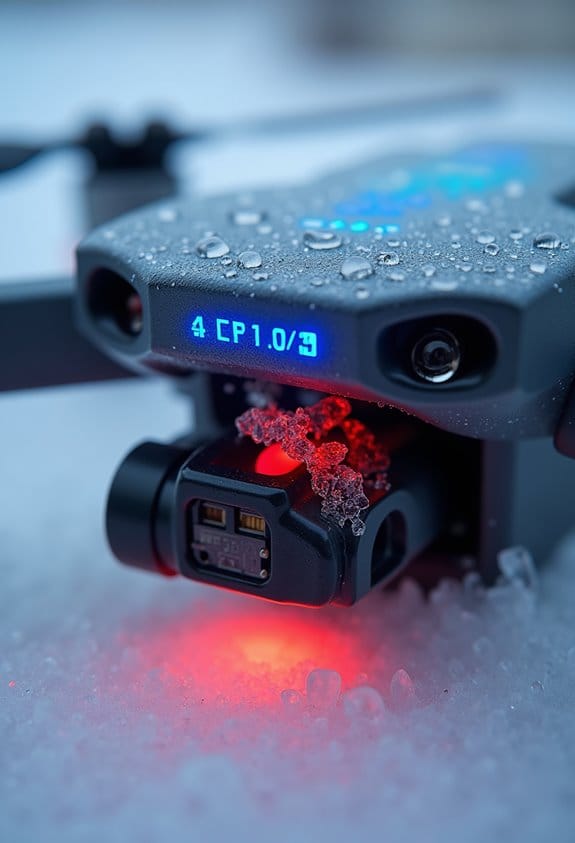
Hey there! If you’re planning to take your drone out for some adventures in the extreme cold, it’s super important to remember that frigid temperatures can really mess with battery efficiency. When it’s chilly—notably below 59°F (15°C)—you can expect your drone’s flight time to take a hit. For instance, if you’re flying in temperatures around 14°F (-10°C) or lower, those LiPo batteries can lose power unexpectedly, which is not something you want mid-flight!
What’s happening is that the chemical reactions in the batteries slow down when it’s cold, leading to less power output. It’s almost like the batteries are shivering too! To keep your drone flying longer in the cold, one trick is to warm the batteries to around 75°F (25°C) before you head out. Just place them in your pocket for a bit or use a battery warmer if you have one.
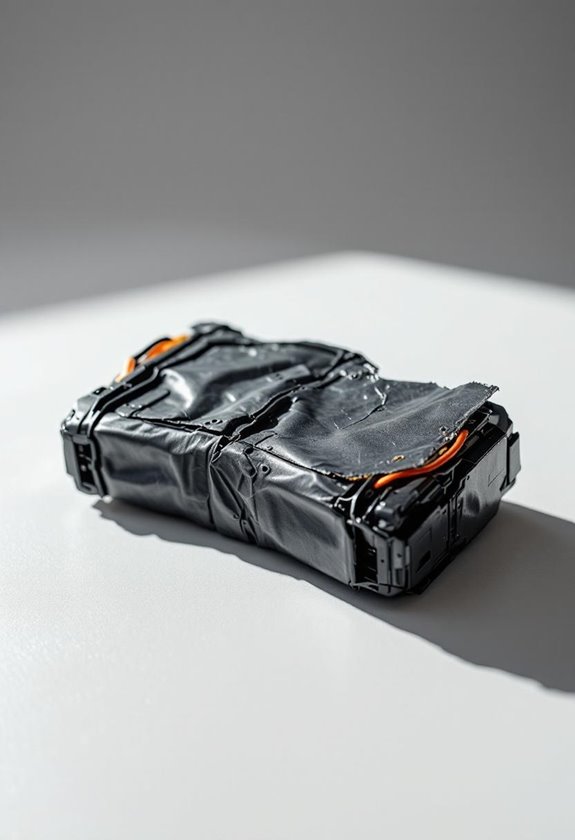
And don’t forget to keep a close eye on your battery levels during your flights. Checking frequently can save you from those heart-stopping moments when the drone starts losing power. So, having these tips in mind will make your cold-weather drone adventures a lot smoother! Using fireproof battery bags can also help protect your batteries during transport and storage in cold conditions.
How Hot Weather Impacts Your Drone’s Flight Time?

Hey! If you’re thinking about flying your drone in hot weather, let’s chat about how those soaring temperatures can really affect your flight time. When it gets too hot outside, the battery in your drone can drain faster than normal because the heat ramps up those chemical reactions inside. Generally, your drone tends to perform best in cooler temps, ideally between 32°F and 104°F. But once you hit that 104°F mark, it can lead to some serious issues like overheating or even malfunctions.
I’ve seen it happen where flying in temperatures above 90°F cuts flight time down to just 10-15 minutes. That’s a bummer when you were hoping for a longer session. It’s super important to keep an eye on the battery temperature too; if it gets too hot, it can lead to a sudden power loss, causing your Li-Po batteries to drain quickly. So, if you know you’re flying in warm conditions, try to keep your drone in the shade or use a battery cooler to extend its life. Proper temperature control during charging and use plays a crucial role in extending lithium-ion battery lifespan and ensuring safe operation.
The Role of Humidity in Drone Battery Performance

Hey there! You know, humidity really does affect how our drone batteries perform when we’re out flying. If the air is too humid, it can actually mess with the electrical components, increasing the chances of short circuits and making the batteries work less efficiently. On the flip side, moderate humidity usually won’t create too many problems, but once it gets too high, condensation can form— and trust me, that’s not good news for our drones.
For instance, if you’re flying near a lake or after a rainy day, it’s a smart idea to use waterproof cases for your batteries. This helps shield them from the moisture that can break down the battery materials over time, ultimately shortening their lifespan and effectiveness. Taking a few extra precautions, like checking the humidity level before you fly and keeping your batteries dry, can make a world of difference. Using battery protection circuits with over-discharge protection can also help maintain battery health in challenging environmental conditions.
Comparing Li-Po and Li-Ion: Essential Battery Chemistry
Hey there! Let’s chat about drone batteries, specifically the differences between Lithium Polymer (Li-Po) and Lithium-ion (Li-ion) batteries. Both types have their own perks and pitfalls, so understanding them can really help you choose the best one for your flying needs.
First off, Li-Po batteries are super light and can deliver a lot of power quickly, which is perfect for drones that need to speed up fast. Imagine zipping around tight corners or darting off the ground; that’s where Li-Po shines. But there’s a catch: they don’t perform well in cold weather. When it gets chilly, their internal resistance goes up, and you might find your drone struggling to keep up.
On the other hand, Li-ion batteries are known for lasting longer and handling heat better. They hold a steady voltage for a more consistent performance, whether it’s a hot summer day or a chilly fall afternoon. While Li-Po might puff up if left in a hot car, Li-ion batteries are more reliable, making them a favorite for folks flying in varying temperatures. So, if you’re planning to fly in places with wild weather shifts, you might want to lean towards Li-ion batteries for that peace of mind.
Additionally, both battery types often come with temperature resilience features, allowing them to operate reliably across a range of -20C to +60C, which is crucial for drone applications.
With these characteristics in mind, choosing the right battery can make a huge difference in your drone’s performance. It’s all about matching the battery to your flying style and environmental conditions. Ready to explore battery care tips next?
Recommended Products

[Compatibility Notice] CONNECTOR TYPE IS JST PH2.0MM (2-Pin, 2.0mm Pitch). Please verify the exact size, connector type, and polarity match your device before purchase. An incorrect match may damage your device or this battery.

Battery connector: MX2.0 Plug, or called molex plug, Battery dimensions:29*19.7*7.7mm/1.14*0.78*0.3 inch Battery weight: 7.4grams/0.26oz. Discharge rate:25C. material:Lithium-polymer.
How to Maximize Battery Performance in Different Climates
Hey there! Let’s chat about how temperature can really impact your drone’s battery performance when you’re flying in different climates. It’s crucial to keep in mind that both cold and hot weather can affect how long your drone stays in the air and how reliable it is.
For instance, when it’s cold outside, you’ll want to warm up your LiPo batteries to about 75°F (25°C) before flying. You can use a battery warmer for this. It might sound a bit extra, but this little step helps prevent capacity loss, so your drone can perform at its best. Keep an eye on the battery’s temperature while you’re in the air too, because chilling conditions can seriously drain the power, resulting in shorter flight times.
Now, if it’s a hot day, try flying during the cooler parts of the morning or evening. Also, don’t forget to store your drone in the shade! This simple action can really help keep the battery cooler and extend its life during your flights. And one last tip: when you’re facing cold weather, always carry extra fully charged batteries. You never know when the chill might cause your main battery to drain faster than expected.
Choosing batteries with the appropriate discharge rate for your drone setup can also help optimize performance in varying temperatures.
Understanding these battery tips and tricks can make your flying experience way smoother! So, next, let’s explore how different flying altitudes can also affect your drone’s performance.
Recommended Products

Intelligently discharging LiPo battery to storage voltage via built-in MCU and temperature sensor.

High Capacity & More Powery: Upgraded 450mAh high capacity battery pack delivers power when you need it. URGENEX RC battery pack delivers a discharge rate to push your RC car run time to the peak of its abilities.

Wide Application: URGENEX 380mah 3.7V Lipo batteries are compatible with SYMA Q11, H99W, H6C, H31, H98, TR-C385, TR-F22, TR-P51, AT-96 and Holy Stone HS170G, HS170, HS170C, HS230.(Only if the voltage, dimension and plug match, then it will fit.)
Preparing Your Drone for Seasonal Temperature Changes
As the seasons change, it’s super important to get our drones ready for those temperature swings, especially since they can really mess with battery performance. For example, did you know that if it’s chilly outside, warming up your drone batteries to about 75°F (25°C) before you fly can really boost efficiency? That way, you can avoid any frustrating mid-air power cuts.
Also, it’s a good idea to regularly check your battery’s specs, particularly the operational temperature ranges. This will help you ensure you’re flying in safe conditions. For instance, LiPo batteries tend to drop in performance once the temperature dips below 59°F (15°C), so you might want to think about using insulation or even battery warmers to keep them cozy.
When it comes to storage, always aim to keep your drones and batteries in a warm spot. Batteries that are drained and stored in low temperatures often struggle to perform well when you take them out for a flight. And don’t forget to pack some extra fully charged batteries, especially during seasonal changes, since they can drain quicker when it’s not so warm.
Preparing your drone for seasonal temperature changes can really enhance your flying experience, making it not only safer but also a lot more fun. So, let’s take a closer look at how to keep your drone in tip-top shape throughout the year!
Using batteries with a low self-discharge rate ensures that your drone’s batteries retain their charge longer during storage, which is crucial in colder seasons.
Recommended Products
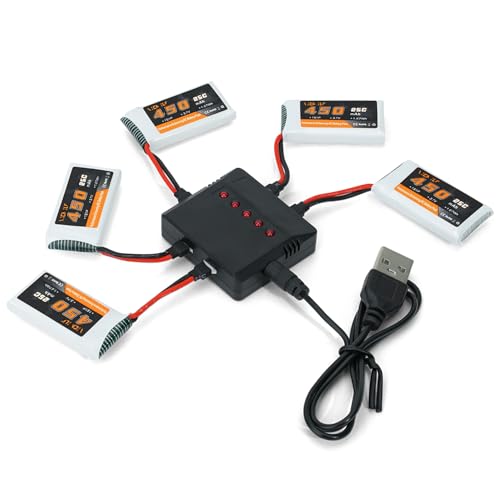
Specific Parameters: Dimensions: 8.1mm*20mm*37mm/0.32*0.79*1.46 inch; Weight:12g/0.42oz; Volt: 3.7V; High Capacity: 450mAh; High Discharge Rate: 25C; Discharge Plug: Molex; Charger: 5in1 Battery Charger.

18400mAh high capacity battery pack provides long lasting warm for your heated apparel.

Upgraded 4500mAh Capacity– 23-Min Flight Time: This Satonaka intelligent flight battery delivers a true 4500mAh (68.4Wh, 15.2V) capacity, providing up to 23 minutes of flight time per full charge. Perfect for capturing stunning aerial footage of landscapes or special moments. Flight time may vary based on flight mode, wind conditions, and temperature. Pro Tip: Perform 2-3 low-altitude test flights before high-altitude operation.
Monitoring Your Drone Battery’s Health and Performance
Hey! So, if you’re flying drones like I do, you know that monitoring your drone battery’s health and performance is super important, especially when temperatures start to change. Keeping an eye on your battery’s voltage and temperature can help you avoid overheating, which can really wear out your battery. I like to check the battery’s temp before every flight; if it’s climbing too high, I’ll give it a break.
Using some cool apps or diagnostic tools can also make a big difference. They can keep track of things like how many charge cycles your battery has gone through and its internal resistance. This helps you get a clearer picture of when you might run into performance issues. Oh, and don’t forget about scheduled maintenance – in colder weather, your battery might not perform at its best, so it’s useful to know the manufacturer’s recommended temperature ranges to avoid underperforming drones. Additionally, using a high accuracy voltage checker ensures you have precise readings to maintain optimal battery performance and longevity.
Recommended Products

Compatibility for 1-8S RC Batteries: Works seamlessly with LiPo/Li-Ion/LiMn/Li-Fe batteries widely used in RC drones, cars, and boats. Effectively prevents battery damage from overcharging & overdischarging, extending your battery lifespan and saving replacement costs.

MULTI CELL SUPPORT: Works with LiPo, Li-ion, LiFe (2–7S) and NiMH/NiCd (4–7 Cells) packs. 2 Pack

MULTI CELL SUPPORT: Works with LiPo, Li-ion, LiFe (2–7S) and NiMH/NiCd (4–7 Cells) packs.
Choosing the Best Drone Battery for Varying Weather Conditions
When it comes to flying drones, choosing the right drone battery for varying weather conditions is super important for keeping your drone in top shape. A battery that performs well in the cold, heat, or humidity can be the difference between a smooth flight and a frustrating experience.
For those cold days, I’d recommend using Li-ion batteries. They handle lower temperatures quite well and have a wider range than Li-Po batteries, which can struggle to maintain performance in the chilly air. However, if you’re out in scorching heat, look for batteries that have thermal management features. These can help prevent overheating, which could shorten your battery’s life or even affect how well your drone operates.
Humidity is another factor that can impact your battery’s performance. Waterproof batteries are a great choice here, as they can shield themselves from moisture build-up, which might cause short circuits. For instance, if you’re flying near lakes or in rainy conditions, a waterproof battery can save you a lot of headaches. Additionally, focusing on batteries with high discharge rates can improve overall performance, providing better acceleration and reliability regardless of weather challenges.
Recommended Products
【Cold Weather Operation Guidelines】Please start the propellers on the ground and allow the battery temperature to reach at least 20°C/68°F before takeoff. This effectively activates the lithium ions within the battery, preventing the aircraft from triggering an emergency landing during flight due to a sudden sharp drop in battery percentage.

For H99W H31 H6C H98 AT-96 TR-C385 TR-P51 TR-F22 SYMA Q11 quadcopter

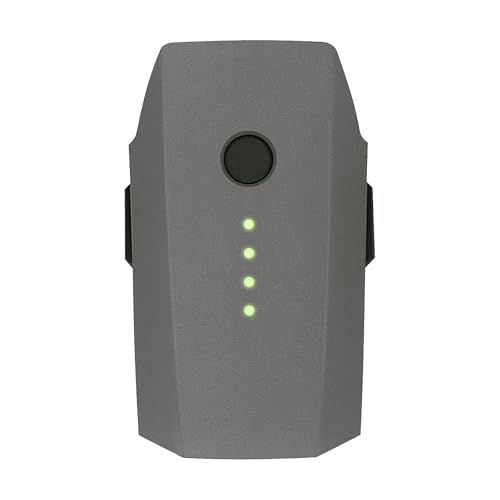
【Strong Versatility】 One-piece dual-compartment design thermostat bag, suitable for most batteries, mainly for DJI drones batteries, dual-compartment design, one-time can hold 2-3 batteries for DJI drone at once.
Frequently Asked Questions
How Does Temperature Impact a Drone’s Battery Performance?
Temperature notably impacts our drone’s battery performance. Cold weather slows battery chemistry, reducing flight time, while heat affects charging cycles and overall efficiency. Effective thermal management is essential for optimizing performance and ensuring reliable aerial operations.
Does Temperature Affect Battery Performance?
Absolutely, temperature affects battery performance greatly. In cold weather, lithium-ion performance drops drastically, causing reduced charging rates and shorter flight duration. We should always monitor temperature ranges to protect battery chemistry and optimize our drone operations.
Why Is My Drone Battery Draining so Fast?
Our drone battery’s fast draining might be due to performance issues linked to temperature effects and outdoor conditions. We can enhance battery lifespan by focusing on power conservation strategies during extreme temperatures.
Does Temperature Affect Drones?
Yes, temperature affects drones substantially. Extreme heat can shorten battery lifespan and flight time, while cold weather hampers performance. We should monitor temperature sensors to maintain ideal drone cooling and guarantee reliable operation.